The Greatest Story in Sports History?

By Dr. Nancy E. Spencer

Tennis commentator John McEnroe called it the greatest story in sports history. Not just in women’s sports, or women’s tennis, but in all of sports’ history! And he wasn’t alone in proclaiming it. On Thursday, January 26, all four ESPN panelists on ‘Around the Horn’ agreed. They were referring to the story of 36-year old Venus Williams and 35-year old Serena Williams, the famous “Sister Act” who were to meet in their 27th head-to-head match in the Women’s Singles final at the 2017 Australian Open. It was part of an historical weekend of tennis that also featured two thirtysomething players in the Men’s final: 35-year old Roger Federer vs. 30-year old Rafa Nadal. By most standards, tennis players in their mid-30s are thought of as over-the-hill. In this case, it was ‘must-see TV’ and tennis was the better for it. Not only were they four of the best players of all time, but they have dominated tennis for over a decade, “winning a combined total of 60 majors in their careers” (Bialik, 2017, para. 1).

16178640_10154501248453732_5966475365408523068_o 16252556_10154501248458732_4382789781416660349_o

The Results? In the weekend matches, Serena edged out older sister Venus, 6-4, 6-4, while Roger needed five sets to prevail over Rafa, 6-4, 3-6, 6-1, 3-6, 6-3. Winning another major title brought Serena’s total number to 23 majors, surpassing Steffi Graf (22), and trailing only Margaret Court, the Australian, who holds 24 titles. Besides adding to her numbers, Serena reclaimed the World No. 1 ranking this week, after what was (for her) a disappointing 2016 season. Now that she is healthy Serena could conceivably tie and maybe even surpass Margaret Court in 2017.

The 2017 Australian Open men’s and women’s finals were nostalgic for fans. My biggest regret was that I didn’t attend this year’s tournament in Australia. Ten years ago, I was at the Australian Open for both finals. Guess who won? The same two: Serena won the Women’s singles over Maria Sharapova, 6-1, 6-2, while Roger defeated Fernando Gonzalez, 7-6 (2), 6-4, 6-4 to win the Men’s singles.

The Williams sisters’ rivalry as well as the pairing of Roger and Rafa demonstrate the longevity of their careers. Venus and Serena have faced each other 27 times, while Roger and Rafa have played 35 times. Neither can truly be considered the ‘greatest tennis rivalry’ in terms of the number of times they have played. Chris Evert and Martina Navratilova hold that distinction, having met 80 times between 1973 and 1989.
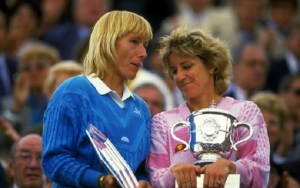
May-Jun 1986:  Martina Navratilova (left) of the USA chats with Chris Evert also of the USA as they hold their respective trophies after the Womens Singles final during the French Open at Roland Garros in Paris.  Mandatory Credit: Allsport UK /Allsport

So, why do multiple sports writers believe the Williams’ sisters’ story may be “the greatest sports story” ever? (Simons, 2017)?

For those who have followed the Williams’ sisters throughout their careers, it is evident that all the elements of a great story are there: a compelling orientation, a crisis, escalation, discovery, and change (Klems, 2014). Below I elaborate on how the Williams sisters’ story demonstrates each of those elements – and how the media reported on them.

The beginning of a good story needs to “grab the reader’s attention,” and orient us to “the setting, mood and tone of the story” (Klems, 2014, para. 15). In 1991, Sports Illustrated writer Sonia Steptoe (1991) introduced 10-year old Venus as “the most hotly pursued preteen in U.S. tennis history” (para. 5). We learned that Venus hailed from Compton, CA (as in “Straight-out-of-Compton” fame) where she lived in “a small mint-green house… spray-painted with black graffiti.” There she dreamed “of wearing a white dress and playing tennis on the grass courts at Wimbledon” (para. 2). Americans were looking for the next great superstar to fill the void left by Chris Evert’s retirement. Venus’ coach, Rick Macci likened her athleticism to ‘His Airness,’ Michael Jordan. The anticipation of this “Cinderella of the Ghetto,” as her father referred to her, established her promise as the future of tennis. Her father, Richard, also suggested that younger sister Serena would be even better than Venus!

venus-and-serena-1991

The second ingredient of a good story is a “crisis that tips your character’s world upside down,” and she cannot immediately resolve the crisis (para. 19). While Venus faced a series of mini-crises in her early career, none rose to the level of unresolvable until 2001, when she and Serena were slated to meet in the semi-finals at Indian Wells, a tournament that was a family favorite due to its proximity to Compton. It was where Serena had won her first professional match. By 2001, Venus and Serena had each won a grand slam tournament – Serena won the 1999 U.S. Open, while Venus captured the 2000 Wimbledon title. When they arrived at Indian Wells, there was great anticipation among fans to see their match that was to be aired live on ESPN. Dominant reports conveyed that moments before their scheduled match was to begin, Venus defaulted, leading some to believe that their father Richard had orchestrated the default, although that suspicion has never been substantiated. Given the disappointment of fans, the announcement was met with harsh booing from the crowd (Smith, 2001). Two days later, when Serena appeared for the final against Kim Clijsters, fans again greeted her with loud boos. And when Venus and Richard entered the court, the booing increased and some fans were heard shouting racial epithets. Richard Williams reported that one fan told him he was ‘lucky it wasn’t 1975,’ or he would ‘skin him alive’ (Smith, 2001, p. 3C).

In an interview with Doug Smith, of USA Today, Richard “accused the media of biased coverage of his family and said ESPN announcers (Pam Shriver and Mary Joe Fernandez) were derelict for failing to criticize the behavior of Indian Wells’ fans when Serena defeated Cljisters” (p. 3C). During the match, Shriver and Fernandez had described the environment as ‘unlike anything they had ever seen.’ Although Serena somehow prevailed to win in three sets, fans continued to boo her throughout the trophy presentation, even as then-19-year old Serena told the crowd that she loved them. In the aftermath of that traumatic experience, Richard vowed never to return to Indian Wells (Smith, 2001).

In 2009, Serena revealed in her autobiography that Venus had informed tournament officials that she was injured earlier in the day of their scheduled semifinal, adding that she would not be able to play the match. However, given the delay (by tournament officials) in announcing her withdrawal until just before the match, Venus (and her father) were vilified by the crowd. Unfortunately, Serena bore the brunt of it. In retrospect, Serena could not understand why a tournament official did not make an announcement or seek to quiet the crowd by telling them that Venus was truly injured. She described it as one of the ‘darkest moments of her career.’

The third element of a good story involves an escalation of the crisis, which occurred in the Williams’ saga when the Women’s Tennis Association (WTA) introduced the “Road Map” in 2008 (Evans, 2008). That plan was implemented to reduce the number of player withdrawals and to encourage players to make greater commitments to tournaments. The aim of the guidelines was to make the tour more ‘fan friendly’ by ensuring that top-ranked players would appear in major tournaments. Another feature of the new plan was the designation of five tournaments as ‘premier mandatory’ events, which meant the prize money would be greater than all except the grand slams, and players would be required to enter, barring injury. When Indian Wells was designated as ‘premier mandatory,’ some speculated that it was done in part to encourage the return of the Williams sisters to Indian Wells. Despite the WTA’s efforts to encourage their return, Venus and Serena remained steadfast in their refusal to play at Indian Wells, and their boycott continued. Many in the media expressed the view that the Williams sisters should return to Indian Wells, as indicated here: “There comes a time when bygones should be bygones. Venus and Serena have made their point… it is time for the sisters to return to the California desert with their heads held high and lingering slights, nasty as they were, forgotten” (Evans, 2008, para. 12).

The fourth ingredient of a good story entails discovery, which occurs as “the climax of the story,” when the protagonist(s) “make(s) a discovery that changes (her) life” (para. 41). In February 2015, Serena announced that she would end her 14-year boycott and return to Indian Wells. She attributed her change of heart to Nelson Mandela’s impact upon her life. His example, coupled with lessons she had learned from her mother, enabled her to realize the power of forgiveness. In contrast to the scene of the 2001 tourney, Serena was greeted with cheers and a standing ovation. Although nervous in her first match, she won it and advanced to the semifinals before having to default due to injury. This time she appeared on court before the match to explain to fans what happened, and the fans had a more positive response. According to Thomas (2015), “You could hear a few scattered boos, unbelievably and too predictably, but mostly there was applause” (para. 20).

Finally, a good story reflects change in the protagonist when she is “transformed into someone more mature, insightful or at peace” (para. 48). Serena’s change of heart was noted by USTA President Katrina Adams who said, “Serena’s decision to return is another sign of her maturity in understanding that although many people show signs of ignorance, not all are (ignorant),” Adams added that, “The past is history, but the present is a gift. She has millions of fans in California that would love to see her play in person, and what a treat they will be in for” (Clarey, 2015, para. 16). While most of the media attention focused on Serena’s change of heart and growth in maturity, there was little if any mention that perhaps Indian Wells needed to apologize publicly for the inappropriate behavior that occurred at Indian Wells in 2001, if for no other reason than to assure Venus and Serena that such a response would never happen again. After Serena’s positive experience upon returning in 2015, her older sister Venus decided to return in 2016. She too experienced the love and appreciation of fans upon her return to the court.

The story of how the Williams’ sisters overcame the crisis at Indian Wells is only one chapter of the compelling story of their 20-year careers in professional women’s tennis. That is probably why so many sports writers and broadcasters consider theirs to be the ‘Greatest Sports’ Story!’ The best thing is that it is still unfolding before us.

References

Bialik, C. (2017, January 27). Tennis is growing old with Federer, Nadal and the Williams sisters. FiveThirtyEight. Retrieved from https://fivethirtyeight.com/features/tennis-is-growing-old-with-federer-nadal-and-the-williams-sisters/

Clarey, C. (2015). After a 14-year boycott, Serena Williams plans to play at Indian Wells. The New York Times. Retrieved from https://www.nytimes.com/2015/02/05/sports/tennis/serena-williams-will-play-indian-wells-ending-boycott.html?_r=0

Clarey, C. (2017, January 26). A final match for Venus and Serena Williams, but maybe not the last one. The New York Times. Retrieved from https://www.nytimes.com/2017/01/26/sports/tennis/williams-venus-serena-australian-open.html?_r=0

Evans, R. (2008, September 6). Williams threat to U.S. Roadmap. The Guardian. Retrieved from https://www.theguardian.com/sport/2008/sep/07/tennis.usopentennis

Simons, B. (2017, January 26). Venus and Serena – ‘The greatest sports story.’ Inside Tennis. Retrieved from http://www.insidetennis.com/2017/01/ao-venus-and-serena/

Smith, D. (2001, March 26). Williams decries fans as racist. USA Today, p.3C.

Steptoe, S. (1991, June 10). Child’s play. Sports Illustrated Vault. Retrieved from http://www.si.com/vault/1991/06/10/124343/childs-play-tenniss-newest-pixie-is-named-venus-at-age-10-she-dreams-of-flying-to-jupiter-others-have-earthier-hopes-for-her

Thomas, L. (2015, March 23). A place in the sun: The return and withdrawal of Serena Williams at Indian Wells. Grantland. Retrieved from http://grantland.com/the-triangle/serena-williams-indian-wells-2015/

NFL is Becoming the No Fun League

Ever since New York Giants’ wide receiver Homer Jones first drilled a football into the hallowed turf of old Yankee Stadium after taking a routine Earl Morrall screen pass 89 yards to paydirt against the Philadelphia Eagles on Oct. 17, 1965, thereby dubbing it the “spike” . . . Touchdown celebrations have been as much a part of the National Football League as Gatorade baths, the Terrible Towel,  Green Bay’s iconic “Frozen Tundra,” and referee Ed Hochuli’s biceps.

After all, they showcase a player’s creativity. They give the casual  fan something to look forward to, even if they’re not interested in a particular game. They inflate television ratings. They’ve been known to celebrate a player’s culture (anyone remember former San Diego Chargers’ tight end Alfred Pupunu, a Tongan, “twist the top off a coconut, and drink the juice” every time he scored a touchdown?). And let’s face it, they’re just plain fun!

Yet, over the last 32 years or so -and particularly during current commissioner Roger Goodell’s reign- the NFL has worked to slowly, but systematically take the fun out of its roughly $74.8 billion product, by plucking the proverbial tail feathers of Jamal Anderson’s “Dirty Bird,” pulling the plug on Joe Horn’s “cell phone call,” and otherwise stifling, outright prohibiting, and doling out ludicrous punishments for just about every other TD celebration that occurs. In 1984, the NFL amended its rulebook, and banned what it defined as “any prolonged, excessive, premeditated celebration by individual players, or groups of players,” which inevitably led to the distinction of the “Fun Bunch” (which was a shame, because watching high-flying Washington receivers Art Monk, Charlie Brown, Virgil Seay, and Alvin Garrett gather in the end zone to perform a group high-five was always a good time). Then, in 2006, the league reopened its rulebook to include such language as “a player leaving his feet,” and “using a prop” such as a goalpost, a towel, and especially a football (it’s known as the “excessive celebration” rule), all of which are frowned upon, and typically earn a 15-yard penalty on the ensuing kickoff. Fast forward to 2016, and some of the league’s most exciting players literally have to be wary of every step, shimmy, strut, and sway of the hips that they take/make, lest they want to garner a hefty fine or even a suspension. Is it any wonder then that the NFL is turning itself into a cliche, but legitimate “no fun league?”

For instance, in weeks one and four of this young ‘16 season, Steelers’ electrifying receiver Antonio Brown was flagged twice, and fined a total of $36,463 for “twerking” (remember the dance made famous by shock pop artist Miley Cyrus at the 2013 MTV Video Music Awards) after taking a pair of Ben Roethlisberger passes to the house. The NFL’s justification for levying such an obscene fine on AB? It has an obligation to protect its product and viewership especially young, impressionable viewers against obscene, “sexually-suggestive” actions that are “construed as being in poor taste.” And while AB’s dance he calls it the “Boomin’”- does indeed incorporate a good bit of pelvic thrusting, where is the NFL’s outrage when it signs some of the sexiest names in pop music à la Beyonce Knowles, Katy Perry, Fergie, and Lady Gaga to perform at its Super Bowl halftime spectacles . . .  Where said divas reap a fortune in viewership for the league every February by purring out overtly-sexual hits, and accompanying them with thrusts, gyrations, and other dance moves similar to Brown’s?

Elsewhere this season, Giants’ dynamic duo Victor Cruz and Odell Beckham Jr were fined $12,154 each when Cruz performed his customary salsa dance after scoring his first regular season touchdown in over a year (the New York pass catcher sat out the entire ‘15 season due to a nagging calf injury). Still, it wasn’t Cruz’s popular dance at all that elicited the steep fines, but instead Beckham Jr’s involvement, which saw the mercurial receiver kneel in the AT&T Stadium end zone, and snap fake Polaroids of his teammate’s moves. The league’s problem with the celebration? It was deemed “excessive, prolonged, and choreographed,” although interestingly enough, it was never flagged. Yet, if the NFL is going to employ that third criteria choreography shouldn’t, too, Cruz’s salsa be flagged and fined every time he catches a TD pass from Eli Manning? Is not the dance the very definition of the term “choreographed?” Has it not been “premeditated,” or planned throughout much of Cruz’s model six-year career? Or because Cruz has been a model citizen, and is still a fresh, young face of the NFL, is he immune to the league’s erratic, often absurd punishments, whereas Beckham Jr with his alleged immaturity, his volatile, powder keg personality, his recent on-field history, and his shock of yellowish hair is not? Were these fines more a case of guilt through association? Is this just more of the modern NFL’s hypocrisy?

As of  the ‘14 season, players have not been able to “dunk” the football over the goalpost crossbar in the vein of Alvin Harper, Tony Gonzalez, and Jimmy Graham. Tabbed the “Jimmy Graham Rule” due to a ‘13 game during which monstrous 6’7”, 265 lb then-Saints’ tight end Graham hauled in a touchdown pass, and then proceeded to throw the pigskin down violently over the crossbar, thereby actually bending the 500 lb aluminum structure, and knocking it askew . . . NFL officials made the celebration illegal shortly afterwards, enforcing the decision with the threat of both a 15-yard unsportsmanlike conduct penalty, and an approximately $15,000 fine (Graham, now a Seahawk, has been fined a total of $30,000 for a pair of thunderous dunks since). The league’s thinking on the ban? It’ll cut down on lengthy repair delays in an already at times three-plus hour game, and perhaps more importantly, assure of player, official, and fan safety if indeed a goalpost was to be damaged more than the one was in the freakish Graham dunk, and Heaven forbid come crashing down.

And while “safety” for one’s fellow man is indeed a noble cause, then why did the NFL “grandfather” the 23-year-old “Lambeau Leap” into its ever-thickening volume of rules as a legal celebration in ‘00? Absolutely, it’s one of the coolest TD celebrations in all of football, and has stood as a time-honored Green Bay tradition ever since former Packers’ safety LeRoy Butler returned a fumble recovery for a score, and proceeded to leap into the crowd for the first time way back in 1993. And, sure, it officially takes place “off the field of play,” whereas the majority of TD celebrations that get flagged (and fined) for infractions like “delay of game,” and “taunting,” and “unsportsmanlike conduct,” allegedly do so because they occur within the parameters of the gridiron. But, if the NFL is going to cite “safety” as an issue in the banning of goalpost dunks, shouldn’t it at least consider it with the “Lambeau Leap,” as well? Realistically, what’s more probable, a goalpost crashing down, and badly injuring the “dunking” player, an official or two, and several fans seated in the end zone section of, let’s say, the Georgia Dome? Or, a Packers’ wide receiver like Jordy Nelson or Davante Adams attempting to jump into the crowd after snaring an Aaron Rodgers’ touchdown pass, and in the process sliding off the icy wall and breaking an ankle on the frozen turf below (or worst case scenario, knocking a fan over the side in the midst of the leap, causing serious injury or worse). Stranger things have happened! Can you say lawsuit, NFL?

Further, it’s not merely celebrations in the end zones that are getting lost in this current whirlwind of hypocrisy, out-of-whack priorities, and outright lunacy either! Indeed, more and more celebrations as a result of big plays between the goal lines -and particularly defensive plays- are being blindsided by penalties of the 15-yard unsportsmanlike variety, and ridiculous fines, as well. Case in point? How about Redskins’ star cornerback Josh Norman’s 15-yarder and ensuing $10,000 fine for “shooting an invisible bow-and-arrow” as means of celebration when he picked off a Cody Kessler pass during the fourth quarter of a week four matchup with the Browns? It’s a fact that not one player, official, stadium employee, or raucous fan losing their mind inside FedExField was hurt or killed when Norman pulled back his invisible bow, and let that arrow fly . . . Yet, still, the NFL labelled it a “violent act,” and will look to open its hallowed rulebook at least one more time in the near future probably before the 2017 season kicks off to ban the “bow-and-arrow,” along with the “throat slash” gesture, the “machine-gun salute,” and the “six-shooter” celebration, all of which have been victimized by the league’s “fun posse” in seasons past. And, okay, maybe some of these more marginal celebrations like the aforementioned “throat slash” and the “machine gun salute”- should be mothballed due to current events and American tragedies in recent years, but the “bow-and-arrow?” The NFL is going to strike quick and decisive on such a “violent act” as this, yet drag its feet on bringing justice to the random bullies, wife beaters, and other miscreants who have been giving the game a proverbial black eye for years? Oh, the NFL usually does suspend these players from the league eventually, it just takes a long time. Unlike, say, disciplining a player for dancing! Talk about your out-of-whack priorities!

All that being said, football is supposed to be fun, and a majority of the time, touchdown celebrations are just that . . . Celebrations of America’s greatest game, and its greatest professional sports league (even for all of its above flaws), that comes forth from these players and more when they feel the same joy and passion for the sport that they felt when they were little boys. That’s why the Pack leaps at Lambeau. That’s what made Washington’s “Fun Bunch,” well, fun. That’s what made 1980s-era New York Jet of the famed “New York Sack Exchange”- Mark Gastineau go all “wild man,” and perform his savage “Sack Dance” every time he brought down a quarterback.

The “twerk” is what helps make “business boomin’” for AB, the “high step” is what made Deion Sanders “Neon,” and, Donning a Superman cape, handing out autographed No. 85 jerseys, and proposing to Bengals’ cheerleaders after scoring touchdowns, is what made Chad Johnson “Chad Ochocinco.”

And, like it or not “Uncle” Roger and NFL . . . It’s all what’s helped take your product into the primetime and beyond! It’s what’s made the game, and the league, larger-than-life. It’s what’s helped grow a once-struggling, fringe game into “America’s Game,” thereby stealing the crown from our “National Pastime.”

All that fun and passion, NFL? It’s part of why we watch. It’s part of what we talk about around the proverbial water cooler on Mondays, it’s what we Tweet about, and why we share videos on Instagram with our friends. And, we, the NFL fans, are a huge reason why your product is so big, too.

Keep taking all the fun out of our favorite game by penalizing and banning touchdown dances and other celebrations, and the biggest thing about your product will be Hochuli’s arms as he throws flag after flag.

The Early Trials of Ben McAdoo

by Brendan Ripley-Barasch

It is widely known that players and coaches of New York’s professional sports teams are subject to scrutiny that might not exist for smaller market clubs. If he wasn’t aware of this before, Ben McAdoo, Head Coach of the New York Giants, now certainly understands the magnitude of operating in the epicenter of professional sports.

As the Giants near the midway point of the NFL season, they sport a record of 4-3 which falls a bit short of the hefty expectations that were placed on them heading into the year. This team, which missed the playoffs for the fourth consecutive year in 2015, underwent a massive and expensive rebuild in the off-season. The Giants handed out over $200 million in free agency in an attempt to revamp an atrocious defense that plagued them last year and then followed suit in the 2016 NFL Draft when they selected cornerback Eli Apple with the 10th overall pick. However, the changes didn’t just come in terms of players but also with coaching. Following the disappointing 2015 season, two-time Super Bowl winning Head Coach, Tom Coughlin, decided to step down, leading to the eventual promotion of Ben McAdoo from Offensive Coordinator to Head Coach for the first time in his career. Obviously there were going to be a few growing pains stemming from the changes  made, but no one could have predicted the problems that would surround the Giants in the first few weeks of the 2016 season. To expect a rookie Head Coach to handle these problems with ease would be an unreasonable assumption.

Odell Beckham Jr., who has shined in his first two seasons with New York, has been a topic of discussion among the media so far this year. While the Giants were able to get off to a 2-0 start to begin the season, disappointment ensued when they relinquished a late lead to the NFC East rival Washington Redskins in a 29-27 loss. Beckham had the camera turned on him for the most part of the game due to the highly anticipated match up between him and CB Josh Norman. Beckham was able to have a very productive day, catching seven passes for a combined 121 yards and drawing multiple penalties. While he was able to do well on the field, what he did off of it was a different story. Following a stalled possession, Beckham took out his frustration on the sideline when he struck a kicking net that responded by bouncing back and hitting the receiver in the face. This humorous highlight was then played on loop in the following week while reporters discussed the player’s struggles to handle his emotions. In their next game against the Vikings, Odell once again had the spotlight on him when he was flagged for unsportsmanlike conduct on a day where nothing went his way. Following these outbursts, Odell released a statement where he was quoted as saying, “I’m not having fun anymore,” when talking about playing football.

Odell seemed to have changed his ways in the next couple weeks where he manged to keep his emotions in check and make fun of his altercation with the kicking net on multiple occasions. But in a game against the Baltimore Ravens, after scoring a game winning touchdown to cap off a career day which included a staggering 222 yards receiving, he cost his team when he removed his helmet on the field leading to an unsportsmanlike penalty. These sideline tantrums have turned into an unnecessary distraction for a team with playoff aspirations and have also put Beckham’s teammates and coaches in a bad spot. McAdoo and the rest of the Giants’ players have voiced their support for the player but emphasized that these kinds of actions will not be tolerated anymore.

The other big dilemma that McAdoo has had to deal with in his first year as Head Coach involved Giants’ kicker, Josh Brown, who was accused of abusing his wife. After the team signed Brown to a two-year $4 million extension in April, the player was suspended for the first game of the season stemming from an investigation conducted by the NFL into his arrest in May of 2015. Although he was never charged in the matter, Brown certainly broke the NFL’s domestic violence policy but somehow only received a one game suspension. This minor penalty does not demonstrate what Commissioner Roger Goodell has stated would be the base-line punishment for any player involved in domestic violence. After the Ray Rice fiasco in 2014, Goodell announced that anyone involved in these kind of cases would receive a minimum six game suspension. But rather than focusing on how the league failed to uphold this policy, New York media looked at McAdoo as having mishandled the entire ordeal and questioned why a player like this was able to stay on the roster.

Things changed when new documents were released last week by the King County Sheriff Office that showed Brown admitting that he had abused his wife, Molly Brown, on multiple occasions. This caused the NFL to re-open their investigation into the case and the New York Giants organization did what they should have done in the first place when they officially cut Brown.

Following the release of Josh Brown, Giants President and Chief Executive Officer, John Mara, admitted that him and the rest of the team’s executives’ actions in accordance to the situation were “misguided.”  He stated that the information that was made available to them never showed any irrefutable evidence that Brown had been guilty of committing this crime but after the release of these new documents they concluded that it was time to part ways with the player.

With all of this said, is it reasonable to place the blame on Ben McAdoo for not handling this situation properly? No, but that is the reality of being in charge of a professional team in the biggest market in sports. As previously stated, the team was never given all the information about Brown’s case and when they finally were, they cut the player. Sadly, even though they did the right thing, they will still be criticized for not doing it soon enough.

Being a rookie Head Coach in the NFL is obviously no simple task, but add in the fact that that McAdoo has had to deal with a variety of sensitive issues while also considering the ferocious nature of NY media, it is almost impossible to operate under the radar. For now it seems like this issues have been put in the past, OBJ is well aware of the fact that he simply cannot continue to act the way he has been and Josh Brown is officially not the Giants responsibility anymore. Although, this doesn’t mean McAdoo can relax yet. He still has the duty of putting a competitive team on the field every Sunday, he has to figure out how to incorporate new formations and plays into an offense that has been exposed as being one-dimensional, and overall he has to be a leader for a team that is currently missing one. So far in 2016, the NFC East has shown it might be the best division in all of football and now that these problems seem to be in the past, the New York Giants can finally just focus on winning games.


Gary Sanchez: New York’s Next Superstar

by Brendan Ripley-Barasch

The New York Yankees had by far the most interesting season in all the MLB this year. To sum it up, their year had three parts. The first part ranged from opening day until the All-Star break, where fans saw a continuation of the previous season with their team showing flashes of greatness only followed by long periods of disappointment. Sporting an everyday lineup filled with injury prone veteran players, fans had to hope t00at these men would play above their potential every game in the very tough AL East. But to their disappointment, we watched as Alex Rodriguez, Brian McCann, and Mark Teixeira struggled mightily and went through lengthy absences due to injury. When the All-Star break finally arrived, the Yankees sported a .500 record of 44-44, this is where the second part began.

Following the break, the Yankees ended July going 8-8 and capped it off by getting swept by the dreadful Tampa Bay Rays. This generated a lot of chatter about what New York would do at the trade deadline, either stay course and hope the team could rebound and make a push for the playoffs, or cut their losses and sell some of their top players to build for the future. General Manager Brian Cashman chose option number two and at the deadline agreed to multiple trades which resulted in Aroldis Chapman, Andrew Miller, Carlos Beltran, and Ivan Nova being shipped to different teams. The pool of players that New York brought in return were highlighted by highly touted prospects Clint Frazier and Gleyber Torres among many others. To go along with these trades, the Yanks also decided to part ways with Alex Rodriguez when they cut him on August 13th and thanks to the pressure he was feeling from the fans, Mark Teixeira announced he would retire after the season.

With all of this said, the Yankees now had a totally revamped major league roster to go along with a much improved minor league system. Part three occurs when NY called up their top prospects Gary Sánchez, Aaron Judge, and Tyler Austin. Each player helped spark the team and allowed them to realistically contend for the post season. But as everyone is well aware, Gary Sánchez was the heart and soul in the last two months of the season.

On August 3rd Gary Sánchez was officially moved up to the big leagues and while many knew of the incredible skill set this young man had, no one could have predicted he would go on the tear he did. After making all the trades they did, New York was seen by many as officially entering the rebuilding stage, they were trying to get these young players at-bats and playing time so when the 2017 season rolled around they would at least have some level of experience. But to baseball viewer’s amazement, Sánchez played historically good and not just because he was a rookie. In two months, Sánchez was able to break multiple rookie records, was the main reason his team even sniffed the playoffs, and somehow put himself in contention with Tigers pitcher Michael Fulmer to win AL Rookie of the Year. In just 53 games, Sanchez’s slash line was .299/.376/.657 to go along with an incredible 20 home runs and 43 RBI, those stats are nothing short of amazing.

Image result for gary sanchez                                                                                                 Image via nypost.com

Ever since two of the Yankees all-time legends, Mariano Rivera and Derek Jeter, retired, New York has been dying for their next superstar. After spending millions of dollars on big names like Jacoby Ellsbury and Masahiro Tanaka, it’s only right the next star would work himself up through the team’s system. The buzz and hype that Sánchez generated from his play is ver similar to what Jeremy Lin did to the city when he came to the Knicks, not just the city of New York was in a state of shock and utter disbelief but as was the entire nation. In an article titled Gary Sánchez has impressed the baseball world written by Erik Boland, there is a quote from an opposing AL team executive describing his view of Sánchez, he says, “I’m buying. I don’t think it’s a fluke. That’s a stupid pace he was on, but . . . with that swing, he should be a 30-home run guy, I would think.” This just adds to the point of how in just two short months, Sánchez has already won over many people in the league thanks to his consistent high level of play.

During the 53 games he played at the major league level, it is impossible to find just how many articles were published about this player or how many times he was mentioned in broadcasts because simply everyone in the sports world wanted to talk about Gary Sánchez. He could have done what he did on any team in the league and would still be receiving a crazy amount of attention, but the fact that he did this in New York City, the center of the sports world, only added to the hype.

It is hard to wrap your mind around the fact that in such a short time Sánchez has already put himself in the center of the Yankees plans for years to come, looking to him as the player they need to build around. Even though his club still missed the playoffs, his efforts helped shift the view of the team from being in a state of rebuilding, to being one that should contend in 2017. Obviously in sports it is impossible to predict if a player can continue to have such an incredible level of play but when discussing Sánchez, how can you doubt him anymore? His tenure with New York this year was filled with many claiming it was beginners luck but night after night he kept producing. No adjustment could be made to slow him down and now fans are eager for next year to see the numbers he will put up. The 2016 New York Yankees season will simply go down as the year Gary Sanchez emerged.

Remembering Niño

By Nate Flax

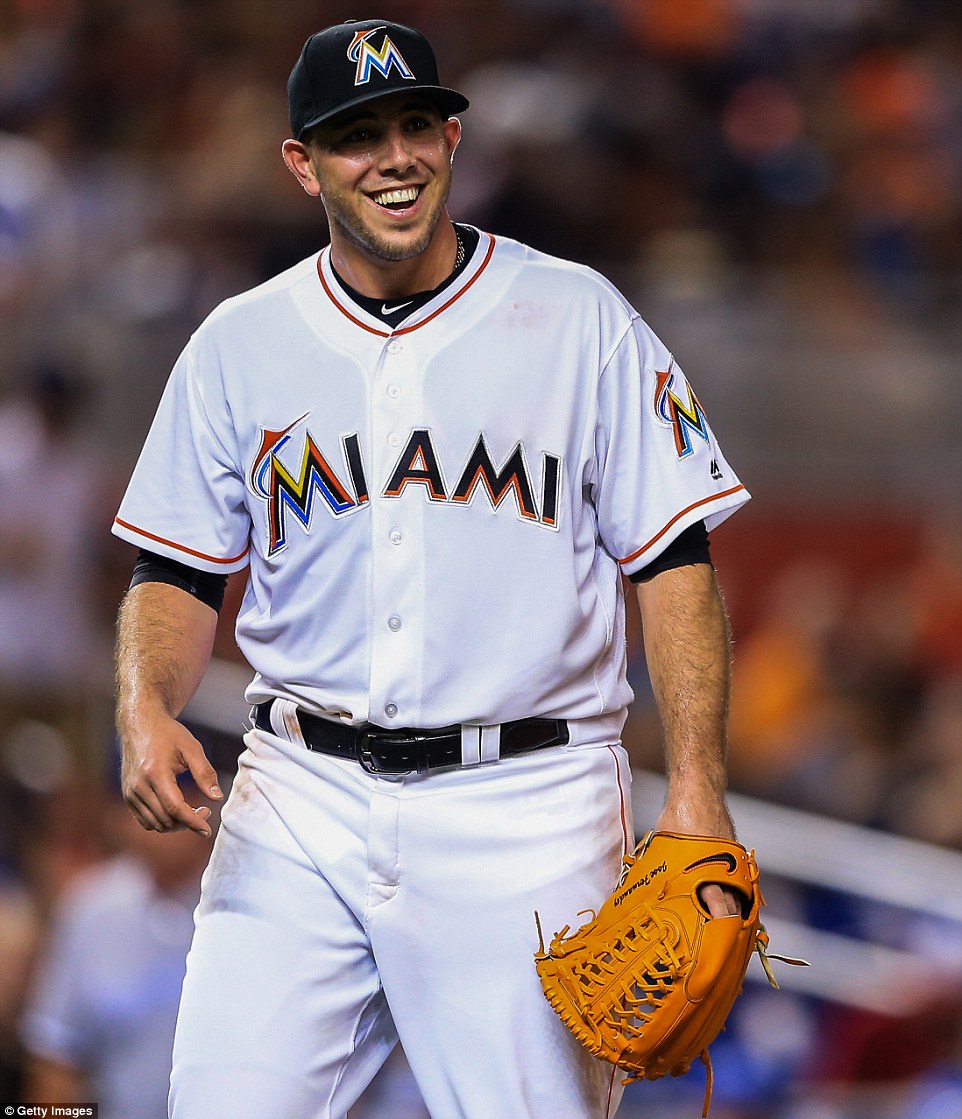
Before the early morning sun even had a chance to kiss the shores of South Beach, a dark cloud had been cast over far more than Miami and the sporting world. Reports of a boating accident involving a 32-foot fishing boat nicknamed Kaught Looking (spelt with a backwards K) just off the coast of Miami came in early Sunday. The vessel belonged to José Fernandez, star pitcher of the Miami Marlins, who, along two of his close friends, Eddy Rivero and Emilio Macias, died that night when their boat crashed into a jetty and landed upside down on the rocks. However, in the words of Dr. Seuss and as legendary broadcaster Vin Scully signed off his final game with “do not be sad it’s over, smile because it happened”, which is what we should all do in remembering the lives of Rivero, Macias, and Fernandez.

joses-boat

PHOTO: PATRICK FARRELL/MIAMI HERALD/ASSOCIATED PRESS

Fernandez, 24, attempted to escape three times from Cuba, before finally reaching the United States with his mother, and leaving his grandmother behind. He was drafted in the first round of the 2011 MLB amateur draft (14th overall) before making his début for the Marlins as a 20 year-old in 2013 when he dominated the New York Mets, striking out eight in just five innings. That year he played in an all-star that year as well as Rookie of the Year honors for the National League. Injuries would plague his next two seasons, but Fernandez would return to all-star form in 2016 as he racked up 16 wins to go along with an earned run average under 2.9, putting him in contention for a Cy Young award. However, Fernandez were far more than phenomenal numbers, as it is his person for which he will forever be remembered.

Getty Images

Getty Images

As so many involved with the game of baseball could tell you, Fernandez brought a certain joy to the clubhouse, coming to work day in and day out with the giddiness we all had when we played the game as children. In short, he made the game fun again. One need look no further than moments like a booming Giancarlo Stanton home run, where Fernandez can be found in the dugout jumping up and down, his hands flailing in the air, and a huge grin on his face, to see just how much fun he had just by coming to the ballpark.

Another moment he’ll be long remembered for is when he caught a screaming line drive off the bat of Troy Tulowitzki who looked out at Fernandez stunned asking “Did you catch that?” to which Fernandez replied through his massive smile “Yeah. Yeah, I did”. Or after his final game, which he claimed was the best he had ever pitched, when he came back to the dugout and received a massive bear hug from hitting coach and good friend, Barry Bonds.

It was not until it was too late, however, when we all got to see just how much Fernandez meant to the Marlins organization and the game of baseball. Approaching Marlins Park Monday morning, one would see a sunny day everywhere but over the stadium where one cloud poured rain on the dome in the start of an overwhelming, emotional day. The game would start with tributes and grieving from both teams for Fernandez, whose number 16 covered the stadium and the mound, before the Marlins took the field with eight players, all wearing Fernandez’s number 16, missing their pitcher. After the Mets were retired in the top half of the inning, Dee Gordon led off for Miami, taking the first pitch thrown to him from the right-handed batter’s box while wearing Fernandez’s helmet, before switching to his natural lefty side. Two pitches later, Gordon would hit a powerful home run to right for his first homer of the season. An emotional trip around the bases concluded with tears throughout the stadium and hugs from every teammate in the dugout. After the game Gordon said, “I told the boys, if y’all don’t believe in God, y’all might as well start. I ain’t ever hit a ball that far, even in BP…we had some help.” Even though the Marlins ended up losing the game that day, the entire stadium and baseball community felt the presence of Jose “Niño” Fernandez cheering on his teammates from above that day.

Leicester City: The Greatest Sports Story. Ever.


By Nate Flax

As the clock hit the 96th minute of the Tottenham – Chelsea match, the entire soccer world realized that the greatest underdog story in sport history had concluded. After trailing 2-0 at halftime, Chelsea came back to draw with the second place Tottenham Hotspur, thanks to a brilliant 80th minute equalizer by Chelsea’s Eden Hazard. As the final whistle blew to end the heated London Derby, Tottenham’s title hopes were dashed and for the second year in a row, a new Premier League champion was decided at Stamford Bridge. However, this time it wasn’t one of England’s heavyweight contenders, but instead a club that had been written off before the season even started.

Leicester City

Located right in the heart of England, world-famous clubs, always surrounded Leicester with Manchester just to the North and London to the South, but until this year, very few that did not follow the BPL closely even knew a soccer club existed there, even though the team was founded in 1884 (132 years ago). The Leicester City Foxes were simply insignificant, finishing at the bottom of the table the year before and had only received promotion into England’s top league the year before that. They entered the season 5000-1 odds to win the title this year and featured a team that had cost just £80 million to put together (to put in perspective Manchester City spent £80 million on one transfer alone earlier in the year). Billy Beane’s Moneyball scheme wouldn’t stand a chance against this. Other recent previous 5000-1 odds as explained by ESPN’s Paul Carr included 16-year-old Paul Chaplet’s chances at this year’s Masters (where he shot 21 over par and finished dead last) and the Minnesota Timberwolves’ chances to make the playoffs with a month left in the season and their record sitting at 14-35. The odds for Elvis Presley being found alive were also 5000-1.

Being written off before the season even started, Leicester really had no chance of failing any expectations given to them, quite frankly because there were no expectations to start with. But that’s when everything clicked. Led by Riyad Mahrez, Danny Drinkwater, Jamie Vardy, and seasoned manager Claudio Ranieri, the Foxes outdid themselves by continuing to be that pesky opponent that just wouldn’t give up even though they seemingly had no business competing with powerhouses like Manchester City, Manchester United, Arsenal, and Chelsea. Yet somehow, with Chelsea holding Tottenham to a draw, Leicester City sat seven points clear on top of the table with just two games to play, making it impossible for anyone to catch them, and crowning them the kings of England. With the third smallest budget in the Premier League, the Foxes became the first team not named Manchester City, Manchester United, Arsenal, or Chelsea in 21 years to win the title, and just the sixth to win out of 48 that have tried since 1992. After a season that proved that money can’t always guarantee a crown, Leicester City concluded the fairy tale of a season that underdogs could previously only dream of.

Interview with Jerod Cherry

Je’Rod Cherry played safety and on special teams for 4 different teams  over the course of his nine-year NFL career. Cherry is best known for his special team work for the Patriots when they won three Super Bowls in 4 years. After his football career Je’Rod Cherry got into broadcast media and in 2009 became a talk show host  for WKNR 850 in Cleveland.

I had the privilege of meeting Je’Rod Cherry and other former NFL player like Pro-Bowlers Michael Turner and Greg Jones at our annual NFL Journalism Boot Camp.

Here is my full interview taken on April 22nd with Je’Rod Cherry.

Q: How do you think the media narratives about Tom Brady and Bill Belichick differ from the people they actually are?

One thing people don’t know about Bill Belichick is that he’s isn’t just a dark anti-social old guy. Belichick has a great sense of humor and can be a warm, caring person as well. What you see is what you get with Tom Brady. He’s just a great classy guy who everyone respects.

Q: You played on some bad teams, and on one of the greatest dynasties of the last 20 years. What were some of the differences between the good teams and the bad teams as far as the locker room atmosphere?

Good teams had a common purpose. Good teams won for each other while other teams had too many “me-first” guys. The Patriots instilled a culture that brought people together for the purpose of winning ball games.

Q: You said on radio and at the Bootcamp that you feel that if a player truly wants to win they’d play through concussions? Could you expound on this statement?

Football is a physical sport. You have to sacrifice your body just to be competent. Sometimes there are situations where you may be hurt. You have to make a decision about whether you value your long-term health or team. The guys that are willing to risk injury and long term health have more determination and warrior spirit needed to play football at the highest level.

Q: What do think is the most distinct characteristic of the Cleveland Media? How does it compare to Boston’s media or the national media?

The difference between Boston and Cleveland is that the Cleveland media speak there mind more. Cleveland media is more hopeful and can be positive.

Q: What was the best advice you’ve received about transitioning from football to the broadcast world?

Approach it the same way you would when you play football. If you study hard and work at it you will have a long successful career, just like you would have in football.

Reflections on Laremy Tunsil’s Historic Draft Slide

by Brendan Ripley-Barasch

The 2016 NFL Draft was held this past Thursday night in Chicago and there were some surprises to say the least. A couple of things that may have shocked some fans included linebacker Myles Jack falling out of the first-round, CB Eli Apple being drafted at No. 10 by the New York Giants, and the mind-boggling amount of former Ohio State Buckeyes taken in the first-round. But one thing that took everyone by surprise was how far offensive lineman Laremy Tunsil fell.

                                                                                    Image via http://www.clarionledger.com

A dramatic series of events led to Tunsil falling all the way to the Miami Dolphins at No. 13. This player, who was once seen as the number one overall prospect in the draft, saw his downfall begin moments before the draft. Exactly thirteen minutes before the start of the draft, a video was posted to Laremy’s verified Twitter account that showed the former Ole Miss Rebel smoking what is assumed to be weed from a gas-mask bong. After a couple of minutes the video was taken down and the account was then deactivated. The video may have only been up for a few minutes but the damage was done and once again the power of social media was demonstrated.

Even after Tunsil had been selected by the Dolphins the mayhem continued. After the pick, an image was uploaded to Laremy’s Instagram account that showed text messages supposedly between Ole Miss Assistant Athletic Director John Miller and Tunsil. The conversation consisted of Tunsil seeking money from Miller to pay his mother’s rent and electric bills. Last season at Ole Miss, Laremy served a seven-game suspension stemming from similar accusations where he was found guilty of accepting improper benefits.

When it was all over, Laremy was still drafted in the top twenty but his fall cost him millions of dollars. In an article from ESPN titled Video kept Ravens from drafting Laremy Tunsil with No. 6 overall pick, writer Jamison Hensley discusses how the video impacted the Baltimore Ravens evaluation of Tunsil. The author writes, “The Baltimore Ravens would have taken Ole Miss offensive tackle Laremy Tunsil with the No. 6 overall pick were it not for the gas mask video that surfaced.” Even though he only talks about one team, it is probably fair to say the twelve other teams that passed on the prospect were thinking similarly. In the same article, Hensley writes something that ESPN’s Adam Schefter reported, “According to Schefter, Tunsil lost $7 million by falling seven spots in the draft.” Not only did this social media blunder tarnish the player’s image, but it also caused him to lose a lot of money.

It was very hard to watch this young man’s life just unravel right in front of us on one of the biggest stages in professional sports. But this is just the latest case of athletes suffering at the hands of social media. Recently it has been reported that the Dolphins believe Tunsil’s former financial adviser is who hacked into these accounts and posted the image and video. During the draft, ESPN analyst Jon Gruden gave his opinion on the issue, “We live in a glass house these days. … There’s a lot of money and people’s futures at stake. I hope this doesn’t come back to haunt Tunsil. Hopefully it’s a learning experience for him. He’s gotta clean this up if he wants to play in this league.” With this statement, Gruden echoes mine and surely many others opinions.

Following the draft, Laremy Tunsil admitted to the media that he had in fact taken money from an Ole Miss coach and that the screenshots were real. It is unclear whether the NCAA had already been aware of these actions since they had already suspended the player last season for the same reason. Now that Tunsil had admitted such a thing to an audience of millions, the NCAA will surely continue their investigation with the university.

This event is one of the most publicized examples of an athlete being punished for things that had been posted to their social media accounts. Obviously it is unfortunate for Tunsil to fall all the way to No. 13, but he is saying all the right things starting with accepting full responsibility for his actions. The player has a bright future ahead of him in the NFL but this will follow him for many years to come. It cannot be emphasized enough how big of a role social media plays in forming a person’s image and it is crucial for athletes as well as regular people to realize how to properly use these platforms. It is my hope that other athletes learn from this and don’t make the same mistake Tunsil did.


Trouble in Philly: Sam Bradford Wants Out

by Brendan Ripley-Barasch

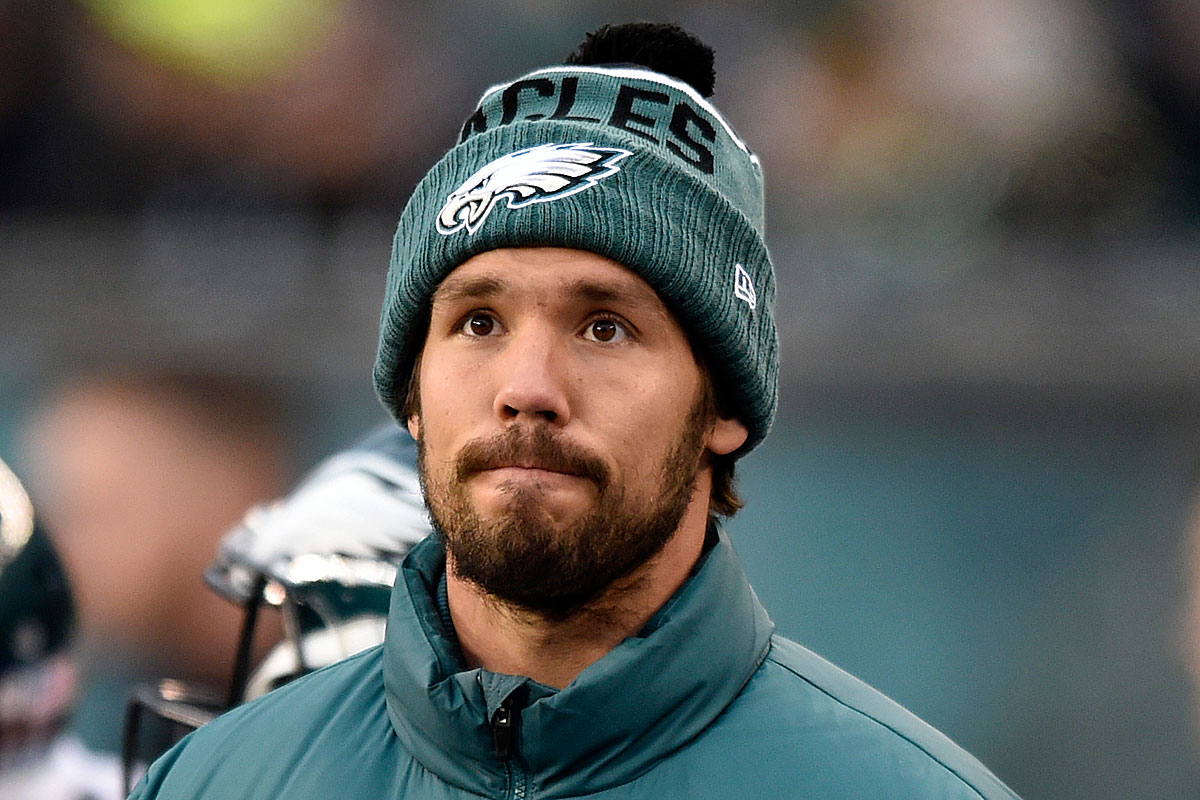
The City of Philadelphia has had a tough go with their professional sports teams in recent years. Most notably, the Eagles have consistently under performed despite having elite talent like LeSean McCoy, Demarco Murray and DeSean Jackson at some point over the past four years. The Phillies have quickly plummeted to the bottom of the MLB and how could we forget the 76ers who have been one of the worst teams in NBA history for the past few seasons. The struggles continued when Eagles quarterback Sam Bradford reportedly requested a trade early Monday morning.

                                                                           Image via http://www.philly.com

The former number one overall draft pick is most likely seeking a trade because of the move his current team made a few days ago. Last Thursday the Philadelphia Eagles agreed to send the no. 8, no. 77, and no. 100 picks in this year’s draft along with a first-round pick in 2017 and 2018 second-round pick to the Cleveland Browns to receive the second overall pick in this year’s draft as well as a 2017 fourth-round pick. After the trade was officially completed, Eagles representatives announced that they planned on taking a QB with the second overall pick. It is interesting that Philly decided to trade away so many picks just so they could draft another signal-caller with the second selection. It is only interesting because this past off-season the team signed Bradford to a two-year deal which included $22 million in guaranteed money while also signing former Kansas City quarterback Chase Daniel to a three-year contract where he is guaranteed $12 million.

It is obvious that the Eagles are trying to solidify what is widely seen as the most important position in football and the trade shows just how desperate they were in doing so. Bradford is upset with the move and he has every right to, why would he tolerate being seen as a stop-gap player?

Earlier in the week, reports were that even after the trade, Sam did not wish to be traded and wanted to prove to the organization that he was “the guy.” But now the complete opposite is being said, the next couple days will prove which report is correct. For now we’re going to pretend that Bradford actually does want to be traded. There are a few teams who are in the market for an experienced quarterback. To name a few, the Denver Broncosand San Francisco 49ers.  With the departure of both Peyton Manning and Brock Osweiler, Denver is in dire need of a player who can lead the team. In San Francisco’s case, the organization has not shown the most trust in Colin Kaepernick and might be interested in making a deal.

Even with his reported request for a trade, Eagles management is supporting Bradford. Executive Vice President of Football Operations Howie Roseman was quoted as saying, “to reiterate our support for Sam Bradford and go back to our statements last week — that Sam is our starting quarterback.” This statement shows that the team is trying to downplay the drama surrounding their quarterback situation, and they are saying the right things.

Even if the former Oklahoma Sooner did request a trade, the media has no room to criticize him. Just like any other player, Bradford wants respect. And if the team does actually use the 2nd pick on a QB, which will most likely be Carson Wentz, why is it wrong for them to plan for the future? The organization is attempting to change the approach they have had the past few seasons, instead of trying to win now, they are figuring out how to win in the future and that means they must have a quarterback who can do that. It would not be the worst idea to take Wentz and let him sit for a couple of seasons allowing him to adjust to a pro style NFL offense. But even if Wentz isn’t thrown into the fire his rookie year, he still has a lot of pressure on him. Philadelphia sacrificed a lot to get this pick and they are counting on Wentz or any other QB they get to make it worth it.

The 2016 NFL Draft will be held in Chicago on April 28th and Eagles faithful as well as media will be waiting patiently to see what their team does. If Philly sticks to their plan and takes a QB, it will take a couple seasons to see who got the best of the trade because now the Cleveland Browns are seen as the clear winners and that is a first.


Tom Brady Suspension Reinstated: Does Goodell Have too Much Power?

The NFL, in their battle against Tom Brady, finally got a victory with the appeals court. The Court reversed the federal judge’s ruling of nullifying Brady’s four-game suspension. As reported on CNN in an article titled “NFL wins ‘Deflategate’ appeal; Tom Brady’s suspension reinstated”, Monday’s court decision came to rule that Goodell “properly exercised his broad discretion under the collective bargaining agreement and that his procedural rulings were properly grounded in that agreement and did not deprive Brady of fundamental fairness.”

Now the NFL has to decide whether they want to exercise the power to reinstate Brady’s suspension in the league. If the suspension remains is intact, Brady will miss games against the Cardinals, Dolphins, Texans, and Bills. A lot could happen in the next few months, as the NFLPA and Tom Brady will need to decide what action to take next against Goodell and the suspension.

In response the new of the suspension, media and personalities throughout the United States posted on social media to voice their opinions. Bill Simmons, who in the past publically spoke on Goodell’s abuse of power, tweeted “FREE TOM BRADY.” Similarly, Skip Bayless urged Brady to attempt to take the case to the supreme court. Even a presidential nominee, Donald Trump, said “leave Tom Brady alone,” at a rally. The news shook the sports world, and could change the landscape for the upcoming NFL season.

Interestingly enough, the court itself stated that Goodell “properly exercised his broad discretion.” It admits that Goodell has “broad” power when it comes to disciplinary action. The media has only been covering the reports of Brady and story between the two sides, the Patriots and the NFL. In reality, it is extremely noteworthy that the judicial system is willing to admit Goodell has excess power in disciplinary action for the league. It is unfortunate that a league with so much influence and coverage throughout the country has been so greatly challenged by the agendas of the commissioner.

At the end of the day, the NFL must address the issue of Goodell’s power. It greatly affects the league, and the players on the field. Whether it is Tom Brady, Ray Rice, Greg Hardy, or Adrian Peterson, the NFLPA and the players themselves need to stand for their rights in the league.