For better or worse, the dollar has become more important than ever in the NIL era of college sport. But not every athletic department has access to a major corporate sponsor or billionaire alumni like some high major/power conference schools do. In order to help ease this difference and maximize our athletics’ potential, I suggest BGSU begin aiding athletes in growing their personal brands as creators. While, of course the game comes first, taking some time here and there to promote players showing their day-to-day routine, personal hobbies, funny/relatable moments, and other behind-the-scenes content will ensure the fan base becomes more familiar with the program.
It’s no secret that fans love to engage and build connections with their school’s players off the field. Feeding into this will make people feel more a part of the team/school as a whole, further leading to an increase in tickets sold, higher concession sales rates, and hopefully a rise in donor interest. We saw a version of this last year during the Pudge saga, but that was just a taste of the buzz you can generate from (figuratively) letting the public in the locker room. Though this alone can’t make up for all disadvantages small schools have in today’s dollar-driven college sport climate, it could play a key role in maximizing BGSU’s potential.
The Bowling Green Falcons have flown into the 2026-27 College Football Season with a new signal caller under center. The man of the hour is Jay Kastantin. Coming into the pre-season, many expected the former 4-star recruit and Oregon transfer, Austin Novosad, to be the starting quarterback for the Falcons this fall. But as training camp progressed, the former 0-star recruit from Division II Assumption College did enough to win over Eddie George and the rest of the staff. Eddie George described this decision as being “tough” and embraced the competition within the program. George also stated, “The consistency, the command of the huddle … I feel comfortable with either quarterback going out there but we have to name a starter and (Kastantin) has the nod from us.” (Cubberley 2026).
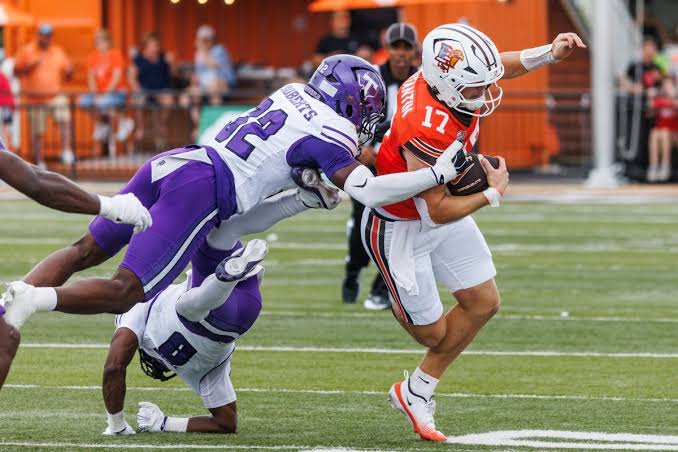
Jay Kastantin runs the ball in the season opener against Tarleton State.
Last season at Assumption College, Kastantin appeared in 9 games, throwing for 1,974 yards and running for another 530. That along with his 24 total touchdowns was enough to win him the Northeast-10 Conference MVP and land him a Division I offer at Bowling Green. Unfortunately, his debut with the Falcons resulted in a tough loss. Despite the loss, Kastantin had moments of success that can give Falcon fans hope. Kastantins 80.0% completion rate, as well as his 262 yards as a passer were some of few bright spots during the Falcons week one loss. If the Falcons can structure the offense to embrace Kastantin’s playmaking ability at quarterback, they may be able to turn things around offensively.
“The key to a rivalry is that you make each other better, and you make the sport better.” [John McEnroe]
By Nancy E. Spencer, Professor Emerita
Nancy Spencer taught in the Sport Management program at Bowling Green State University (BGSU) from 1998 until 2023 and is now Professor Emerita. Since retiring, she continues to focus on writing sociological analyses of Women’s Professional Tennis. Her current project includes a chapter about Women’s Tennis in the 1980s, a time when Chris Evert and Martina Navratilova dominated the tour.
July 3, 2026
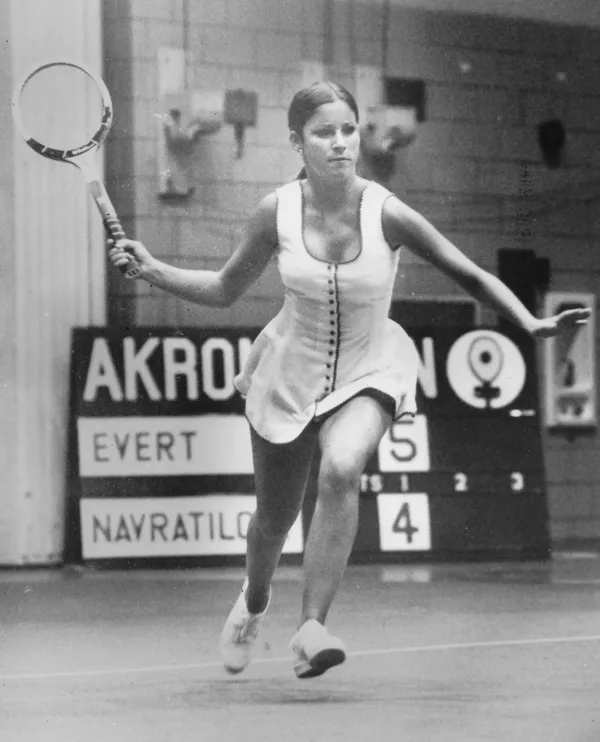
On June 26, Netflix released the movie Chris and Martina: The Final Set which narrates what some consider the greatest rivalry in modern sport history (Curtis, 2018; Flink, 2026). Near the beginning of the film, John McEnroe suggests that the key to a rivalry is that the players make one another better but also make their sport better. This Netflix program does a masterful job of weaving together the candid stories of Chris Evert and Martina Navratilova – their rise to the top echelon of Women’s Tennis, the ups and downs of their friendship, and their intertwining battles against cancer. Although Evert and Navratilova are both younger than me, I followed their careers, articulations of their rivalry, their friendship and, more recently, their parallel bouts with cancer. In March 1973, my life intersected with them when all three of us played on the USLTA Professional Spring Tennis Tour, at a tournament in Akron, Ohio. Evert and Navratilova met in the semifinal, with the 18-year-old Evert (then ranked No. 3 in the world) outlasting the 16-year-old newcomer, Navratilova, 7-6 (5-4), 6-3. Since I had already lost in the first round of qualifying, I was not in Akron when they played. I wish I had been there!
No. 1 seeded Chris Evert faced Martina Navratilova in the semifinals at Akron in 1973.
Evert and Navratilova reflected on their first impressions of one another when they met in 1973. At the first tournament on the USLTA Spring Tour (in Ft. Lauderdale, FL), Navratilova recalled seeing Evert playing backgammon with a tournament official (Jenkins, 2023). She was awestruck to see the player who graced posters on her wall at home; she was even more excited when Evert later said hi to her. When they played their first match, Martina called it “a dream come true” because she could measure herself against the next No. 1 player in the world (Walker, 2023, para. 5). Her goal for the match was for Chris to remember her name. Evert recalled feeling “a little nervous going into the match” since she had heard that Navratilova was “dangerous, very raw, with a great volley, a versatile game at a very young age” (para. 6).
While Evert knew that Navratilova moved well, she was overweight, which Martina herself acknowledged, saying “I was a butterball” (para. 7). When she got to the States, she put on 20 pounds in less than a month. Evert thought that if she ever got in shape, she would be “a force to be reckoned with” (para. 8).
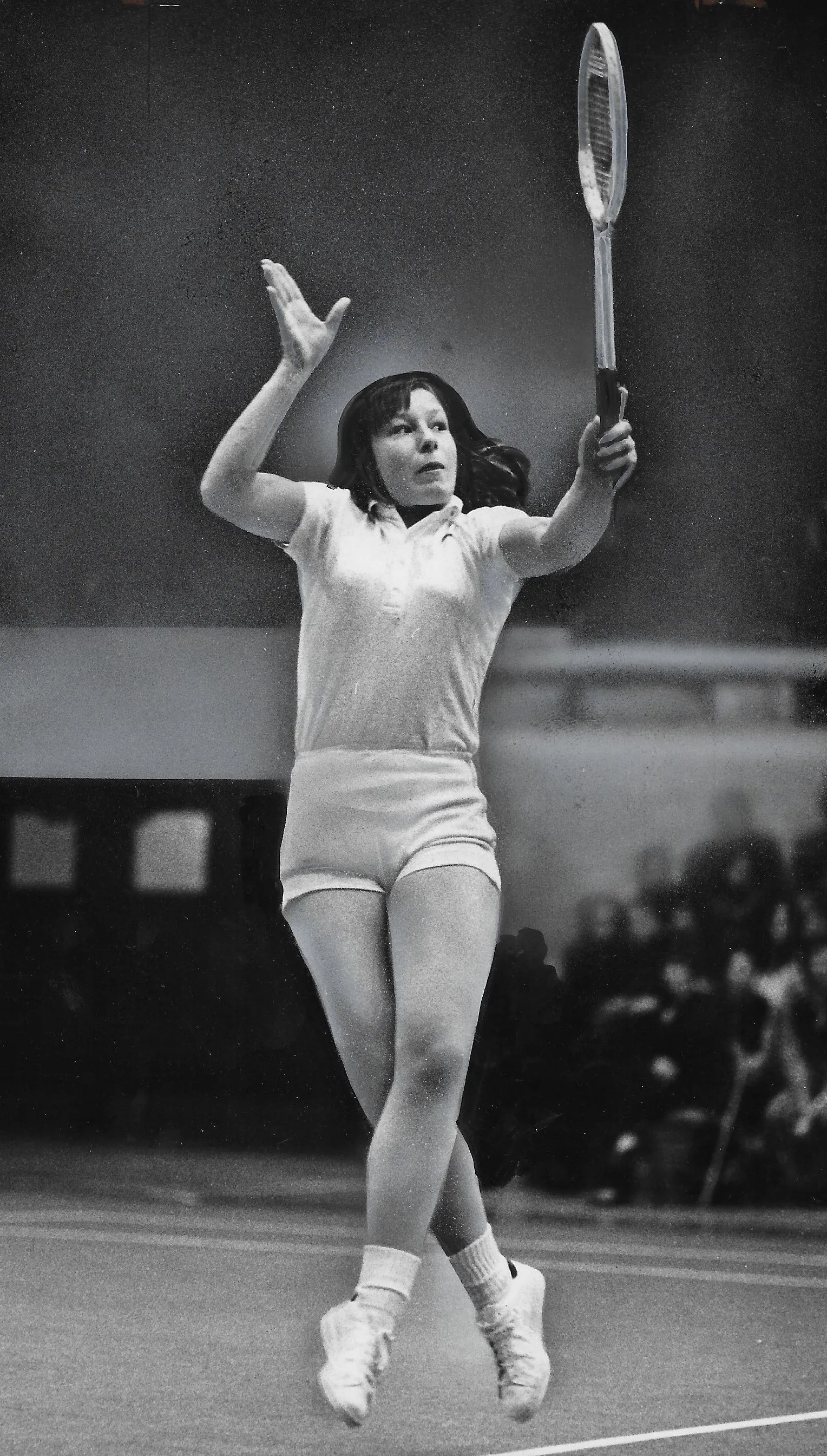
16-year-old Czechoslovakian Martina Navratilova played her first match against Chris Evert.
Little could they know that their match was the first of an 80-match rivalry that would redefine women’s tennis over the span of the next 16 years. It would end with Navratilova holding a 43-37 advantage over Evert, with each raising the level of her game as well as the level of women’s tennis writ large.
Tennis commentator Mary Carillo said that, in 80 matches, no individual athletes or rival teams faced one another over 16 years with such high-quality stuff (Shapiro, 1999a). Jake Curtis articulated four key factors that make a compelling rivalry. Longevity is the first factor, as illustrated by the duo’s rivalry that began with their first match-up in Akron and ended with their final meeting in Chicago.[1]
Second, a compelling rivalry should have contrasting styles and/or personalities – Evert and Navratilova had both. TV commentator Brent Musberger described them as “fire and ice…Martina was fire… Chris Evert was ice cold—win or lose” (Shapiro, 1999a). While Evert played a consistent baseline game with pinpoint accuracy, Navratilova displayed an aggressive serve-and-volley game often associated with masculinity. Their cognomens evoked contrasts – with Evert regarded as “America’s sweetheart” and “ChrisAmerica” while Navratilova was often referred to as the “Chech-defector” (Deford, 1986). It was “what a rivalry should be” as revealed by “the physically powerful and politically outspoken Navratilova against Evert’s ferocious ambition, which was too often obscured by tributes to her conventional femininity” (Knapp, 2005, para. 4).
Curtis identified the third factor as the epic nature of their meetings that they typically played in tournament finals, including 14 grand slam tournaments (Howard, 2005). They competed in an era when epic rivalries in men’s and women’s tennis contributed to what many regarded as a “golden age of tennis” (Allen, 2009; Curtis, 2018; Davies, & Fellows, 2023).
Fourth, Evert and Navratilova were the two best women tennis players who ranked Nos. 1 and 2 over an 11-year span.[2] There is one more factor that I add to what makes a compelling rivalry and that is “affect,” how a rivalry makes tennis fans and viewers feel. Johnette Howard (2005) wrote that it was not only their athletic prowess that attracted fans; their followers “fell in love with their stories” and that was about their contrasts (p. 4). There is something about a great rivalry that makes their face-to-face meetings must-see events – whether in person or on television. I felt similarly about watching Borg and McEnroe, Graf and Seles, Federer and Nadal, and the Williams sisters. The budding rivalry between Carlos Alcaraz and Jannik Sinner appears to be the next compelling rivalry.
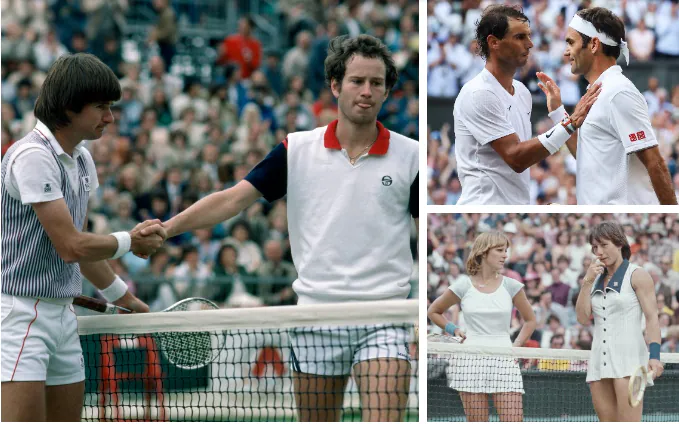
Among the great rivalries of the 1980s and beyond were: Clockwise (L-R) Jimmy Connors v. John McEnroe; Rafa Nadal v. Roger Federer; Chris Evert v. Martina Navratilova
The Netflix program also described the trajectory of Evert and Navratilova’s friendship, which was sometimes impacted by their on-court rivalry, and at other times, by influences of coaches and/or off-court relationships. Sally Jenkins (2023) brilliantly profiled “the shape of the relationship” as an ‘hourglass’ (para. 7). They first met as teenagers in 1973, became friends and even played doubles together; in the late seventies, they drifted apart as each battled to become the world No. 1 at the other’s expense. At the end of their rivalry, “they somehow reached a perfect equipoise of 18 Grand Slam victories each[3]” (Jenkins, 2023, para. 7). In the early seventies, when Evert won 20 of their first 24 meetings, the duo also played doubles in seven tournaments, winning two grand slam doubles titles together: the 1975 French Open and the 1976 Wimbledon Championships.
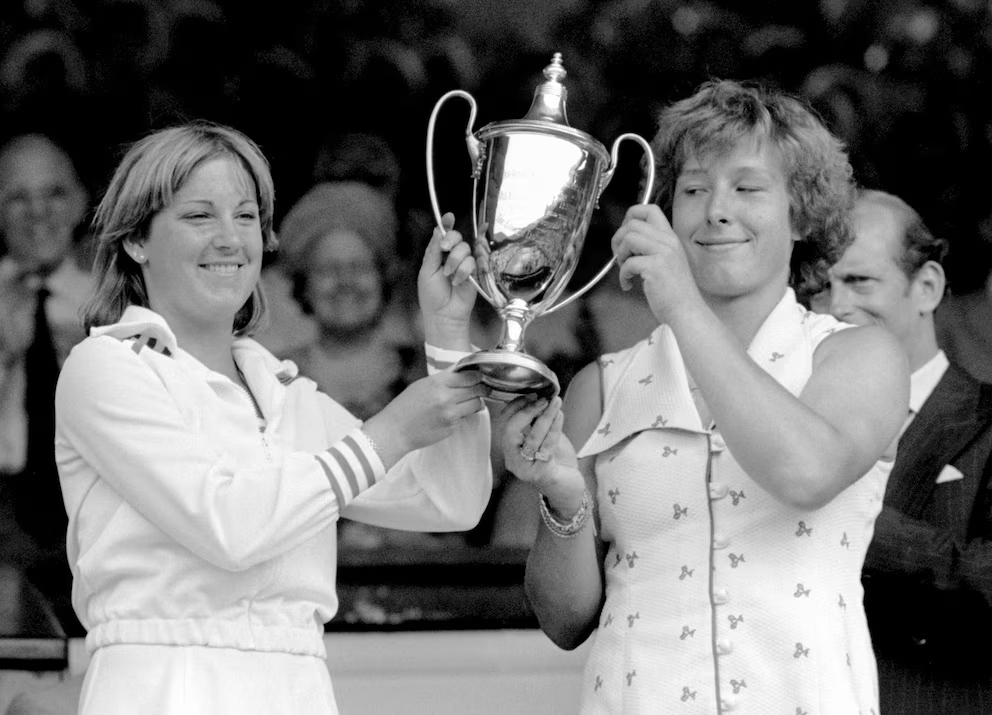
Chris Evert and Martina Navratilova hold the ladies’ doubles trophy after defeating Billie Jean King and Betty Stove in the final at the Wimbledon Championships, July 5, 1976.
In the 1976 Wimbledon semifinal, where Chris eked out a 3-set win over Martina, she realized that her friend was starting to beat her more frequently, which led Evert to the difficult decision to end their doubles partnership. When they stopped playing doubles, Navratilova took it as an afront to their friendship, while Evert was just trying to protect her ranking. She realized that playing doubles was all right but only if she was No. 1.
Another threat to their friendship came in 1981, when professional basketball player Nancy Lieberman entered Navratilova’s life at a critical moment.
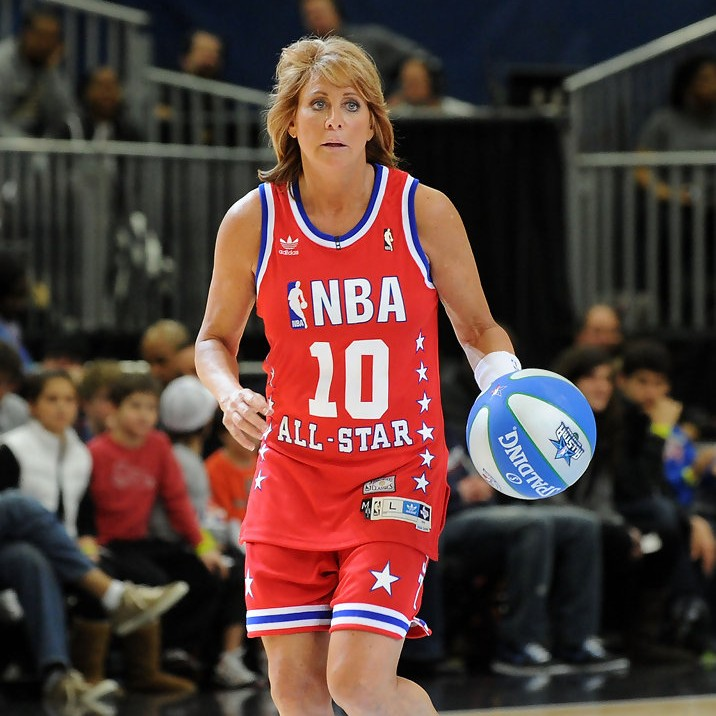
Nancy Lieberman at an NBA All-Star celebrity game presented by Final Fantasy XIII held at the Dallas Convention Center on February 12, 2010 in Dallas, Texas.
At the end of July, an article in the New York Daily News revealed that Navratilova was bisexual.[4] The article appeared several months after Billie Jean King’s disclosure that she had been in a lesbian relationship with her former hairdresser. Rumors were circulating about potential ramifications for tour sponsors if further news of gay or lesbian relationships in tennis were to emerge. In addition to concerns about the tour’s image, a threat to Evert and Navratilova’s friendship entered through Lieberman, who believed that Martina needed to hate her chief rival. A turning point for Navratilova came in the final at Amelia Island when Evert’s ‘double bagel’ (6-0, 6-0) win over her lit a fuse that changed the chemistry of their rivalry and friendship (Encabo, 2026). The lopsided win so angered Lieberman that she berated Martina, telling her, “You’re better. [In] every area of your game you’re better than she is. She’s not the athlete you are. She doesn’t move like you do. She doesn’t have the shot-making you do” (Encabo, para. 13). Lieberman ended her tirade by saying Martina should not be friends with Chris, a suggestion that created an ‘icy silence’ between them. For Navratilova, the strategy worked as she gradually edged closer to Evert’s record in their head-to-head rivalry.
Entering the 1984 U.S. Open final, Evert and Navratilova stood at 30-all in their rivalry. Their final at Flushing Meadow would break the tie. That final match became the centerpiece of “Super Saturday,” what many consider the greatest single day of tennis in U.S. Open history. The day began and ended with men’s singles semifinals: Czechoslovakia’s Ivan Lendl won the first semifinal in 5 sets over Australia’s Pat Cash, while the second semi saw John McEnroe prevail in 5 sets against Jimmy Connors, in a rivalry that Nancy Lieberman must have loved given their disdain for one another.
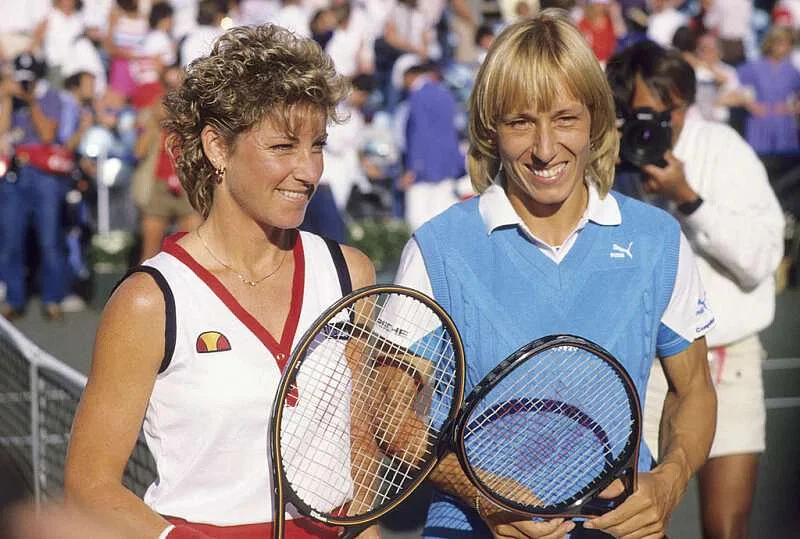
Chris Evert (L) and Martina Navratilova (R) met in their 61st match at the 1984 U.S. Open
Sandwiched between the two semifinal matches was the Women’s Singles final which Navratilova won in 3 close sets although Evert was the clear crowd favorite. While Evert was stung by another loss, Navratilova couldn’t understand the vitriolic responses she received from the crowd. What Martina overlooked was that Chrissie had been the fan favorite since her initial advance to the 1971 semifinal at age 16. Later, during Evert’s four-year stranglehold on the game, fans grew weary of her domination and began to root for her opponents. Now that Chris was the underdog against Martina, the fans’ rooting interests swung back to Evert again.
By 1984, Martina had begun a relationship with Judy Nelson, who liked Chris and encouraged Martina to repair their relationship (Jenkins, 2023). Eventually the two players confronted the dissonance in their friendship and decided that media narratives about them had contributed to stereotypes with which neither was entirely comfortable. Amidst the difficulties each faced, Evert and Navratilova discussed the bothersome stereotypes that stemmed in part from the media as well as from their individual fan bases. They decided that if they felt their fans or the media was trying to sow discord between them, “they would speak directly to the other,” so they knew where one another stood (Jenkins, 2023, para. 73). They finally agreed that they needed their friendship more than the animosity that had tainted their rivalry.
The riveting Netflix program about Evert and Navratilova went beyond their on-court rivalry and close friendship to their shared cancer diagnoses. Having cancer as a common adversary challenged them mentally, physically, and spiritually. However, it also strengthened their bond, drawing them closer together than they were during their rivalry (Jenkins, 2023).
In 2010, Navratilova announced that she had an early form of breast cancer “but was deemed cancer-free six months later” (McCarthy, 2026, para. 7). In January 2022, after Evert’s sister Jeanne died of ovarian cancer, someone from the Cleveland Clinic notified Chris that she should be tested for the BRCA1 gene. Results of the test revealed that she had Stage 1C ovarian cancer and needed to undergo “a grueling six cycles of chemotherapy” (Jenkins, 2023, para. 19). After treatments, she was declared cancer-free. Later that year, in December 2022, Navratilova discovered that she had “two early-stage cancers, in her throat and breast” and she too had to undergo treatment (Jenkins, 2023, para. 20). In 2023, Evert received a diagnosis that she never wanted to hear – that her ovarian cancer had returned – although she was grateful that the cancer had been detected early. Once again, she underwent robotic surgery to remove cancer cells and embarked on another round of chemotherapy. (Walcott, 2023). On July 1, 2024, she announced in the New York Times that she was cancer-free once again (Waldstein, 2024).
Evert revealed that ovarian cancer had returned for a 3rd time, calling it “relentless,” but vowing to fight!
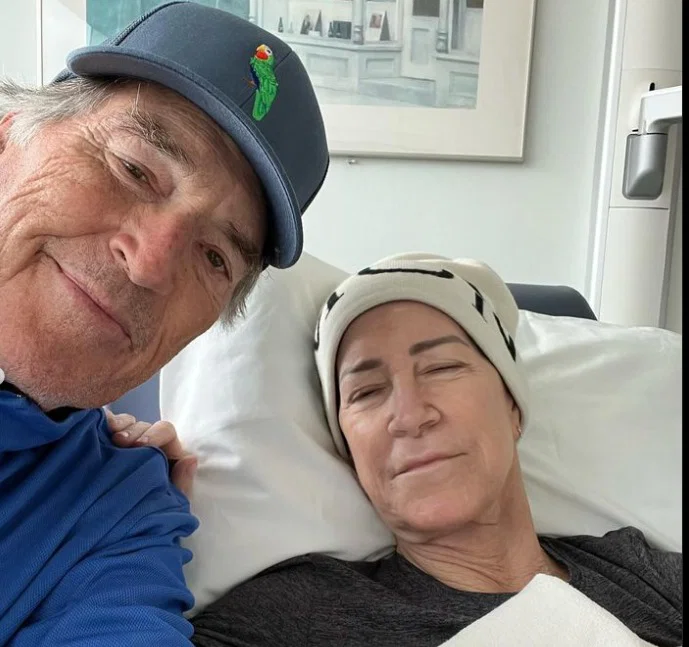
As the Netflix film begins, Evert’s ex-husband Andy Mill (below) makes a poignant statement that captures where the one-time bitter rivals stand today,
“They were battling a war forever on the tennis court. And now, in life, they’re trying to save each other” (Jenkins, 2026).
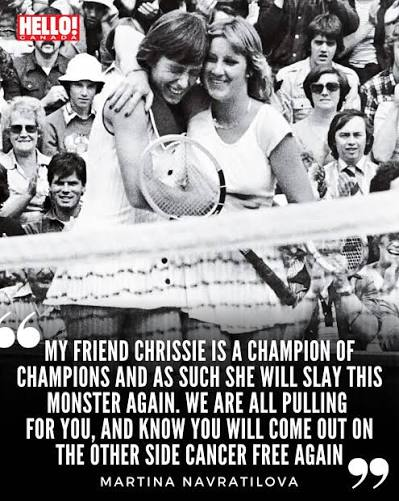
The saga of Chris and Martina continues with the two rivals joining together to combat a more insidious rival in cancer. I am hoping and praying that both Chris Evert and Martina Navratilova have many more chapters to write before their ‘final’ set. Martina expresses the sentiment that each of them has for one another.
Davies, N., & Fellows, A. (Executive Producers). (2023). Gods of Tennis: Martina Navratilova and Chris Evert. [TV series]. Mindhouse Production Company, BBC: London, UK.
[1] On March 22, 1973, Evert won their first meeting on the USLTA Tour in Akron (7-6, 6-3) while Navratilova prevailed in Chicago (6-2, 6-2) on November 13, 1988.
[2] Aside from a brief span when Tracy Austin was No. 1.
[3] Collins Dictionary defined equipoise as “a delicate harmony or a counterbalancing factor.”
[4] Navratilova became a more visible lesbian activist in the early 1990s and came out as gay in 1991 (Allen, 1997).
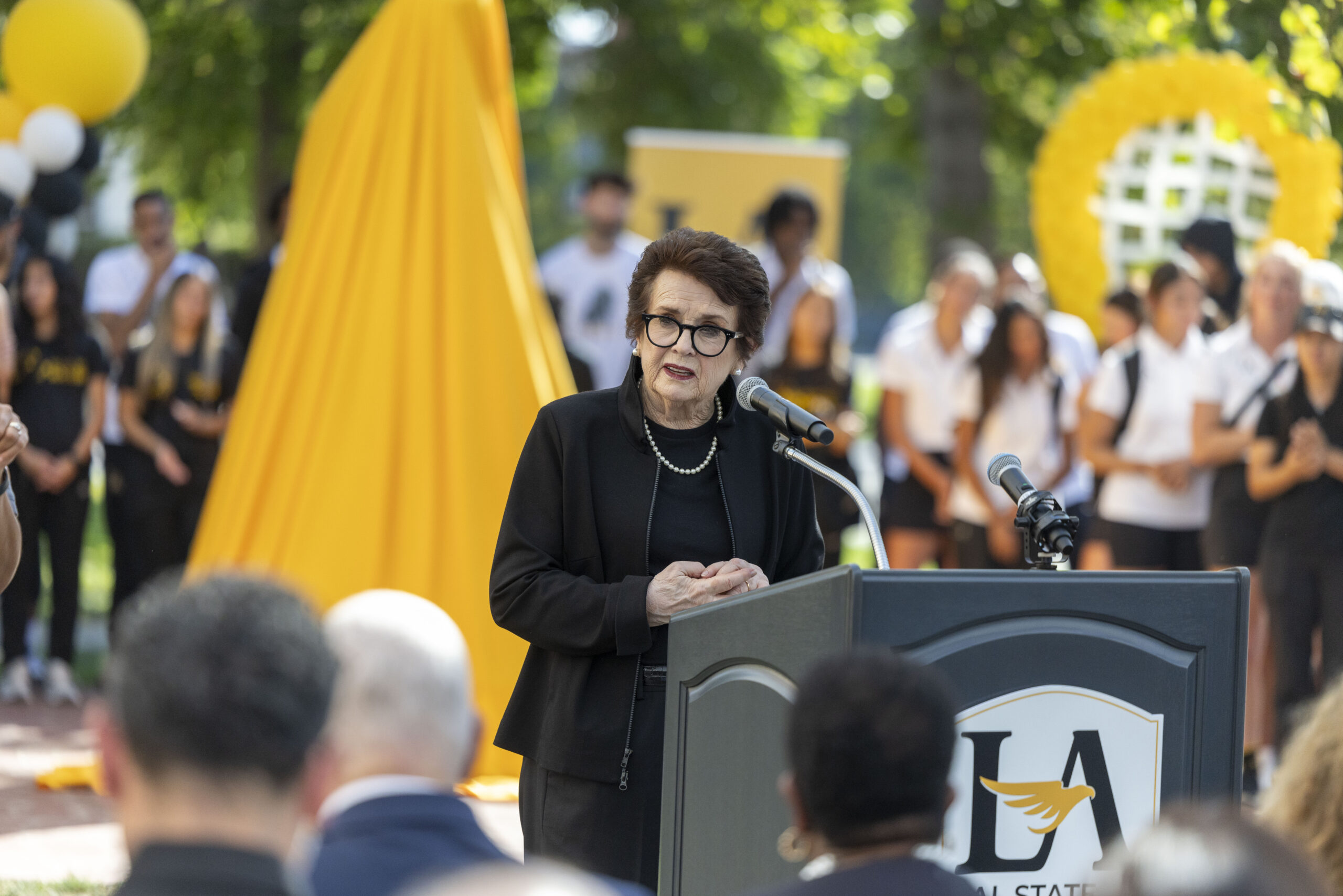
After attending Cal State-LA from 1961 to 1964, Billie Jean King completed History degree at age 82
By Dr. Nancy E. Spencer
Dr. Spencer is Professor Emerita at BGSU, having taught in the Sport Management program from Fall 1998 until Spring 2023. The main focus of her research is on sociological analyses of sports (primarily tennis), and includes articles on the Battle of the Sexes, the Evert v. Navratilova rivalry, and the Williams sisters at Indian Wells.
May 18, 2026
Imagine being a History Professor at California State-Los Angeles (CSULA) and learning that one of your incoming students made history herself as a member of the ‘Original Nine’ (in 1970) and earned plaudits for defeating Bobby Riggs in the 1973 Battle of the Sexes at the Houston Astrodome.
That would be pretty cool, wouldn’t it?
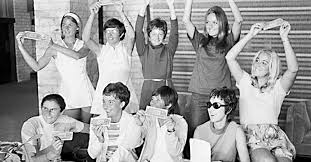
The ‘Original Nine’ featured: (counterclockwise, L-R) Judy Tegart, Kerry Melville, Rosie Casals, Gladys Heldman, Kristy Pigeon, Peaches Bartkowicz, Nancy Richey, Billie Jean King, and Val Ziegenfuss.
Now imagine that you are a freshly-minted Phd whose first job as an Assistant Professor begins in 1998 at Bowling Green State University. Among your first classes is the History & Philosophy of American Sports. ESPN has just featured a special about the “Battle of the Sexes” that occurred 25 years earlier. One of your colleagues (Dr. Ray Schneider) shares with you a videotaped program to present in your Sport History class. The week of September 20 (the 25th anniversary of the historic match), you show select segments of the program to your class of 60 Sport History students, none of whom even know about the event, and you tell them that you called lines for the match. You were a primary historical observer. That was how my first semester at BGSU began!
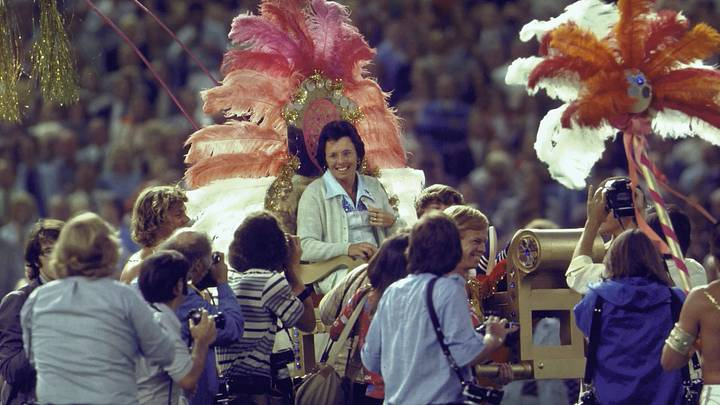
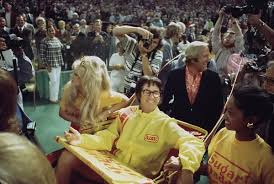
The ESPN Special revealed how the match was hyped – with King entering the court as the “feisty feminist,” and Riggs entering on a rickshaw as the “self-proclaimed male chauvinist pig.” Their rhetoric fitted perfectly with the zeitgeist. With “Women’s Lib” in ascendance, Gladys Heldman (who organized the ‘Original Nine’ and promoted the early tour) dubbed it “Women’s Lob.”
King entered court on a gold litter carried by four shirtless members of Rice University’s track team
Riggs entered the court on a rickshaw surrounded by “Bobby’s bosom buddies.”
Riggs, a former No. 1 and winner of Singles, Doubles, and Mixed Doubles at the 1939 Wimbledon, added to the hype with his rhetoric. Among his memorable comments were that women belonged in the kitchen and the bedroom, but not on the same court as a man. He also suggested that he would beat Billie Jean because she was a woman and women were weak physically and mentally.
At the end of class, having set out the ‘spectacular’ buildup to the match, a student raised her hand to ask, “Who won?” I had forgotten that the students had not heard about this event. Almost as an afterthought, I replied, “Billie Jean King.” A student in the back of the classroom raised his hand (I still remember his name – Greg Berkmeier) and asked, “Was it rigged?” I was shocked that anyone would ask such a question. “No,” I replied defensively.
Why would anyone even think that?
Only later did I discover that one of Bobby’s best friends, Jack Kramer, had written in his autobiography (Kramer & Deford, 1979) that Billie Jean won that match fair-and-square. Riggs had wanted to use the hype to promote a tour for 35 & over (senior) men’s tennis comparable to that which the PGA had. Given that objective, Kramer pointed out that there was no way he would have purposely lost that match. In the end, Riggs acknowledged that he had underestimated King.
King entered the match knowing that this moment, while meaningless in terms of rankings, had the potential to change hearts and minds. Frequently, she said that it was about ‘social change.’ She and others said that it provided evidence that a woman could compete against a man even in sports. The impact of her victory was credited with contributing to advances in women’s sports that aligned with the women’s movement.
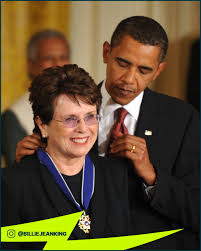
The same motivation that fueled King’s victory in the Battle of the Sexes and made her one of the most impactful leaders in the history of women’s tennis, also carried over to her pursuit of a college degree. Her parents had always emphasized the importance of education to Billie Jean and her brother Randy. Although they were no longer alive, King knew they would have been so proud of her accomplishment. She even rated it right up there with many of her tennis victories. Besides defeating Bobby Riggs in the Battle of the Sexes, King won 6 Wimbledons and a total of 39 grand slam victories in singles, doubles, and mixed doubles. In 2009, President Barack Obama presented King with the nation’s highest civilian honor in recognition of her lifelong advocacy for women’s equality and civil rights. King sought to see inclusivity based on gender, race, and sexuality. After being ‘outed’ in 1981, she initially denied that she was gay, but later came out as a lesbian and became a staunch advocate for LGBTQ+ rights.
President Obama awards Billie Jean King with Presidential Medal of Freedom
In one of the the favorite parts of her coursework at CSULA, King participated in a program for the school’s Prison Graduate Initiative (PGI). In 2016, the PGI became “the first and only BA program to be designated a Second Chance Pell (PEP) site in California, and it was the first bachelor’s degree program in California to award a BA degree to incarcerated students.” According to USA Today’s Cydney Henderson (2026), King “gave a commencement speech for the first graduating class at the California Institution for Women in October.” She also spoke to inmates at a women’s prison and two men’s prisons, acknowledging that it was a life-changing experience.
Since Billie Jean King first came on the tennis scene as an ebullient tennis player in the 1960s, she has focused on effecting social change. She sees her most recent accomplishment as something that might inspire future generations, including ‘nontraditional’ students who might decide to go back to school at a later stage of their lives. Being a non-traditional student who received her Phd at 47, I can appreciate her influence on those who have doubts about whether they could succeed. As an educator, I would have loved to have a grad student older than me who returned to school on such a mission – whether or not she made history herself, as King did.
CAPTION: 2026 Winter Olympics in Milano-Cortina, ITALY
Maxwell Media Watch Collaborative: Charlotte Boisvert, Brenna Orton, Elise Williams, Meredith Flaherty, and Nancy Spencer
February 18, 2026
At tonight’s meeting of the Maxwell Media Watch, we welcomed Dick Maxwell, who is the namesake of this site. Mr. Maxwell began our round table discussion by encouraging us to write about sports we’ve been watching recently on TV. Two students (Elise and Charlotte ) provided their observations about figure skating and/or men’s hockey. Another student (Brenna) has been following the WNBA salary negotiations and is interested in the Unrivaled women’s basketball league. This entry provides student and faculty members’ insights into their impressions of the 2026 Winter Olympics in Milan-Cortina (ITALY). Two faculty members describe their observations of the 2026 Winter Olympics as well as of previous Games. Future collaborative articles will examine our reflections on the WNBA negotiations as well as the Super Bowl Halftime show.
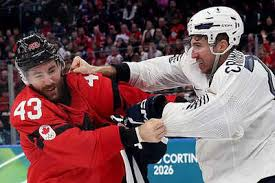
Charlotte Boisvert: Personally, I have kept up with Men’s and Women’s Olympic Hockey. During the France and Canada men’s Olympic hockey game on Feb. 15, France’s Pierre Crinon had been suspended by France from subsequent games for fighting Canada’s Tom Wilson.
It is important to note that Olympic hockey follows IIHF or International Ice Hockey Federation rules instead of NHL rules; these rules prohibit fighting within a hockey game. Crinon had broken IIHF Rule 46, which states: “Fighting is not part of international ice hockey’s DNA. Players who willingly participate in a brawl or fight, so-called willing combatants, shall be penalized accordingly by the referee and may be ejected from the game. Further Supplementary Discipline may be imposed.” The NHL differs, letting players finish a fight before a major penalty of five minutes is assessed.
The fight was unsportsmanlike, resulting in a suspension for the remaining games.
Wilson is currently one of the NHL’s strongest defensive players we see in the league, so it was no surprise that he took on the fight naturally. It is second nature for Wilson to drop his gloves when it comes to defending his teammates, in this instance it was Nathan MacKinnon, who had scored on the powerplay against France. Most players were all for Wilson dropping his gloves, because it was hardly a physical fight, mainly roughhousing.
CAPTION: Tom Wilson ignites rare Olympic Hockey Fight
Crinon plays for the IIHF, so he knows these rules well, which is why this is so interesting to see this happen. He’s played by these rules his entire career and knows he could get penalized for it, so it could have been surprising to some when it comes to him going against Wilson.
Olympians are meant to be seen as respectable athletes, which is why they stray away from fights like these. It can stir up controversy when people should be focusing on the game instead. Crinon fighting Wilson was not to the standard of an Olympian and could taint the image of his country, so France had every right to suspend him when it came to Olympian standards.
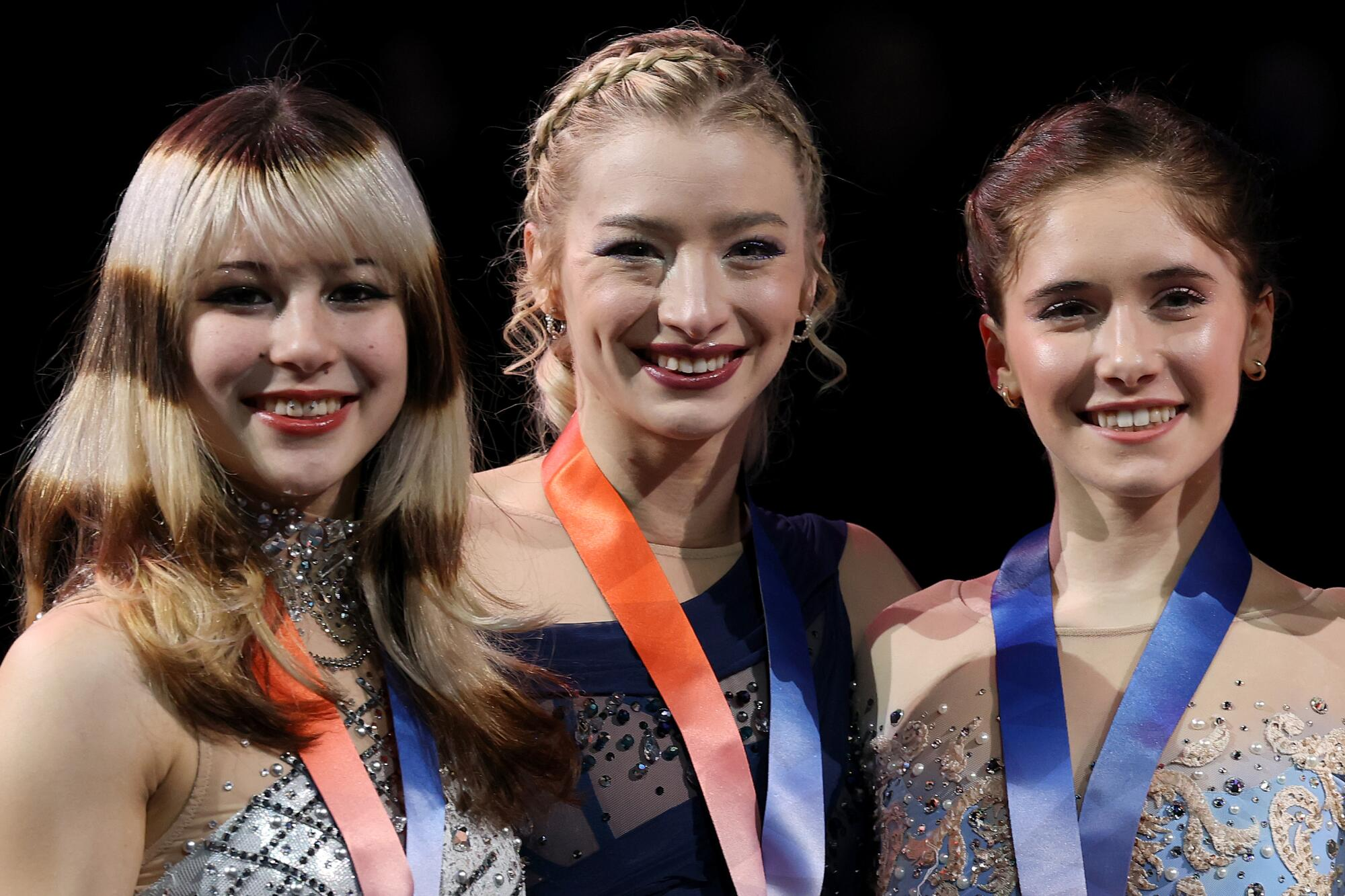
Elise Williams: I’m watching figure skating and curling, interestingly enough. It appears that many people tend to forget that curling is a sport until they turn on their TV once every 4 years: I know I did. The few people I have talked to share the sentiment. It’s been very fun to watch the 3 Team USA figure skaters, Alysa Liu, Isabeau Levito, and Amber Glenn.
CAPTION: (L-R) Alysa Liu, Amber Glenn, and Isabeau Levito, U.S. Olympic Figure Skaters
Levito’s short program dedicated to Sophia Loren was stunning, and I loved Liu’s showing of Promise by Laufey. Amber Glenn is probably my favorite though, from the many videos of her previous routines that I have watched. It hurt to watch her fall so far in the short program. All three Team USA figure skaters skate with such joy and whimsy in their stride, and look so relaxed out on the ice. Liu commented on it, saying she didn’t want her program to end.
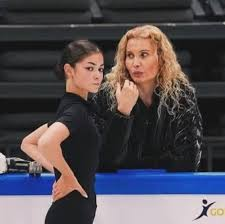
The story of Adeliia Petrosian has also been interesting, considering she is coached by the same person who coached Kamila Valieva, Ana Shcherbakova, and Alexandra Trusova in 2022: Eteri Tutberidze.
She is notorious for being incredibly hard on her young students, and many of them don’t end up competing again after the Olympics. Petrosian did decently well in the short program, taking 5th. I worry for her and the inevitable Hurricane Eteri if she doesn’t win gold. Another skater I have been watching is Kaori Sakamoto, and how this is her last Olympics. She took bronze against the 3 Russians in 2022, and is one of the favorites for gold this year. Her costume for the short program was beautiful, so I’m hoping to see some more beautiful skating from her as she makes her exit. Finally, shout-out to Sturla Holm Laegrid, who openly admitted to cheating on his girlfriend of 6 months in a post-competition interview, unprompted. Really strange. Hope she finds peace. Overall, figure skating has become a new interest of mine, and I hope to follow it more outside of the Olympics.
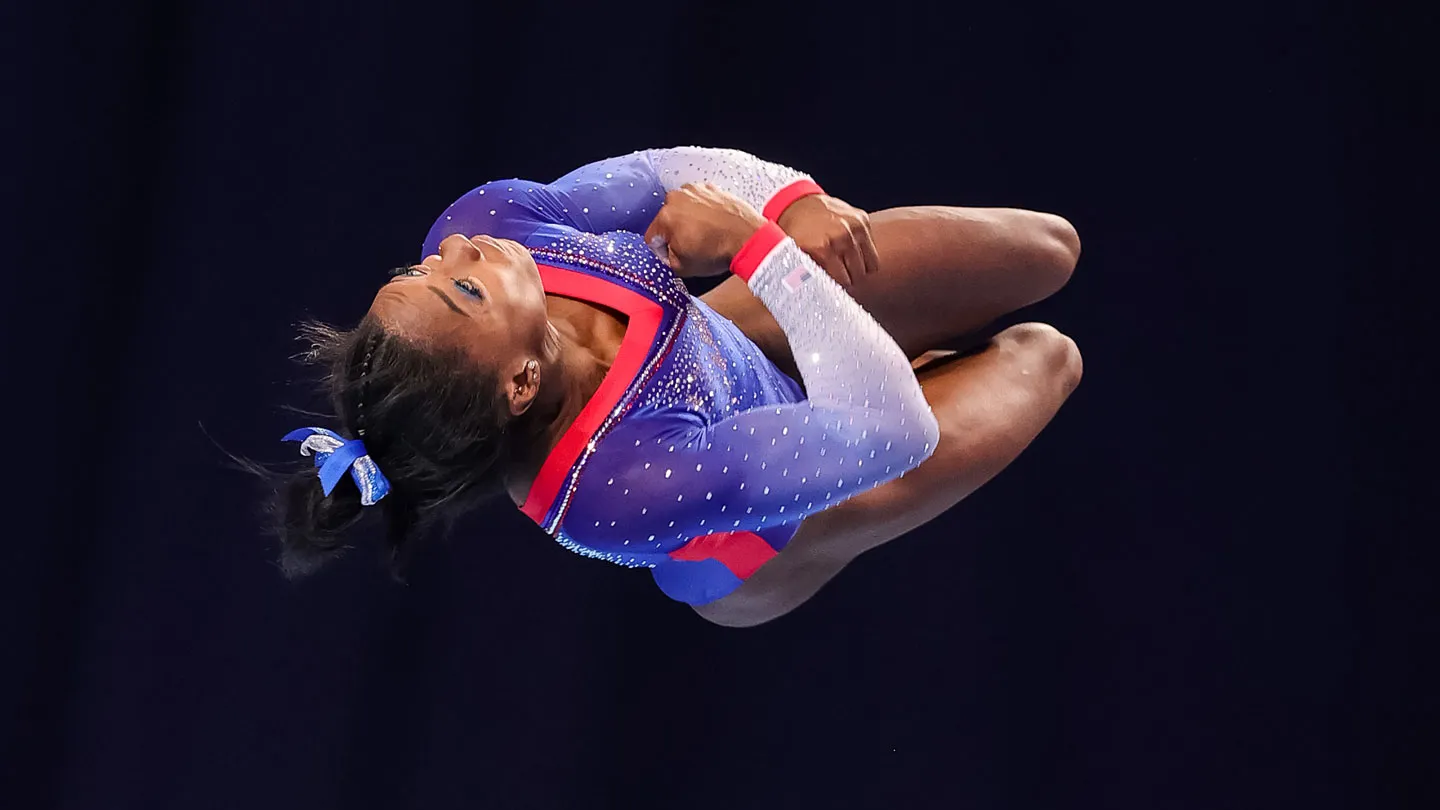
Dr. Meredith Flaherty: I have been watching the Olympics to help me cope with the end of football season. The storylines and national identities that get played up fascinate me. I have been particularly interested in how athletes express their shattered hearts when the Olympic dream doesn’t come true. I remember Simone Biles running into “the twisties” during the summer Olympics and the blow-back she got from admitting that she didn’t feel ready to compete.
CAPTION: Gymnast Simone Biles (pictured) did twisting rotations, flips and other amazing moves at the June 2021 U.S. Olympic trials in St. Louis, Mo. Then she got the twisties at the Olympics in Tokyo, Japan. As a result, she pulled out of several events.
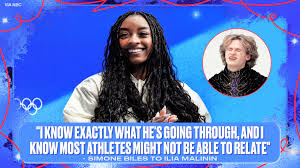
Fast forward to Lindsay Vonn’s crash. that many attributed to trying to be too big for the sport by deciding she was ready to compete despite her injuries. I wonder how those two athletes would be characterized if they “blew it” in their primary performance, like Ilia Malinin said he had, or Atle Lie McGrath, whose error had him spiraling into a walk to the woods when he didn’t win gold.
CAPTION: Norway’s Atle Lie McGrath walks off the course after skiing out during an alpine ski, men’s slalom race, at the 2026 Olympics in Bormio, Italy, Monday, February 16, 2026.
How athletes deal with pressure, or I should say show the effects of pressure, is a story of its own. But how the public reacts to what athletes do, and how legacy media presents it, have me questioning what fans “love about the Olympics.” The reaction to Malinin owning his failure was a stark contrast to the reactions Biles received for taking ownership for her mental health and risk in competing. Lindsay Vonn wasn’t given any grace for choosing the opposite.
Shows of emotion around catastrophic heartbreak on the world stage, aren’t specific to sport, or speed, or age, or competition. But how women athletes choose to compete, how they show emotion, or what they do in their own best interests as an athlete don’t get the same degrees of freedom that the men athletes do.
Dr. Nancy Spencer: After watching two weeks of Australian Open tennis matches, I wasn’t sure if I could embrace another fortnight of drama. Plus I didn’t come in to this year’s Games knowing many of the young Olympians. I was fascinated to see how the ‘Quad God’ would do with all the hype surrounding his talent. When he fell in his bid for gold, like Meredith, I thought of Simone Biles. A few days later, I read that the two had met up and considered it a good thing.
My first Olympic adventure came in 2002, just five months after 9/11. As a result, organizers of the Salt Lake City Olympics considered not allowing fans to attend but contemplated televising the events with empty stadiums. Many countries also “feared for the safety of their athletes and were reluctant to send them” (Davidson, 2018, para. 2). Security concerns may have dissuaded some ticket holders from attending the Salt Lake City Games, which worked to our advantage. Since my brother lived in SLC, I had a place to stay and family with whom to attend events. Best of all, because of security concerns, reduced ticket prices allowed us to attend more events, including cross country skiing, two women’s hockey games (one featuring the U.S. and another with Canada), downhill skiing, and luge. It was a once-in-a lifetime opportunity and I am grateful to have been there for the winter Olympics. Ten years later, I had the opportunity to attend the London Olympics, where I witnessed Serena Williams win the gold medal in Women’s Singles.
Nancy Spencer is a professor emerita who taught in the Sport Management program at BGSU for 25 years. Her focus was and continues to be on women’s professional tennis.
July 11, 2025
How unusual is this?
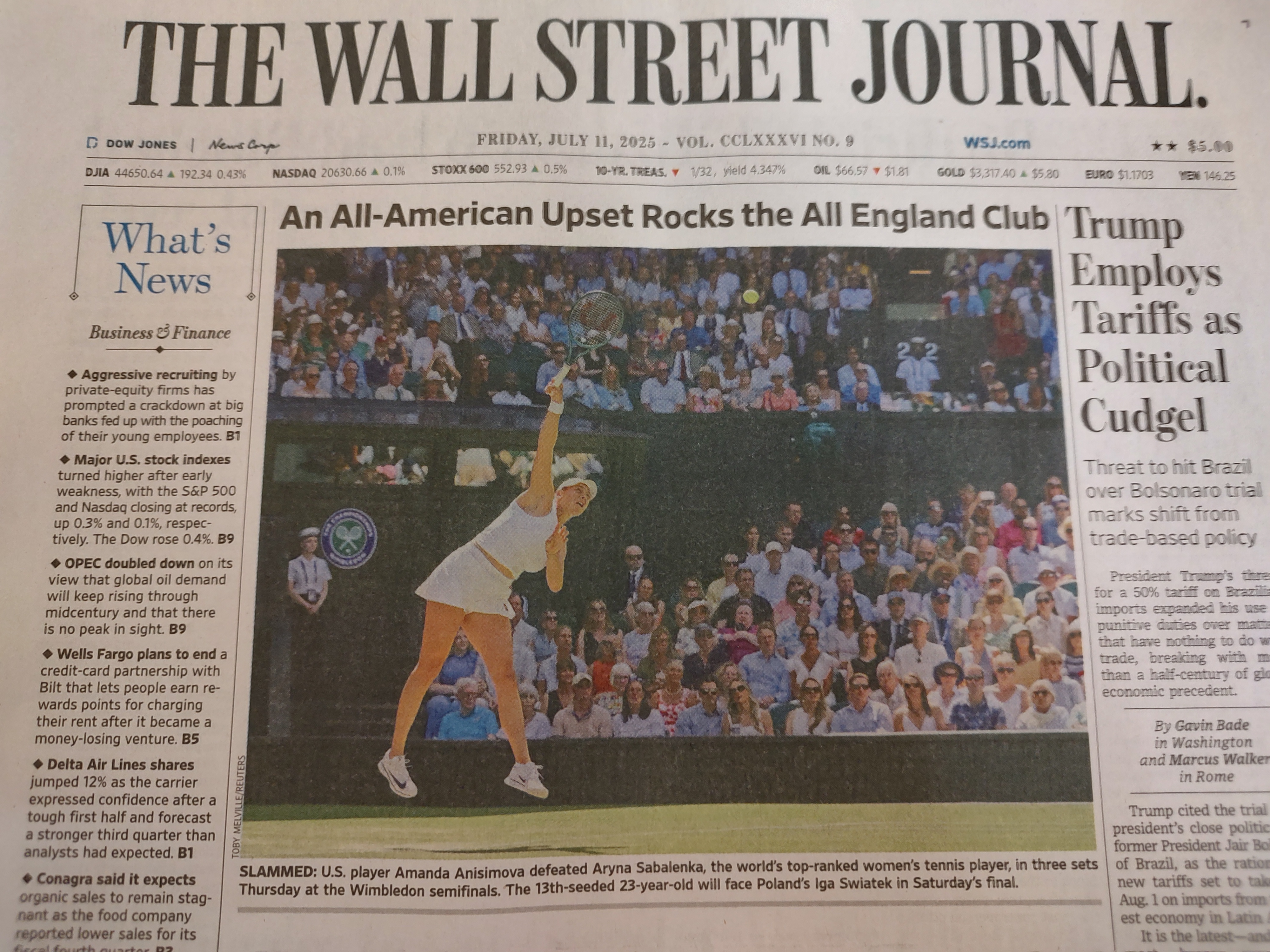
I usually don’t buy the Wall St. Journal but this one caught my attention because of the photo featured front and center!
The caption read: “An All-American Upset Rocks the All England Club“
So I put down $5.00 to buy it, in anticipation of reading an accompanying article that might explain why Amanda Anisimova appeared on the cover!
Only, there was no article attached, unless I had a subscription, so I paid for a 1-year subscription (at a reduced rate). There was another article about Billie Jean King’s transformation of women’s tennis (Bobrow, 2021), so I reasoned it would be worth the investment. After all, isn’t the Wall St. Journal about investments?
I wanted to discover what made Amanda Anisimova’s story compelling enough to feature on the front page of the WSJ. If you follow tennis, and/or watched the semifinal match that she played against Sabalenka (the No. 1 player in the world), you know that two years ago Anisimova took a break from tennis due to burnout. Joshua Robinson (2025) called her “a textbook case of the American tennis phenom who burned out” (para. 1).
Similar to other young phenoms, Anisimova rose quickly to the pinnacle of junior tennis, winning the Girl’s U.S. Open at age 16 (defeating another up-and-comer named Coco Gauff), and she reached a grand slam semifinal before turning 18. That would have been enough pressure, but then her father passed away and that “only deepened her doubts about life in pro tennis” (Robinson, 2025, para. 2).
Two years is a long time to be away from any professional sport and Anisimova had her detractors who warned that she could never come back at a high level if she stayed away too long. But she listened to what her body and mind were telling her and she is now in the midst of a dramatic return. It hasn’t all been positive. A year ago, she ranked outside the top 400 and had to play in the qualifiers at Wimbledon. She did not even make it to the main draw. But since then, she has made improvements to her game as the results are now showing.
Anisimova’s story is not just about her triumphant moment, but about the growing presence of U.S. women among the top-ranking professional women tennis players. American women occupy 4 of the top 10 rankings, including: Coco Gauff (#2), Jessica Pegula (#3), Madison Keys (#8), and Emma Navarro (#10). Anisimova is currently ranked #12 but could climb to as high as #5 if she beats Iga Swiatek in the final.
In tomorrow’s final, Anisimova will face a player she has never played, Iga Swiatek, winner of 5 grand slam titles. Her most recent title came in 2024 when she won her fourth French Open title; this will be her first Wimbledon final. Swiatek has several things in her favor – experience (she spent 122 weeks at No. 1), and she has won all five finals that she reached. If she wins tomorrow, it will be her 100th match victory at a grand slam tournament. So far at Wimbledon, she “has won 78% of her first-serve points,” which should give her confidence going into the final (Garber, 2025, para. 16).
On the other hand, Anisimova has momentum after beating the current No. 1 player in the world. Her break from tennis has given her a renewed optimism and appreciation of playing tennis at such a high level. And there is this – she has 28 straight match victories when she won the first set (Garber, 2025).
Whatever happens in tomorrow’s final, there will be a newly-crowned champion. Based on experience, I have to give it to Swiatek, but given Anisimova’s momentum, I cannot rule her out. That is a match I do not want to miss! Hopefully, you get to see it too!
Brady Shick is from Sagamore Hills, Ohio and recently graduated from Bowling Green State University. He is currently seeking opportunities to pursue a career in Baseball Operations.
July 7, 2025
Every team in Major League Baseball (MLB) looks for a way to get a foot up on their competitors. In past drafts, teams have taken high school prospects higher than they are projected and try to sign them away, with more money than projected, from the college for which they committed to play. One of the most common ways and most controversial is through service time manipulation. Service time is a value system that equates the number of days a player spends on the active 26-man roster for each Major League team. Service time is then used to determine when a player reaches arbitration with his respective club. Small market teams are normally the main culprits of manipulating their players’ service time, but almost always headlined each season by the Pirates. The most common way to manipulate is through the Super-2 deadline and the debuts of top prospects.
The Super-2 deadline normally takes place in the end of May or beginning of June every year and is the cutoff date for players to gain an extra year in which they are arbitration eligible, which normally takes place after three years of service time. If a player is in the top 22% of service time compared to those in their rookie class, they gain an extra year where they can go to arbitration to make more money during that season. If teams wait to call up a prospect later they can save money to use in free agency.
Teams like the Pirates constantly use this strategy with examples being Gerrit Cole, Austin Meadows, Tyler Glasnow, and most recently Paul Skenes. Notable stars called up after the deadline include Bobby Witt Jr (Kansas City Royals), Byron Buxton (Minnesota Twins), Elly De La Cruz (Cincinnati Reds) among others. Most of these players eventually went on to free agency, signing with other teams or being traded prior to reaching free agency.
2025 and Super-2
Within the last week, Major League Baseball has seen two of their top minor league prospects come up to the big leagues in Jac Caglianone (Royals) and Roman Anthony (Red Sox). Caglianone, a former two-way player, hitting and pitching at the University of Florida, has dominated across both AA and AAA levels in the minors. This was all while learning a new position (right field). Caglianone made his Major League Debut without playing a full season in the minors and after dominating in the lower levels.
On the other hand, Roman Anthony has been as dominant as anyone in the minors this season batting .288 with 10 homers in 58 games. He was also the top prospect in all of Minor League Baseball’s second visit to Triple-A. Many scouts across the industry were perplexed as to why he hadn’t gotten the call to the big leagues yet. Major League executives were less confused on his arrival time to Boston. By holding Anthony until this time of the season the Red Sox let the Super-2 deadline pass and gained an extra year of pre-arbitration control on Anthony. All of this was done for the Red Sox to save a few extra bucks while continuing to fall out of the division and wild card standings.
The Red Sox aren’t the only team following this practice. The second ranked prospect in the minors, Bubba Chandler (Pirates), is currently pitching in Indianapolis. The Pirates have called up three other pitching prospects from Triple-A all of whom were on staff with Chandler and none of whom have pitched as well as he has. This is just another instance of the utilization of the Super-2 deadline for baseball.
Dying Practice
Many fans will remember that the 2022 MLB season was delayed due to a players’ strike. One of the largest gripes by the Players Union was the service time manipulation by front offices across the league. Finally, after three plus months of a strike both the owners and players agreed on a new collective bargaining agreement with this issue somewhat resolved.
The solution was for owners and front offices to be incentivized to call up their top prospects at the beginning of the season. If a top prospect makes the Opening Day roster and then wins his league’s respective Rookie of the Year award, that team receives a pick after the first round in the next draft. A team will also receive an extra pick if that prospect finishes in the top three of the Cy Young or MVP awards before he reaches arbitration. However, a team is only eligible for one pick each draft and each player’s success can only be responsible for one extra pick. Since the inauguration of this rule, the Orioles and Mariners have benefitted with Adley Rutschman finishing second in the Rookie of the Year race in 2022 and Julio Rodriguez winning Rookie of the Year that same season.
This new system also can have negative consequences for front offices. Last year’s National League Rookie of the Year did not make the Opening Day Roster for the Pittsburgh Pirates. Had Skenes been up since day one, the Pirates would have received an extra pick in this month’s draft, but due to the new rules this wasn’t the case. Additionally, because Skenes won Rookie of the Year he was awarded a full-year of service time and the Pirates lost the extra year of pre-arbitration they were fighting to maintain.
Future of the Super-2
Service time manipulation has been a big issue for years within the MLBPA and it looks like a better solution is coming. Potentially, long gone are the days of prospects not making their debuts until early to mid-June thanks to the potential for an extra draft pick. However, baseball might be the hardest to predict a prospect’s future. There are plenty of guys that take a year or even a couple to figure out the big leagues. With so much uncertainty teams and front offices will continue to find ways to lengthen their competitive window and service time manipulation is the most accessible. But for the fans hopefully they can see a Travis Bazzana (Guardians) or a JJ Weatherholt (Cardinals) on an Opening Day roster.
Lily Smith is a second-year undergraduate at BGSU from Oregon, Ohio. She is majoring in Sport Management with a Marketing minor. In her spare time, she is an intern in the BGSU Athletics Marketing department, a BGSU Campus Tour Guide, and an avid reader. She is passionate about all things women’s sports, and all things women in sports.
Just about a month ago, I returned to campus from my trip to New Orleans for Super Bowl LIX. I went on the trip with 23 other members of the BGSU Sport Management Alliance (SMA). We travelled to New Orleans, Louisiana to work various different events surrounding Super Bowl LIX.
Super Bowl LIX logo in front of the Caesars Super Dome
Day 1: Travel Trauma
Our first day of the trip was mainly a travel day. Our flight to New Orleans had a short layover in Denver. Although we were only in the Denver airport for about 30 minutes, I still got to see the mountains for the first time.
A photo from our gate at Denver International Airport. A photo from our gate at Denver International Airport.
Things turned downhill after landing at Louis Armstrong New Orleans International Airport. From our flight into Denver and then into New Orleans, I ended up getting altitude sickness from the rapid elevation change. Due to the traumatics of those few hours, I don’t remember much of our arrival into New Orleans. I know we did get to our hotel around 5pm, and I received about 30 phone calls from my mom making sure I was still alive.
The rest of the group was able to go to Opening Night, which from my understanding was similar to the Opening Ceremony at the Olympics. I stayed home and tried to recover from the day. They were able to see players, hear interviews, and overall celebrate New Orleans, and Super Bowl week.
Day 2: Beignets and Exploring the City
After about 12-13 hours of sleep, a very long, very hot shower, and a Pedialyte, I was finally back on my feet, sorta. It is Tuesday now! The only thing we had scheduled for the day was training for one of our upcoming shifts. We were able to pick up our required credentials for the NFL, and our uniforms for the events we were working.
We were also able to go to Cafe Du Monde in the French Quarter and try some fresh beignets. Let me just say, they are delicious. Beignets are definitely something I am not going to eat outside of New Orleans, nothing will compare. We were able to do some small sightseeing, and just take in the overall experience of New Orleans. We went to Louis Armstrong Park, and then did a little shopping at the Nike Store. Then we went back to the hotel to change and refresh for dinner. I got that beautiful plate of shrimp alfredo pictured below.
Beignets at Cafe Du Monde.Louis Armstrong ParkShrimp alfredo at Katie’s Beignets at Cafe Du Monde
Day 3: Botanical Gardens and First Shift
The next morning, we went to the City Park Botanical Gardens. It was very pretty in the gardens, and they had a lot of fascinating art and sculpture installations. The gardens had this precious cat, who did not want anything to do with us, but was very cute sunning itself.
After some fresh air, we headed to the New Orleans Ernest N. Morial Convention Center to work our first shift at the Super Bowl Experience, presented by Panini. The first day, some of the other members of SMA and I worked the 40 yard dash for the kids’ rendition of the NFL Combine. We had a turf area that had 40 yards marked off, including a finish line and a foam area for participants to dive into at the end. Lots of kids wanted to race their friends and siblings. We also had adults and teenagers wanting to get in on the fun as well.
One of the main components of the whole event was making sure attendants of the event had the NFL OnePass app. This was their way of signing a waiver for the different games, but also a good way for the NFL to track participation rates. At each activation, attendants had to scan their app, so a lot of my job at the 40 yard dash station was making sure participants were ready to go before the race. It was definitely a learning curve for the fans, and myself.
Kitty!!!Botanical GardenThere were so many cool plants at the gardens. Things we would never see here in Ohio.
Day 4: LSU and Kylie Kelce
The next day, we went on a visit to Louisiana State University. This was one of my favorite things we did on the whole trip. In one of my previous entries, I did a deep dive on LSU’s Kim Mulkey. She is the head coach for their women’s basketball team. At the visit, we were able to see their basketball arena, the women’s locker room, and some practice facilities. Overall, you could feel the energy in those buildings. As a fan of women’s basketball, this was a magical experience for me. We were also able to go onto the field in Tiger Stadium, and see the whole LSU Football experience. It was amazing to be walking around a campus that in the past and even currently, has had so many legends of the sport industry walking around it as well.
Here I am on the field in Tiger StadiumInside the PMAC (Pete Maravich Assembly Center)Pete Maravich Tribute Women’s Basketball Practice Space
After our visit to LSU, my group and I were able to go into the city and go to the Super Bowl Experience as fans. Some of the other students had shifts working at the airport volunteering with the Host Committee, but the rest of us took time to do homework and explore the city. While we were walking to the entrance of the convention center from our parking lot, we happened to meet Kylie Kelce! This was so exciting to me, as I have become a fan of hers in the last year or so. She was so nice, and definitely the best “celebrity” encounter I have ever had, not that I have had too many though. While exploring the event for ourselves, we were able to see Micah Parsons (Dallas Cowboys) and Drake Maye (New England Patriots) playing pickleball. This was a really cool activation put on by the sporting equipment brand Franklin, and their owners.
Meeting Kylie KelceDrake MayeMicah Parsons
Day 5: The Lombardi Trophy
On Friday, we had another shift at the Super Bowl Experience. This time, I worked the Lombardi Trophy area. This was one of my favorite things I did the whole trip. It was so surreal to be around the trophy and seeing fans interact and take pictures with it. The Lombardi Trophy is such an iconic symbol of the Super Bowl and the empire that the NFL has built.
Up close shot of the trophyPosing with the trophy
Day 6: Our Last Super Bowl Experience Shift
After a long shift being at the Lombardi Trophy’s best friend, we went back to the hotel and got some much needed rest before some free time and then another shift at the Super Bowl Experience. This day, I worked some of the pickle ball events I mentioned earlier. I was not able to take any pictures this day, so I don’t have anything to show for that part of my shift. Halfway through working pickleball, I got moved to a different station where I was working another photo opportunity. This was hands down my favorite thing I worked at the Super Bowl Experience. It was a big SBLIX logo that fans were able to sit or stand on, and take pictures with. It was amazing because I got to connect and talk to so many people. I was able to speak with locals, who thought I had an accent, but also people from all over the country (and the world!) who just shared the love of football.
Day 7: Super Bowl Sunday
After losing my voice and a good night’s sleep, we were off to the game day shift! Our day started bright and early when we had to go to our parking and credential pickup site. All of the credential pickups we did throughout the week were so high tech in terms of facial recognition. It felt like I was in some sort of other reality. We were then shuttled into downtown New Orleans, where our staffing hosts fed us brunch and gave us training reminders for our upcoming shift.
After our bellies were full of delicious local food, we were sent out for our shift. I was stationed on Poydras Drive, which was one of the main entrances into the stadium. My job was helping people with directions and just answering general questions. There were several different tailgate groups that either came with tickets or were a premium, so we had to help guide patrons to those events. One of my favorite things from this time was starting famous E-A-G-L-E-S chants with Eagles fans. Some of the other BGSU people were stationed with me, so we were trying to count all of the NFL teams’ jerseys we saw walking into the game. We did end up seeing all 32 teams represented!
A few hours into our shift, things got cut short due to weather and safety concerns. We had to go back into our home base for our staffing hosts, but were able to watch the game together as a big group of volunteers. After things cleared up, we were able to take pictures in front of the Super Dome just before halftime.
Day 8: Tulane University and Seafood Boil
Monday morning, we had a visit at Tulane University and their athletic department. Tulane had such a cool campus since it is right in the heart of New Orleans. We were able to meet with some of their operations staff and see some of their facilities. The Chiefs had actually practiced on their iconic blue turf football field before the game, so everything was being torn down due to the extra security measures put in place. The Chiefs also requested to practice on real grass, so they had to put a floor down over the blue turf and then put all the pieces down for it to be a grass field.
Turchin Stadium for Tulane BaseballSome of their trophies and jersey combinationsRemoving the grass field
Later that day, we returned to the hotel to start to pack up and rest before our travels home. To round off our time in NOLA, we decided to get a seafood boil. This was one of my favorite things I ate the whole trip. We got a standard boil, but got calamari, frog legs, oysters, and hush puppies on the side.
Digging in The group enjoying our food
Day 9: Travels Home and Last Thoughts
Our last day we woke up, packed up our hotel rooms, and headed off to the airport. After a long day of travel, we landed back in Detroit around 10pm Tuesday night. Overall, I had a great time getting to experience such a great city. Working Super Bowl LIX is something I will never forget, and it truly was a once in a lifetime experience. I learned so much, and I will cherish these memories and knowledge forever. I am so thankful to BGSU and the Sport Management Alliance for making this experience possible for me! I will cherish it forever!
Brady Shick is from Sagamore Hills, Ohio and recently graduated from Bowling Green State University. He is currently seeking opportunities to pursue a career in Baseball Operations.
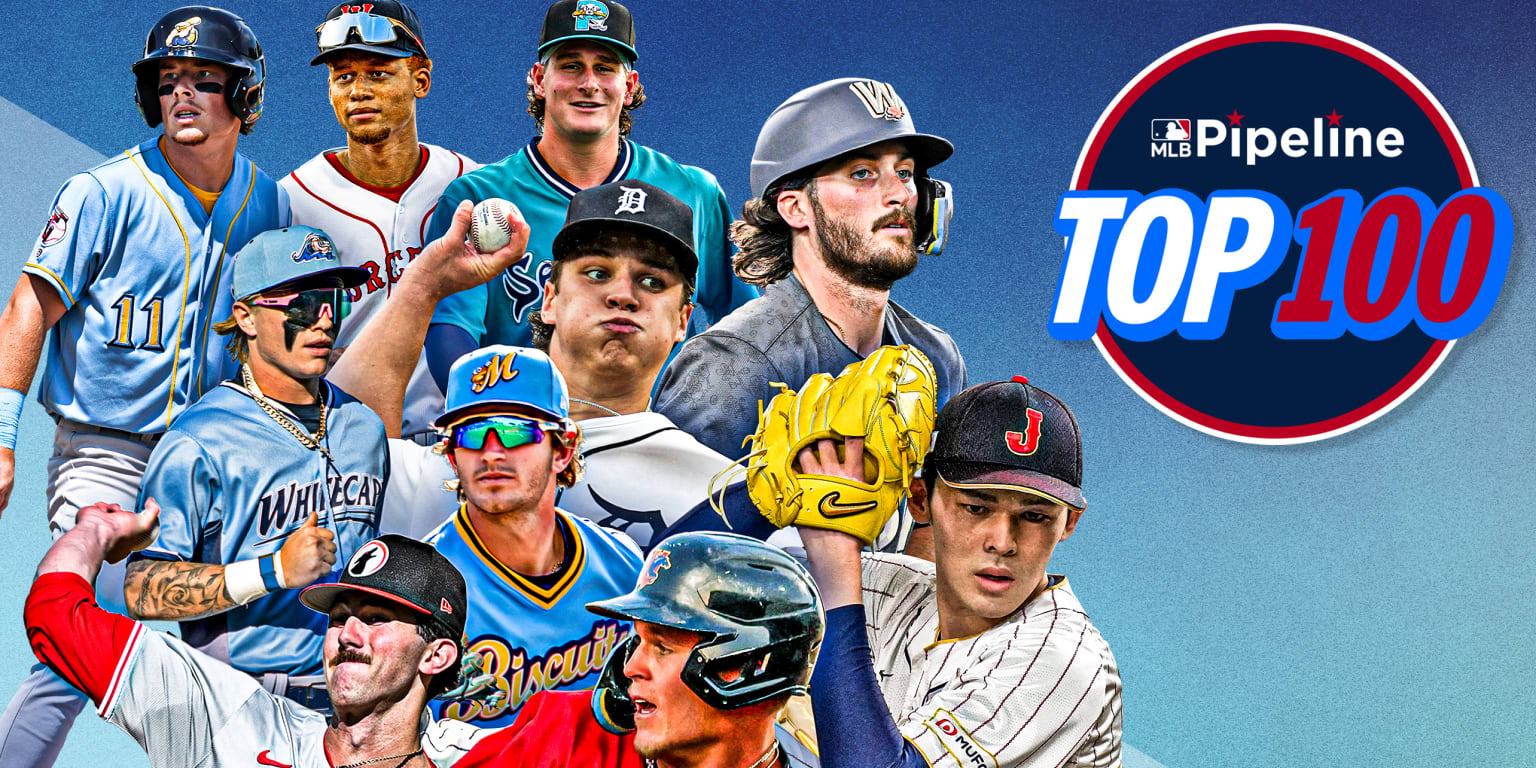
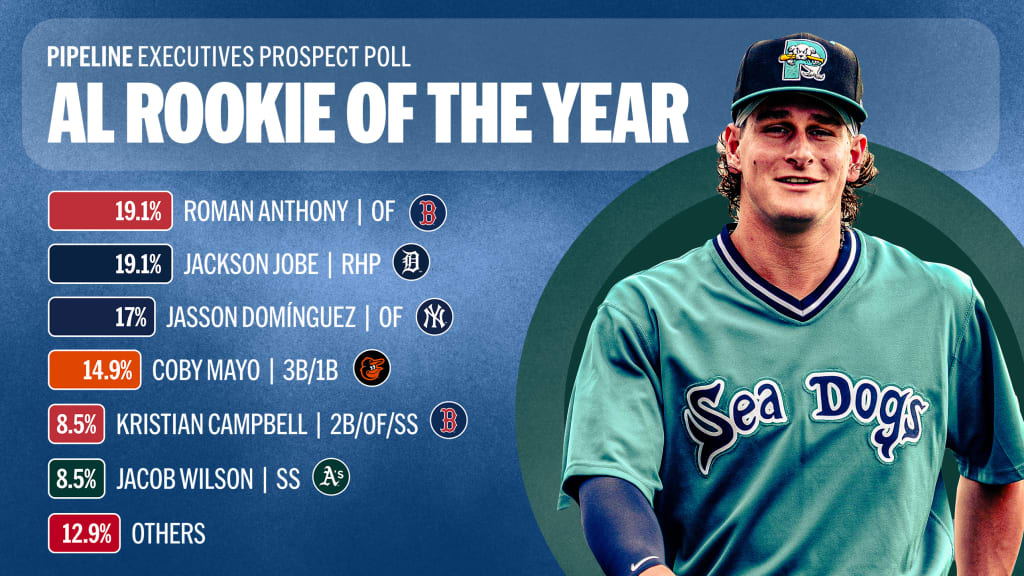
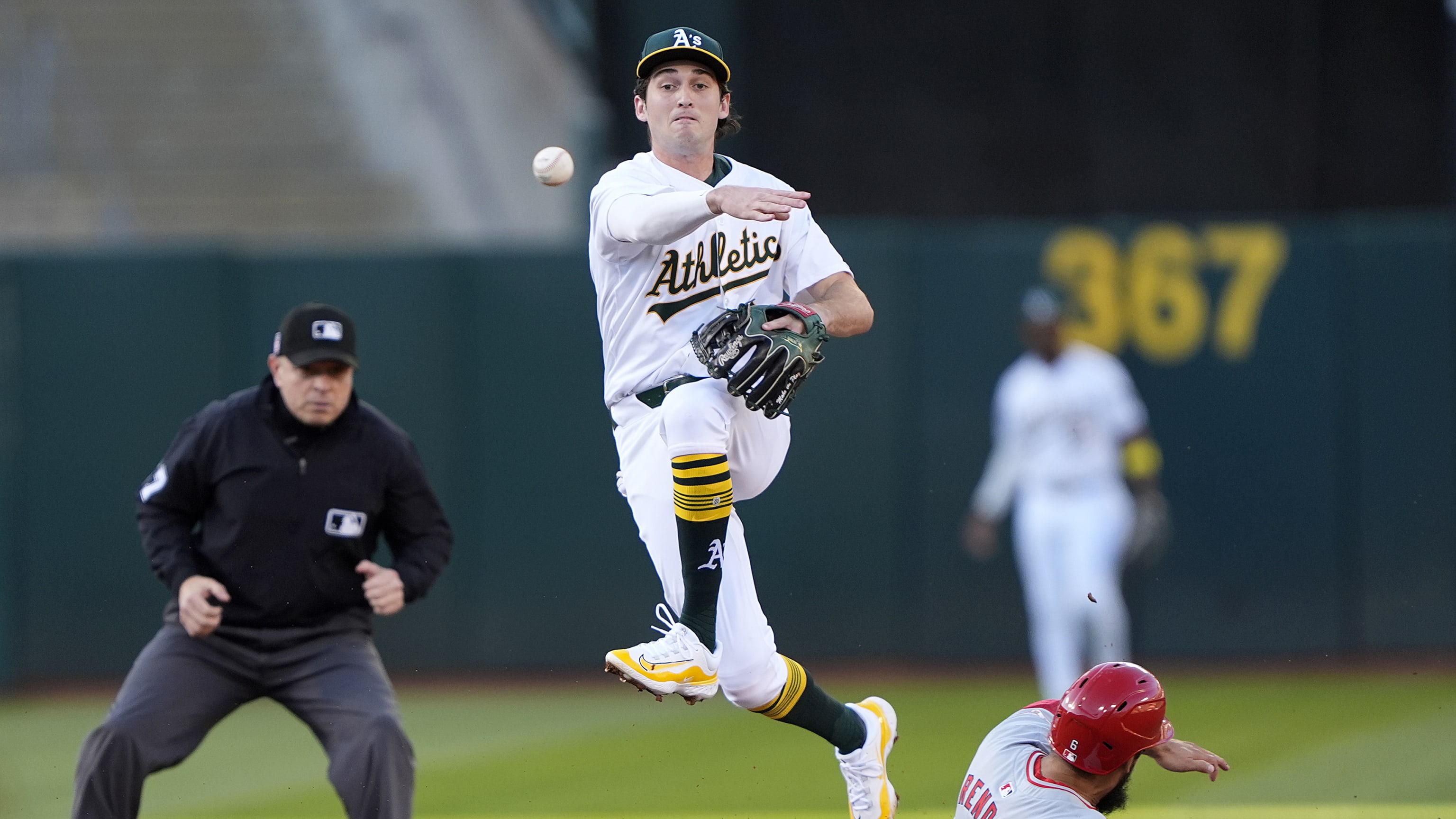
While the 2024 National League Rookie of the Year race was the more entertaining between the two leagues, 2025 brings a fresh breath of talent to the American League. Each of the players below are the top prospects for their respective clubs with two of the prospects likely to make the opening day rosters.
Favorites
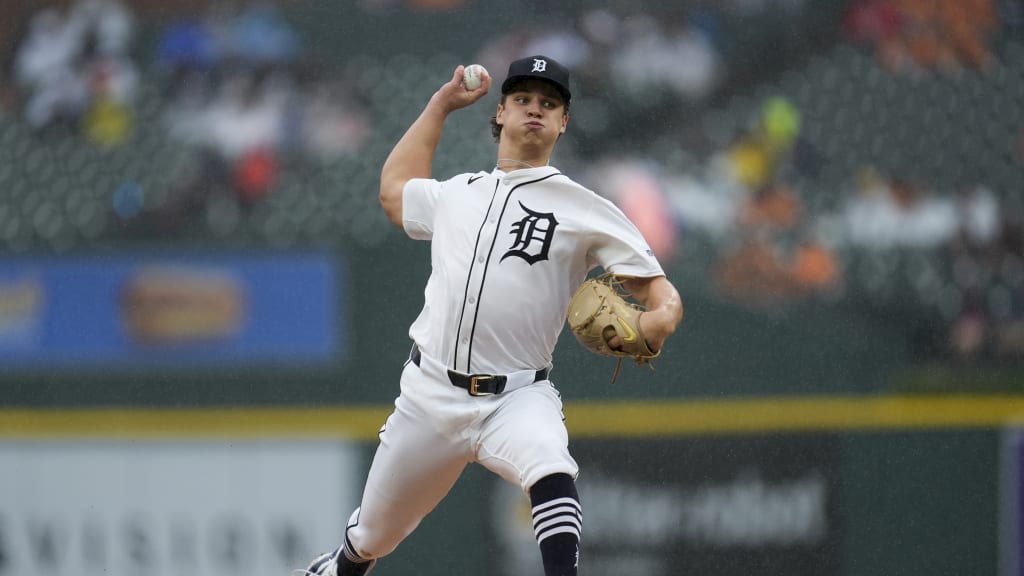
Jackson Jobe
The Tigers made an exciting playoff run at the end of last season. After trading Jack Flaherty and continuing to sell at the trade deadline the Tigers appeared to be giving up on the season. However, after the deadline the Tigers caught lightning in a bottle and made it into the postseason. As a wild card team, the Tigers took the Guardians to five games in the Divisional Series. During that stretch the Tigers were short on pitchers and called up their top pitching prospect Jackson Jobe. Jobe threw four innings during the regular season in two games and finished with a 0.00 E.R.A.
From a scouting standpoint Jobe recently struck out perennial All-Star Vladimir Guerrero Jr. in a spring training start, displaying his dominant pitching arsenal. Jobe’s best pitch is his fastball that sits in the upper 90s with excellent rise. Jobe then pairs his fastball with another plus pitch in his slider. His slider is an analytics darling thanks to its high RPM and movement. Jobe additionally, throws a changeup and cutter to complete his pitching arsenal. The biggest gripe against Jobe is his workload and injury history. He set a professional career high last season throwing 91 ⅔ innings across multiple levels. Additionally, he missed time due to a strained hamstring and back inflammation over his early career.
Jacob Wilson
Jacob Wilson is one of the best pure hitting prospects in recent history. He has the swing and hands to adapt to any pitch in any zone. Not to mention he strikes out in fewer than 10% of his plate appearances. That is unheard of in today’s game. His approach is comparable to hitters from the 60s and 70s. He is in the box to put the ball in play and will do so on a line. He will swing at anything and make contact. In my opinion Jacob Wilson will win a batting title at some point during his career.
Wilson is also the son of a former gold glove shortstop, Jack Wilson (Pirates, Mariners, and Braves), and it’s apparent in his game. Jacob Wilson profiles to be a potential gold glove shortstop thanks to his soft hands and excellent footwork. If it is within his range he will cleanly field the ball and deliver a strike to first.
If he has a weakness, Wilson lacks the ability to hit for power. He will likely never hit more than 15 home runs in a season and he doesn’t have elite exit velocity numbers. This can be concerning in today’s MLB where every hitter chases launch angle and exit velocity. Additionally, Wilson is of average speed. For someone who is a contact hitter with little power, speed is normally a must. Wilson is by no means slow but he’s not going to impress on the base paths.
Dark Horse
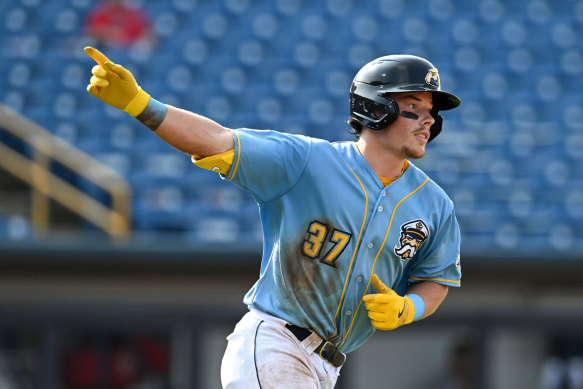
Travis Bazanna
Travis Bazanna was the number one overall pick and the only one of these prospects I’ve had the opportunity to see in person. Bazanna was the obvious choice at number one for the Guardians last year. He has the potential to have an elite hit tool and also be an above average power hitter for his position, second base. This is all in large part due to his quick hands and compact swing from the left side. While he struggled at first, Bazanna helped lead the Lake County Captains to their first Midwest League Title in 14 years; he homered for his first professional hit. His numbers, while not impressive, were brought down by how long it took him to get adjusted. There is no doubt in my mind however that Bazanna will hit at the next level.
Now the red flag for the Guardians taking Bazanna at number one overall was the fact that he is and only will be a second baseman. Bazanna is athletic but not a great fielder. His athletic ability lets him cover more area than most but he lacks the fundamentals at the position and is regularly caught in between hops. Additionally, Bazanna’s arm keeps him regulated to second base long term with a below average grade.
The Guardians made a move this off season to free up second base for Bazanna at the position. In December the Guardians traded their gold glove second baseman, Andrés Gimenez, for a starting pitcher, two pitching prospects, and an outfield prospect. This trade was only two seasons removed from a 7 year extension with the Guardians for Gimenez. Making a move like this hints at the faith that the Guardians have in Travis Bazanna and his future. However, Bazanna has only played in High-A for the Guardians last season. While he will likely start the season in Double-A the Guardians are not likely to be rushing him to make his MLB debut.
Conclusion
Jackson Jobe looks like he could be this season’s Paul Skenes. Jobe has a great pitching arsenal led by an elite fastball similar to Skenes. Additionally, Jobe already has had the experience in high leverage situations at the Major League level pitching for the Tigers in relief during last year’s postseason. His AL Central counterpart, Travis Bazanna is a former number one overall pick with a ton of potential in front of him. The Guardians have freed up second base for the long-term for Bazanna to take over and it’s just a matter of time for him to do so. Out west Jacob Wilson is coming to the league as one of the most disciplined hitting prospects in recent history. The only thing holding him back will be his power, but he benefits from playing a critical position at shortstop. This race is likely to be as good as the fans have seen in recent memory.
Brady Shick is a recent graduate of Bowling Green State University from Sagamore Hills, Ohio. He is currently pursuing a career in Baseball Operations and looking for opportunities.
Twenty twenty-four brought one of the best National League (NL) “Rookie of the Year” Races in recent years. Headlined by two first round picks in Paul Skenes and Jackson Merrill, it was one of the tightest races we have seen. Even the third finalist, Jackson Chourio, would have been likely to win Rookie of the Year most other seasons. Chourio finished the season batting .275 with 21 home runs and 22 steals. Meanwhile, Merrill’s efforts in batting .292 with 24 homers resulted in him earning his first ‘Silver Slugger’ award. FInally, Skenes finished the season as a NL Cy Young Candidate with a resume of 133 innings pitched, a sub 2.00 ERA, and 11 wins. Skenes ended up taking home the award in a tight race with Merrill and this season could bring the same.
2025 Favorites
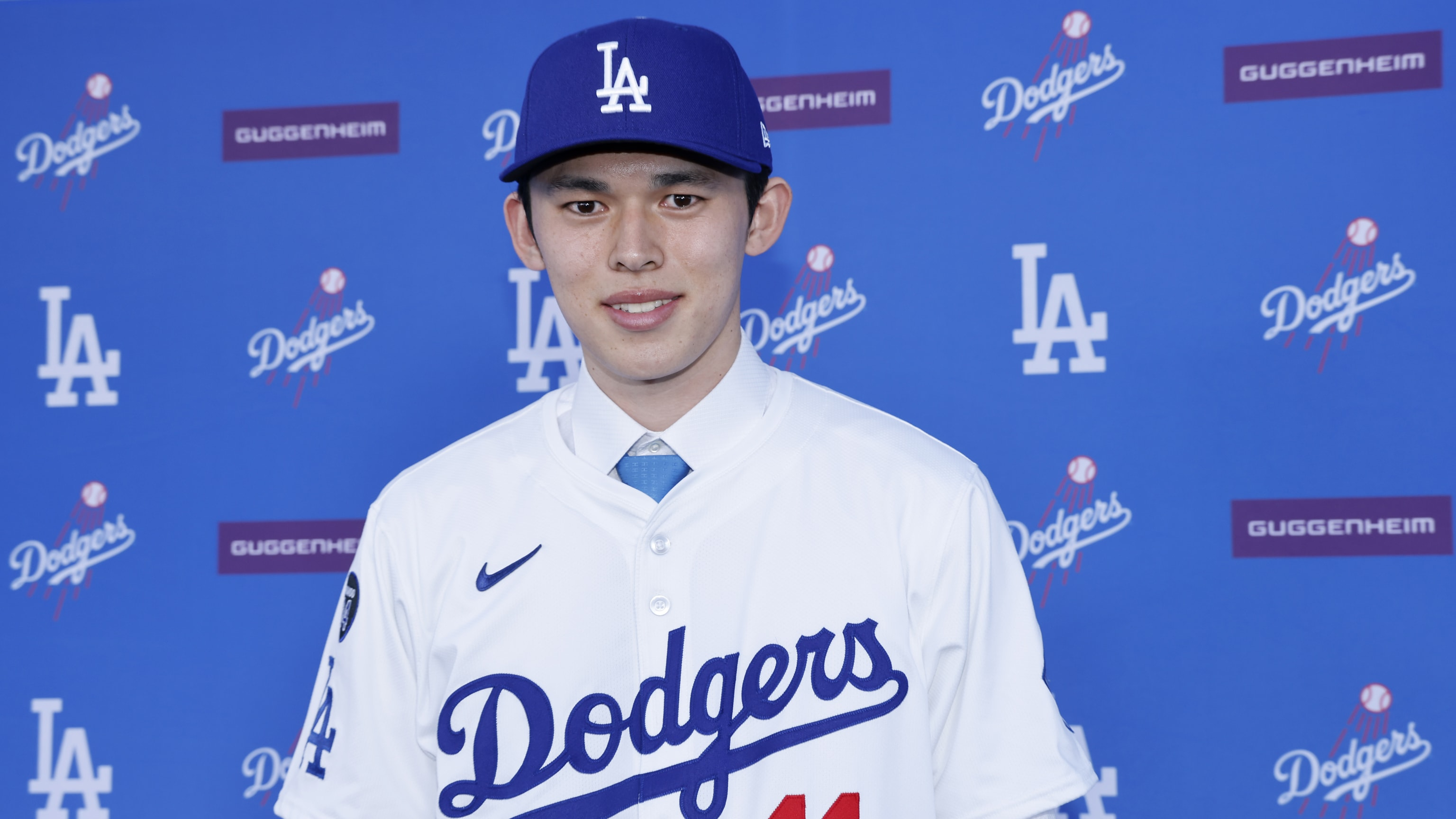
Roki Sasaki
Right now far and away the favorite for NL Rookie of the Year is Roki Sasaki. Sasaki comes over from Nippon Baseball in Japan to join the reigning World Series winning Los Angeles Dodgers. Sasaki was one of the biggest free agents this season aside from Juan Soto. In Japan’s professional league, Sasaki had a 2.10 E.R.A over 4 seasons, and more than 500 strikeouts in fewer than 400 innings. While in Japan, Sasaki also outdueled Yoshinobu Yamamoto in a head-to-head matchup before Yamamoto signed his 12-year $325 million contract with the Dodgers last offseason. Sasaki also dominated during the World Baseball Classic (WBC) with two spectacular starts in 2023.
The only thing stronger than Sasaki’s reputation is his pitching arsenal. Sasaki debuted his stuff for the world at the WBC with a fastball consistently topping out at 100+ and an elite splitter. These pitches led to 11 strikeouts on two starts for Sasaki including some against current MLB veterans.
Sasaki goes into one of the best situations possible in LA. Joining an organization known for developing talent, especially on the pitcher’s mound, with names like Clayton Kershaw, Walker Buehler, and Ross Stripling, they are poised to help Sasaki fulfill his potential. This along with being one of the best pitchers in Japan is why Roki Sasaki is the current favorite to win National League Rookie of the Year.
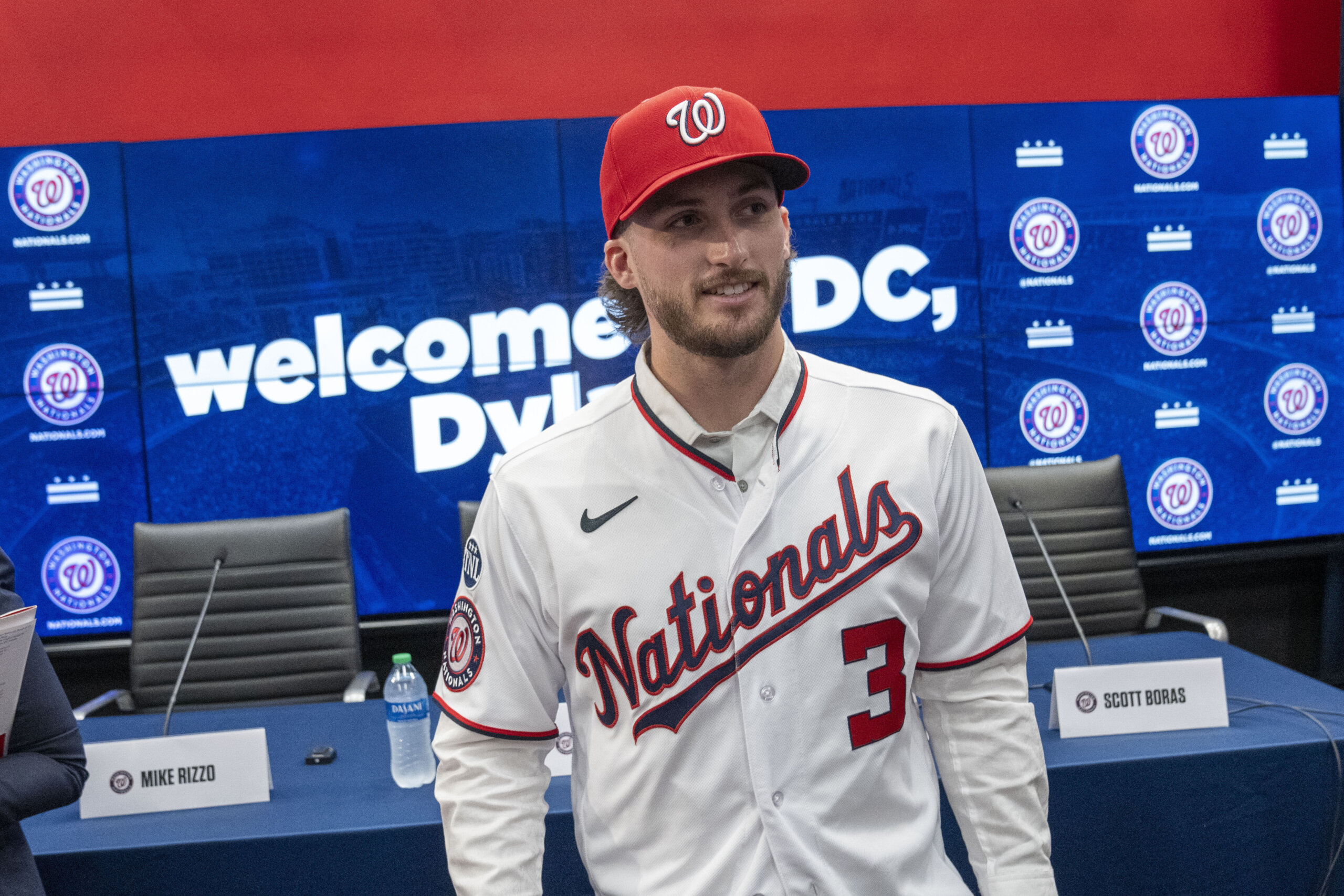
Dylan Crews
Even though Paul Skenes finished his first season in the majors as a Cy Young finalist and National League Rookie of the Year, the media wasn’t sure if he was going to the Pirates with the first pick. There was buzz around his Louisiana State University teammate outfielder Dylan Crews that he might be going to Pittsburgh. Crews was a five-tool prospect coming out of college and had a dominant junior year batting over .400 with 18 home runs. However, Crews ultimately ended up being drafted by the Nationals who held the next pick.
Crews made his Major League Debut in 2024, but still maintained his prospect status thanks to a small sample size of at-bats and he is ranked as the 6th best prospect by Baseball America. While Crews did not have a great start to his career he showed flashes of his five tool potential. Crews stole 12 bases in 31 games, played well defensively, and added 8 extra-base hits. Crews will make the Nationals’ roster out of Spring Training to be an everyday outfielder for the Nats. He will be a strong contender for Rookie of the Year.
Bubba Chandler
In high school Bubba Chandler was a multi-sport athlete. Prior to being drafted he was a 4-star quarterback recruit committed to play at Clemson. However, when he was drafted by the Pirates in 2021 he decided to sign with the franchise and start his professional baseball career. Originally, Chandler was a two-way player for the Pirates’ affiliates, where he would play in the designated hitter spot on days he wasn’t pitching.
Last season saw Chandler’s first year in the minors where he devoted himself strictly to pitching. This decision saw a vast improvement in his season statistics from a year prior and he really excelled in Triple-A for Indianapolis. Chandler saw his best minor league success late in the season last year just one step away from Major League Baseball. In Triple-A Chandler finished the season with an E.R.A of 1.83 in nearly 40 innings with 54 strikeouts in 7 starts.
The main thing holding Chandler back amongst this group is the timetable for his MLB debut. The Pirates are notorious for manipulating service time to get the most years of control for their top prospect using the Super-2 deadline. This deadline is an arbitrary date during each season in which a player doesn’t receive a full year of service time. This gives the team an extra year of control before the player goes to free agency. The Pirates have done this for almost all of their top prospects including Paul Skenes, Gerrit Cole, Andrew McCutchen and other top prospects. Additionally, the Pirates are not contenders so there is no reason to push Chandler to Pittsburgh.
Conclusion
The favorite to win National League Rookie of the Year is undoubtedly Roki Sasaki. From his stellar performances at the World Baseball Classic and dominating in Japan, Sasaki has debuted his talent across the world and it’s time for him to showcase it for Major League audiences. Dylan Crews and his five tools will be an immense talent for a young Nationals team with no one to take away opportunities. It will be time for him to show more than just flashes of his five-tool potential. As for Chandler the only thing holding him back is the Pirates’ timetable for his debut. Regardless, this year’s race could be just as exciting as the 2024 Rookie of the Year race.