“The key to a rivalry is that you make each other better, and you make the sport better.” [John McEnroe]
By Nancy E. Spencer, Professor Emerita
Nancy Spencer taught in the Sport Management program at Bowling Green State University (BGSU) from 1998 until 2023 and is now Professor Emerita. Since retiring, she continues to focus on writing sociological analyses of Women’s Professional Tennis. Her current project includes a chapter about Women’s Tennis in the 1980s, a time when Chris Evert and Martina Navratilova dominated the tour.
July 3, 2026
On June 26, Netflix released the movie Chris and Martina: The Final Set which narrates what some consider the greatest rivalry in modern sport history (Curtis, 2018; Flink, 2026). Near the beginning of the film, John McEnroe suggests that the key to a rivalry is that the players make one another better but also make their sport better. This Netflix program does a masterful job of weaving together the candid stories of Chris Evert and Martina Navratilova – their rise to the top echelon of Women’s Tennis, the ups and downs of their friendship, and their intertwining battles against cancer. Although Evert and Navratilova are both younger than me, I followed their careers, articulations of their rivalry, their friendship and, more recently, their parallel bouts with cancer. In March 1973, my life intersected with them when all three of us played on the USLTA Professional Spring Tennis Tour, at a tournament in Akron, Ohio. Evert and Navratilova met in the semifinal, with the 18-year-old Evert (then ranked No. 3 in the world) outlasting the 16-year-old newcomer, Navratilova, 7-6 (5-4), 6-3. Since I had already lost in the first round of qualifying, I was not in Akron when they played. I wish I had been there!
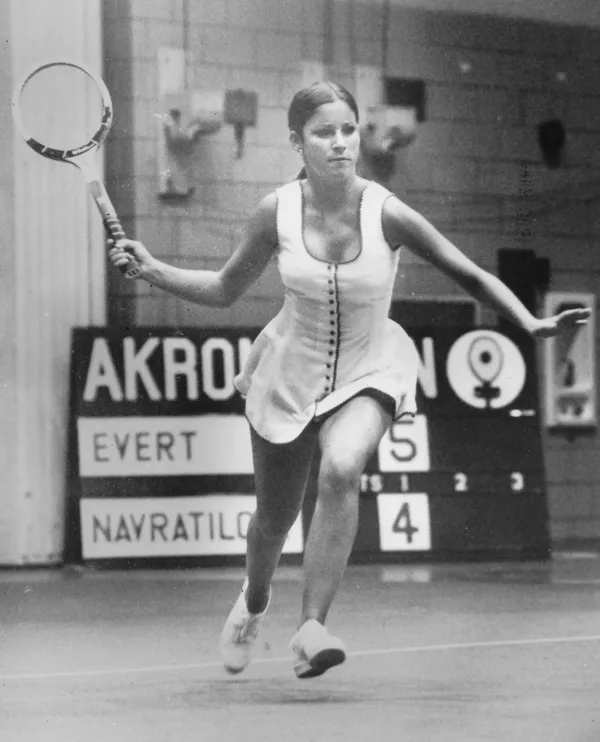
Evert and Navratilova reflected on their first impressions of one another when they met in 1973. At the first tournament on the USLTA Spring Tour (in Ft. Lauderdale, FL), Navratilova recalled seeing Evert playing backgammon with a tournament official (Jenkins, 2023). She was awestruck to see the player who graced posters on her wall at home; she was even more excited when Evert later said hi to her. When they played their first match, Martina called it “a dream come true” because she could measure herself against the next No. 1 player in the world (Walker, 2023, para. 5). Her goal for the match was for Chris to remember her name. Evert recalled feeling “a little nervous going into the match” since she had heard that Navratilova was “dangerous, very raw, with a great volley, a versatile game at a very young age” (para. 6).
While Evert knew that Navratilova moved well, she was overweight, which Martina herself acknowledged, saying “I was a butterball” (para. 7). When she got to the States, she put on 20 pounds in less than a month. Evert thought that if she ever got in shape, she would be “a force to be reckoned with” (para. 8).
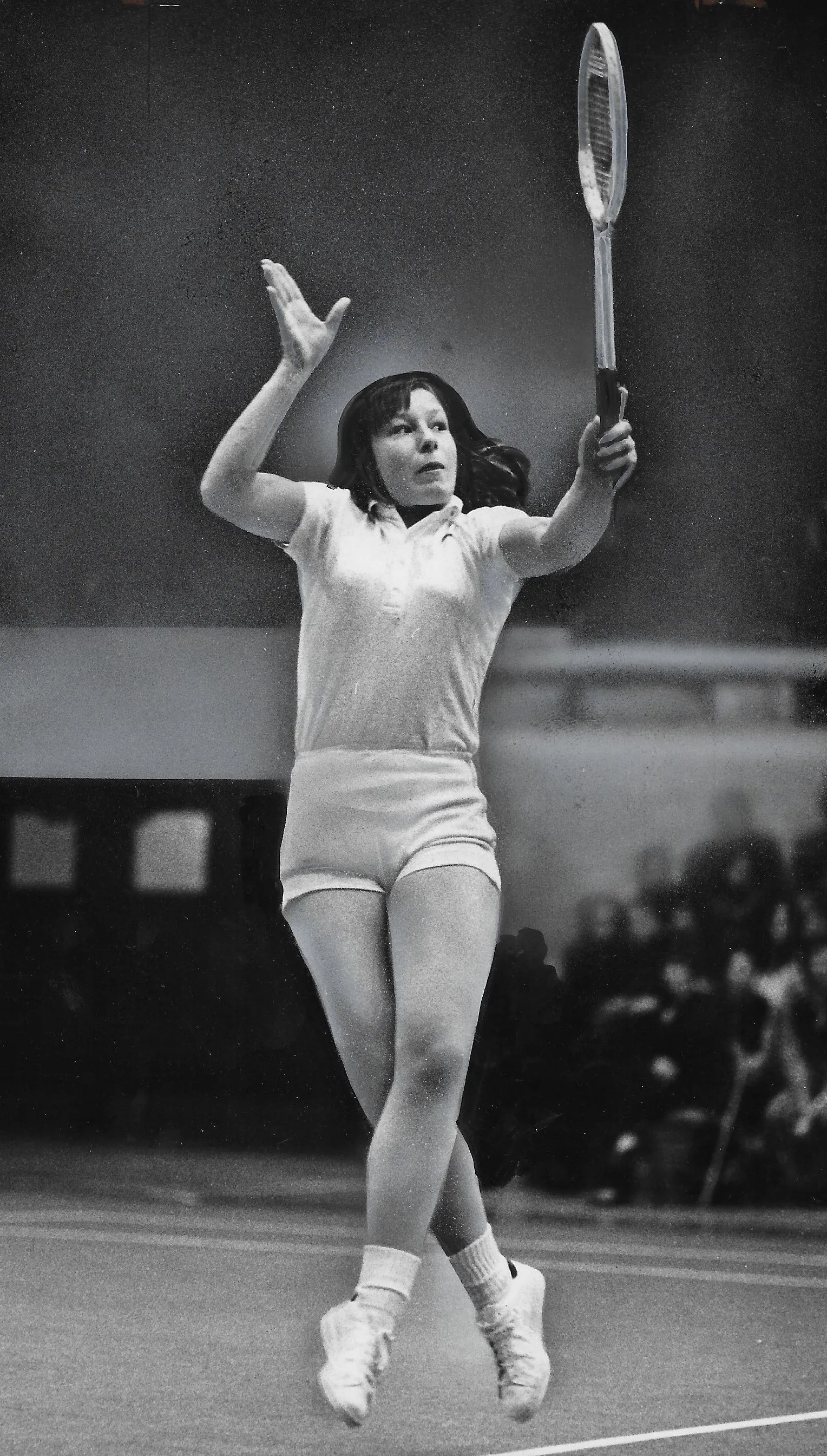
Little could they know that their match was the first of an 80-match rivalry that would redefine women’s tennis over the span of the next 16 years. It would end with Navratilova holding a 43-37 advantage over Evert, with each raising the level of her game as well as the level of women’s tennis writ large.
Tennis commentator Mary Carillo said that, in 80 matches, no individual athletes or rival teams faced one another over 16 years with such high-quality stuff (Shapiro, 1999a). Jake Curtis articulated four key factors that make a compelling rivalry. Longevity is the first factor, as illustrated by the duo’s rivalry that began with their first match-up in Akron and ended with their final meeting in Chicago.[1]
Second, a compelling rivalry should have contrasting styles and/or personalities – Evert and Navratilova had both. TV commentator Brent Musberger described them as “fire and ice…Martina was fire… Chris Evert was ice cold—win or lose” (Shapiro, 1999a). While Evert played a consistent baseline game with pinpoint accuracy, Navratilova displayed an aggressive serve-and-volley game often associated with masculinity. Their cognomens evoked contrasts – with Evert regarded as “America’s sweetheart” and “ChrisAmerica” while Navratilova was often referred to as the “Chech-defector” (Deford, 1986). It was “what a rivalry should be” as revealed by “the physically powerful and politically outspoken Navratilova against Evert’s ferocious ambition, which was too often obscured by tributes to her conventional femininity” (Knapp, 2005, para. 4).
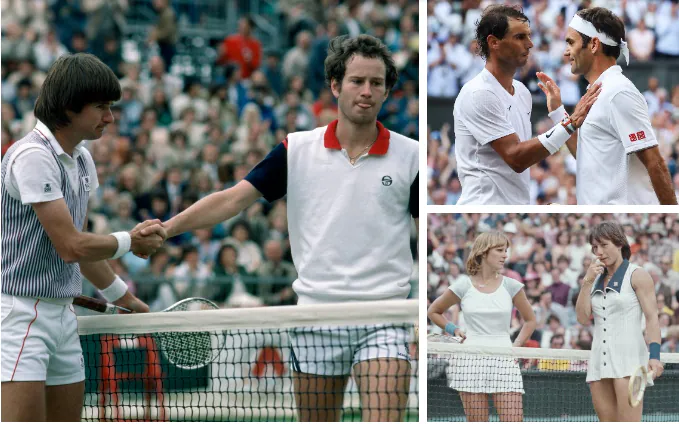
Curtis identified the third factor as the epic nature of their meetings that they typically played in tournament finals, including 14 grand slam tournaments (Howard, 2005). They competed in an era when epic rivalries in men’s and women’s tennis contributed to what many regarded as a “golden age of tennis” (Allen, 2009; Curtis, 2018; Davies, & Fellows, 2023).
Fourth, Evert and Navratilova were the two best women tennis players who ranked Nos. 1 and 2 over an 11-year span.[2] There is one more factor that I add to what makes a compelling rivalry and that is “affect,” how a rivalry makes tennis fans and viewers feel. Johnette Howard (2005) wrote that it was not only their athletic prowess that attracted fans; their followers “fell in love with their stories” and that was about their contrasts (p. 4). There is something about a great rivalry that makes their face-to-face meetings must-see events – whether in person or on television. I felt similarly about watching Borg and McEnroe, Graf and Seles, Federer and Nadal, and the Williams sisters. The budding rivalry between Carlos Alcaraz and Jannik Sinner appears to be the next compelling rivalry.
The Netflix program also described the trajectory of Evert and Navratilova’s friendship, which was sometimes impacted by their on-court rivalry, and at other times, by influences of coaches and/or off-court relationships. Sally Jenkins (2023) brilliantly profiled “the shape of the relationship” as an ‘hourglass’ (para. 7). They first met as teenagers in 1973, became friends and even played doubles together; in the late seventies, they drifted apart as each battled to become the world No. 1 at the other’s expense. At the end of their rivalry, “they somehow reached a perfect equipoise of 18 Grand Slam victories each[3]” (Jenkins, 2023, para. 7). In the early seventies, when Evert won 20 of their first 24 meetings, the duo also played doubles in seven tournaments, winning two grand slam doubles titles together: the 1975 French Open and the 1976 Wimbledon Championships.
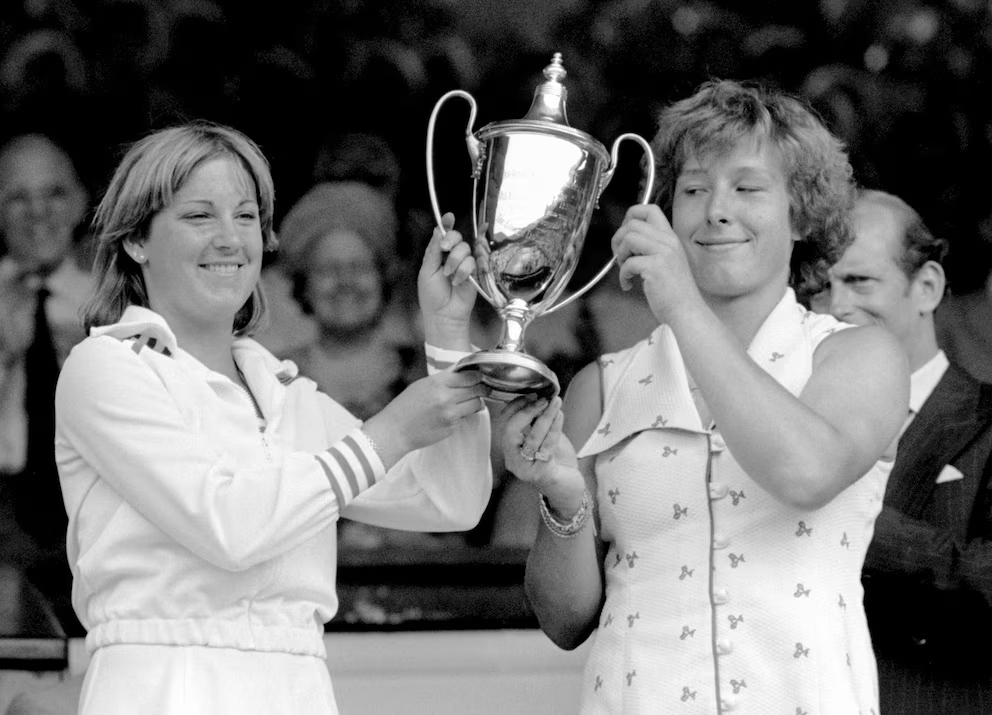
In the 1976 Wimbledon semifinal, where Chris eked out a 3-set win over Martina, she realized that her friend was starting to beat her more frequently, which led Evert to the difficult decision to end their doubles partnership. When they stopped playing doubles, Navratilova took it as an afront to their friendship, while Evert was just trying to protect her ranking. She realized that playing doubles was all right but only if she was No. 1.
Another threat to their friendship came in 1981, when professional basketball player Nancy Lieberman entered Navratilova’s life at a critical moment.
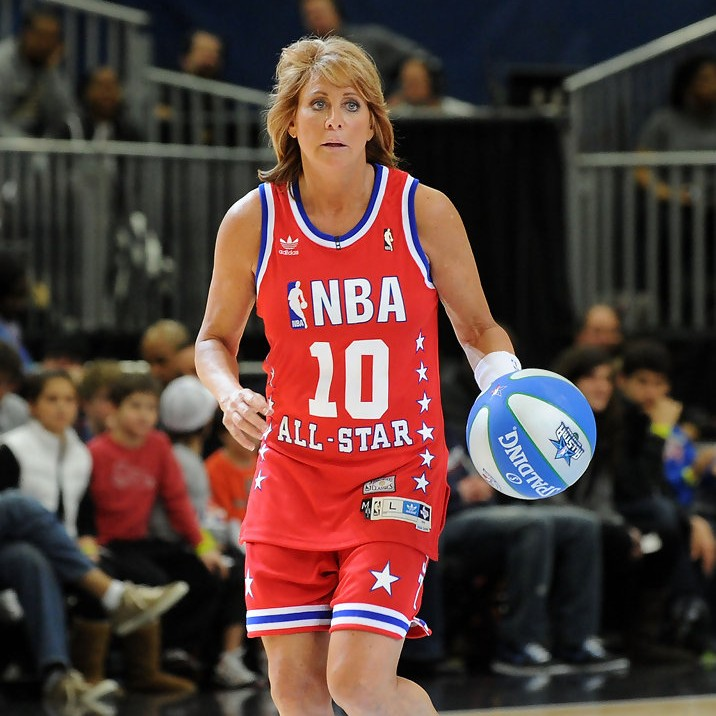
At the end of July, an article in the New York Daily News revealed that Navratilova was bisexual.[4] The article appeared several months after Billie Jean King’s disclosure that she had been in a lesbian relationship with her former hairdresser. Rumors were circulating about potential ramifications for tour sponsors if further news of gay or lesbian relationships in tennis were to emerge. In addition to concerns about the tour’s image, a threat to Evert and Navratilova’s friendship entered through Lieberman, who believed that Martina needed to hate her chief rival. A turning point for Navratilova came in the final at Amelia Island when Evert’s ‘double bagel’ (6-0, 6-0) win over her lit a fuse that changed the chemistry of their rivalry and friendship (Encabo, 2026). The lopsided win so angered Lieberman that she berated Martina, telling her, “You’re better. [In] every area of your game you’re better than she is. She’s not the athlete you are. She doesn’t move like you do. She doesn’t have the shot-making you do” (Encabo, para. 13). Lieberman ended her tirade by saying Martina should not be friends with Chris, a suggestion that created an ‘icy silence’ between them. For Navratilova, the strategy worked as she gradually edged closer to Evert’s record in their head-to-head rivalry.
Entering the 1984 U.S. Open final, Evert and Navratilova stood at 30-all in their rivalry. Their final at Flushing Meadow would break the tie. That final match became the centerpiece of “Super Saturday,” what many consider the greatest single day of tennis in U.S. Open history. The day began and ended with men’s singles semifinals: Czechoslovakia’s Ivan Lendl won the first semifinal in 5 sets over Australia’s Pat Cash, while the second semi saw John McEnroe prevail in 5 sets against Jimmy Connors, in a rivalry that Nancy Lieberman must have loved given their disdain for one another.
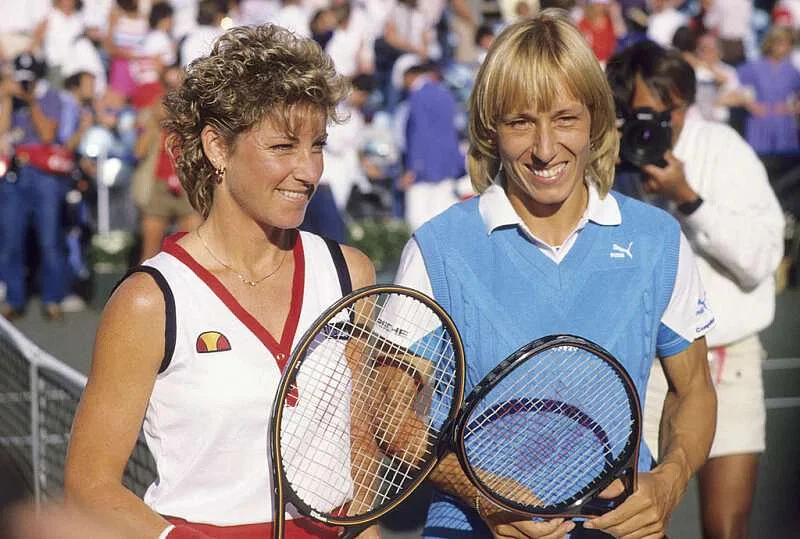
Sandwiched between the two semifinal matches was the Women’s Singles final which Navratilova won in 3 close sets although Evert was the clear crowd favorite. While Evert was stung by another loss, Navratilova couldn’t understand the vitriolic responses she received from the crowd. What Martina overlooked was that Chrissie had been the fan favorite since her initial advance to the 1971 semifinal at age 16. Later, during Evert’s four-year stranglehold on the game, fans grew weary of her domination and began to root for her opponents. Now that Chris was the underdog against Martina, the fans’ rooting interests swung back to Evert again.
By 1984, Martina had begun a relationship with Judy Nelson, who liked Chris and encouraged Martina to repair their relationship (Jenkins, 2023). Eventually the two players confronted the dissonance in their friendship and decided that media narratives about them had contributed to stereotypes with which neither was entirely comfortable. Amidst the difficulties each faced, Evert and Navratilova discussed the bothersome stereotypes that stemmed in part from the media as well as from their individual fan bases. They decided that if they felt their fans or the media was trying to sow discord between them, “they would speak directly to the other,” so they knew where one another stood (Jenkins, 2023, para. 73). They finally agreed that they needed their friendship more than the animosity that had tainted their rivalry.
The riveting Netflix program about Evert and Navratilova went beyond their on-court rivalry and close friendship to their shared cancer diagnoses. Having cancer as a common adversary challenged them mentally, physically, and spiritually. However, it also strengthened their bond, drawing them closer together than they were during their rivalry (Jenkins, 2023).
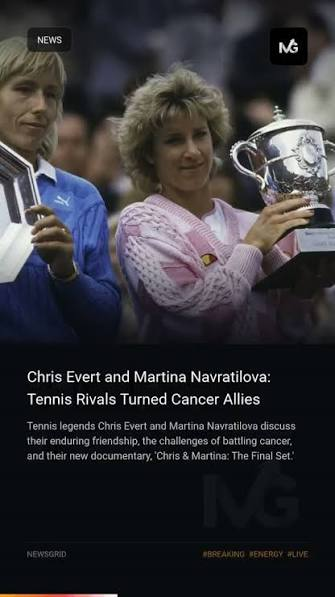
In 2010, Navratilova announced that she had an early form of breast cancer “but was deemed cancer-free six months later” (McCarthy, 2026, para. 7). In January 2022, after Evert’s sister Jeanne died of ovarian cancer, someone from the Cleveland Clinic notified Chris that she should be tested for the BRCA1 gene. Results of the test revealed that she had Stage 1C ovarian cancer and needed to undergo “a grueling six cycles of chemotherapy” (Jenkins, 2023, para. 19). After treatments, she was declared cancer-free. Later that year, in December 2022, Navratilova discovered that she had “two early-stage cancers, in her throat and breast” and she too had to undergo treatment (Jenkins, 2023, para. 20). In 2023, Evert received a diagnosis that she never wanted to hear – that her ovarian cancer had returned – although she was grateful that the cancer had been detected early. Once again, she underwent robotic surgery to remove cancer cells and embarked on another round of chemotherapy. (Walcott, 2023). On July 1, 2024, she announced in the New York Times that she was cancer-free once again (Waldstein, 2024).
On June 25, a day before Netflix dropped the moving tribute to Evert and Navratilova’s rivalry and just as the 2026 Wimbledon was about to begin, Evert announced that the cancer had returned for a third time. In her announcement, she wrote, “ovarian cancer is relentless, but I will stay optimistic and determined in continuing to fight this battle” (“Tennis legend,” 2026).
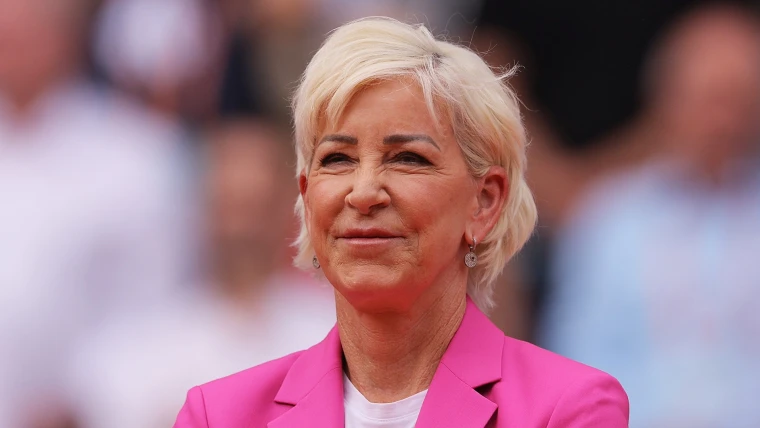
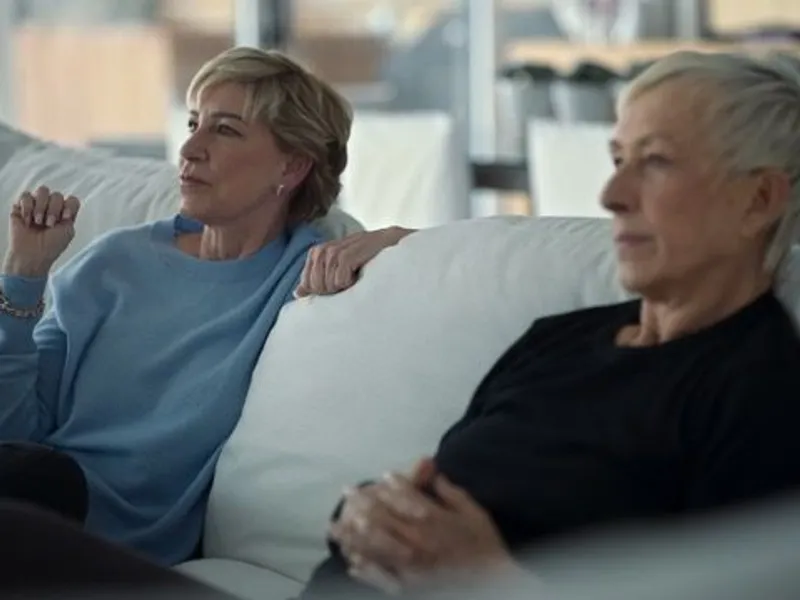
As the Netflix film begins, Evert’s ex-husband Andy Mill (below) makes a poignant statement that captures where the one-time bitter rivals stand today,
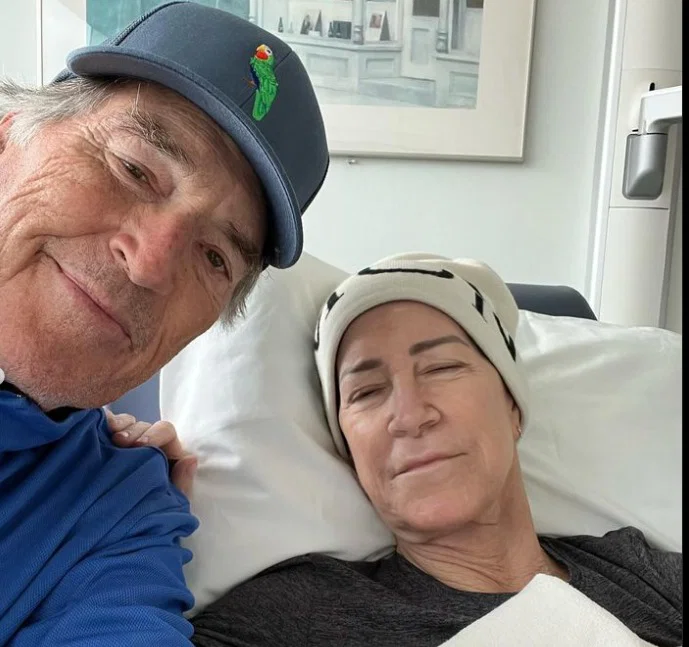
“They were battling a war forever on the tennis court. And now, in life, they’re trying to save each other” (Jenkins, 2026).
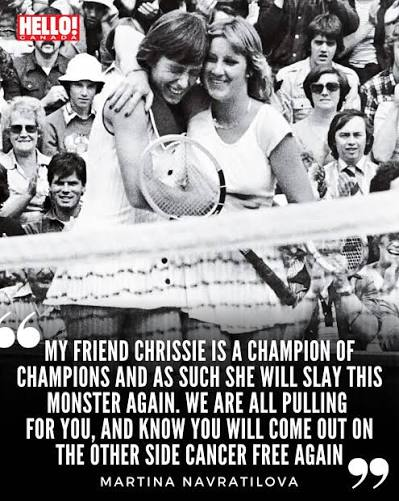
The saga of Chris and Martina continues with the two rivals joining together to combat a more insidious rival in cancer. I am hoping and praying that both Chris Evert and Martina Navratilova have many more chapters to write before their ‘final’ set. Martina expresses the sentiment that each of them has for one another.
References
Allen, L. (1997). The lesbian idol. London: Cassell.
Complete Doubles Results. (nd). Chris Evert.net. https://chrisevert.net/match-results-and-records/complete-doubles-results/
Curtis, J. (2018, June 8). Ranking the 10 best rivalries in tennis history. Bleacher Report. https://bleacherreport.com/articles/1703668-ranking-the-10-best-rivalries-in-tennis-history
Davies, N., & Fellows, A. (Executive Producers). (2023). Gods of Tennis: Martina Navratilova and Chris Evert. [TV series]. Mindhouse Production Company, BBC: London, UK.
Encabo, N. (2026, June 26). The rivalry that transformed tennis long before Federer, Nadal, and Djokic: “You need to not be friends with her. You need to hate her.” Claytenis.com. https://www.claytenis.com/features/evert-navratilova-netflix-documentary-uncovered/
Ephron, N. (1985, March 31). Martina’s Unfairness Doctrine. The New York Times, pp. SMA29, SMA52, SMA54, SMA58.
Howard, J. (2005). The rivals: Chris Evert vs. Martina Navratilova: Their epic duels and extraordinary friendship. New York, NY: Broadway Books.
Jenkins, S. (2023, July 3). Bitter rivals. Beloved friends. Survivors. The Washington Post. https://www.washingtonpost.com/sports/interactive/2023/chris-evert-martina-navratilova-cancer/
Jenkins, S. (Executive Producer). (2026). Chris and Martina: The final set. Netflix.
Knapp, G. (2005, June 19). Evert v. Navratilova—what a rivalry should be. SFGate. https://www.sfgate.com/sports/knapp/article/evert-vs-navratilova-what-a-rivalry-should-be-2661371.php
McCarthy, K. (2026, June 11). Tennis legends Chris Evert, Martina Navratilova reflect on rivalry, friendship, cancer diagnoses. ABC News. https://abcnews.com/GMA/Culture/tennis-legends-chris-evert-martina-navratilova-reflect-rivalry/story?id=133781003
Tennis legend Chris Evert reveals ovarian cancer has returned. (2026, June 25). GMA. https://www.youtube.com/watch?v=QBARNOddY_E&t=1s
Waldstein, D. (2024, July 1). Chris Evert beat cancer. Then it came back, so she beat it again. The New York Times. https://www.nytimes.com/2024/07/01/nyregion/chris-evert-cancer-tennis.html
Walker, R. (2023, March 21). The 50-year anniversary of Chris Evert and Martina Navratilova’s first-ever match. World Tennis Magazine. https://worldtennismagazine.com/the-50-year-anniversary-of-chris-evert-and-martina-navratilovas-first-ever-match/21828
[1] On March 22, 1973, Evert won their first meeting on the USLTA Tour in Akron (7-6, 6-3) while Navratilova prevailed in Chicago (6-2, 6-2) on November 13, 1988.
[2] Aside from a brief span when Tracy Austin was No. 1.
[3] Collins Dictionary defined equipoise as “a delicate harmony or a counterbalancing factor.”
[4] Navratilova became a more visible lesbian activist in the early 1990s and came out as gay in 1991 (Allen, 1997).