Author Archives: tennisprof1

Miami Dolphins Mismanagement of Tua Tagovailoa Injuries

By Sam Morris

Sam Morris is from Madison Heights, Michigan, and is an undergraduate student at BGSU majoring in Sports Management. He has a passion for sports writing and journalism. In his free time, he also performs, writes, and produces his own raps for the music industry club at BGSU.

October 11, 2022

NFL and SAFETY

With the NFL being a high-contact sport, there is obviously the potential to incur multiple serious injuries. The league has increased safety measures in many ways over the last few decades, especially when it comes to protecting quarterbacks. These changes include not being able to hit the quarterback in the shoulder-neck-head area once he is sliding, making him defenseless, as well as increasing emphasis on roughing the passer penalties. Despite these improvements, it is impossible to eliminate NFL concussions which are one of the most common injuries in the sport, especially for quarterbacks. It is important that all NFL teams follow the concussion protocol to keep players safe and to maintain the integrity of the league’s rules.

TUA TAGOVAILOA

The Miami Dolphins have been accused of not following the concussion protocol regarding their starting quarterback Tua Tagovailoa. Tagovailoa was a star recruit out of the same Honolulu, Hawaii high school as Atlanta Falcons quarterback Marcus Mariota back in 2016. He committed to play college football at Alabama because Nick Saban would be his coach. Tua started off his freshman season as the backup to current Philadelphia Eagles Quarterback Jalen Hurts. He gained prominence relieving an injured Jalen Hurts in the 2018 CFP title game, leading the Crimson Tide to a victory over the rival Georgia Bulldogs. Tua played two more seasons riddled by injuries before being drafted by Miami with the 5th overall pick in the 2020 draft. Throughout his first 3 seasons with Miami, Tua has been inconsistent and frequently injured. Despite being plagued by injuries and receiving doubt from the media because of his inability to stay on the field, Tua began the 2022-23 season with 2 victories before controversy ensued.

GREGORY ROUSSEAU HIT

During week 2, Miami had already begun to be the talk of the NFL landscape with Tua completing a 28-point comeback against Baltimore and throwing for a franchise record 6 touchdowns in one game. In week 3, however, Tua would be tested against Josh Allen and the Super Bowl favorite Buffalo Bills. With 2 minutes left in the second quarter, and with the scored tied 14-14, on a 2nd and 3, Tua dropped back in a shotgun formation and rolled out of the pocket to throw to former Alabama teammate wide receiver Jaylen Waddle. Tua was tackled by the Bills 2nd year 6 foot 6, 270-pound Defensive End Gregory Rousseau after he got the pass off. Tua ‘s head immediately hit the ground before the rest of his body, and he got up extremely shaky. Tua originally tried to walk back to the huddle for the next play but wobbled in a zig-zag line and was taken out of the game. Tua was said to have gone through concussion protocol by Miami’s medical staff, but he was ruled to have a back problem and was cleared to come back into the game just a few minutes later at the start of the second half. The Dolphins upset the Bills by beating them 21-19 and backup Teddy Bridgewater only played for 2 minutes since Tua was quickly cleared.

MEDIA AFTERMATH
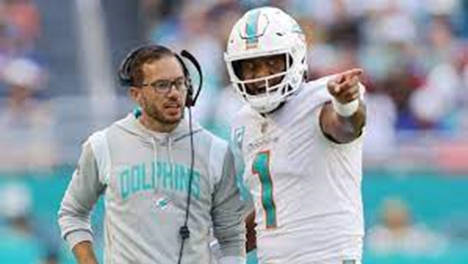
Immediately after the Dolphins-Bills game, the reporters at the Dolphins post-game press conference questioned Miami’s process of the concussion protocol. One of the major symptoms of a concussion is balance issues, but this usually only occurs when severe force puts a blow to the head to cause the concussion. This severe force could have come from a man 70 pounds and 6 inches taller than Tua, running full speed, and completely unblocked by the Miami offensive line. First-year head coach Mike McDaniel said in the week 3 post-game press conference when asked why Tua was able to play, “his legs got wobbly because his lower back was completely loose.” Although the back is connected to your balance and equilibrium, it was highly suspicious since Tua hit his head first, but McDaniel and the medical staff described it as a back injury instead.

THURSDAY NIGHT FOOTBALL CONCUSSION
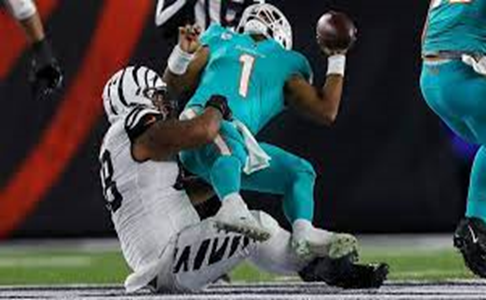

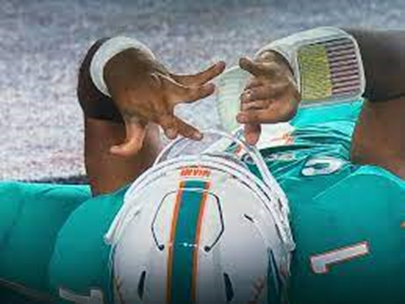
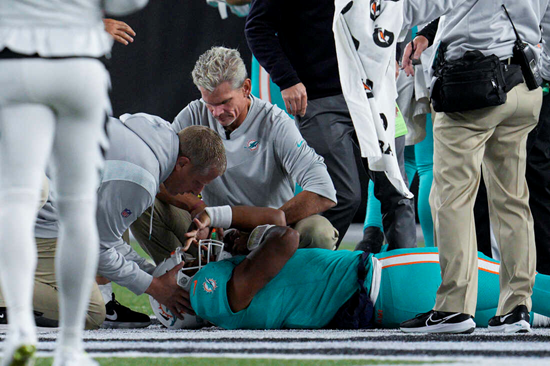
The following week, 4 days later, on Thursday Night Football, against the reigning AFC champion Cincinnati Bengals, the Dolphins were down 6-7 in the 2nd quarter with 6 minutes left and had a 2nd and 7 situation. Tua faked a hand-off to running back Raheem Moshert when the pocket collapsed, and he was sacked and thrown hard to the ground by the 6 foot 3, 340-pound Nose Tackle Josh Tupou. Tupou grabbed Tua by the waist so that his head jerked backward hard and hit the turf immediately with force much greater than in the previous week. Tua eventually had to be carted off the field as his hands and fingers were visibly shaking on camera.

MEDIA AFTERMATH

The questions started pouring in from around the sport as two situations that were so similar yielded extremely different results. While both opponents the Dolphins were playing when Tua got injured are playoff caliber teams, the Bills have arguably a more talented roster this year. Although Tua was obviously in more pain with the second injury, critics have begun to accuse the Dolphins of bringing Tua back in the Bills game prematurely to have a better chance of beating their division rivals.

RESULTS AND STANCES

After the Thursday Night game, the neurotrauma consultant in charge of clearing Tua to play was removed by the NFL. While the consultant was hired by the NFL, she is not specifically affiliated with the Dolphins and instead worked with many teams simultaneously around the league. The aftermath of this situation has led to multiple players union and NFL meetings to discuss evaluating the concussion protocol and its steps to clear players to play. It also stands to speculate that the reason the second concussion was so much worse was a direct result of the mistreatment of the previous week’s situation as Tua possibly never got the correct help he needed to heal. After a 10-day rest, Miami was still reporting that Tua would be out for week 5 against the Jets.  As for Mike McDaniel, he stood by his previous statement that the Dolphins handled Tua’s medical process correctly.
Wake Up the Echoes

By Ryan Harless

Ryan Harless is a third-year undergraduate at BGSU from Hillsboro, Ohio. He is majoring in Sport Management with a Journalism Minor. Baseball and golf at all levels are his primary interest but is also interested in combat sports, hockey, basketball, and football.

October 4, 2022

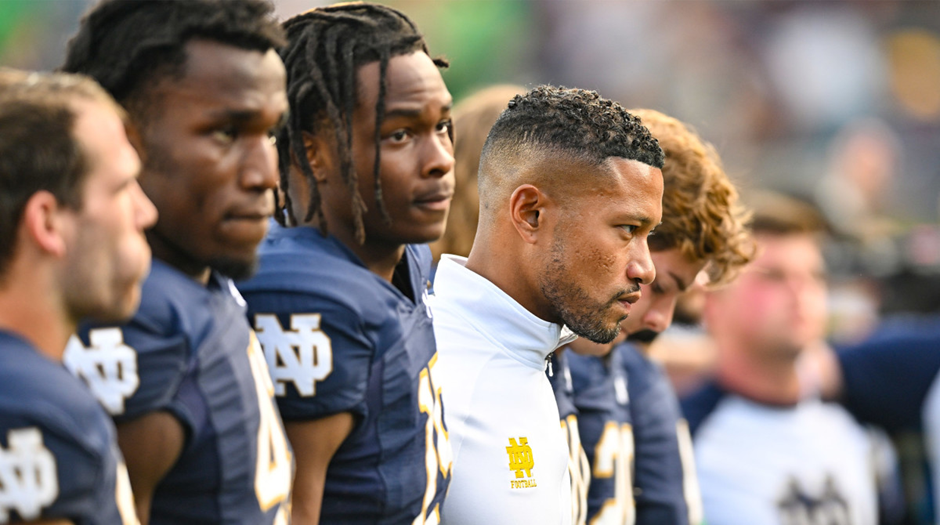
The Marcus Freeman era is well underway at the University of Notre Dame and thus far has been all but ideal. The Fighting Irish are off to a 2-2 start this season; with last season’s loss in the Rose Bowl plus the first 4 games of this season, they are 2-3 in Freeman’s first five contests.

This was supposed to be the breakthrough season for the Irish, but the South Bend faithful have had the wind sucked from their sails. The starting quarterback at the start of the season Tyler Buchner was put out for the season with a shoulder injury in the second game, a 26-21 loss to Marshall, leaving Drew Pyne to step up.

The first game with Pyne under center was another roller-coaster where nothing seemed to fully click for the Irish. During the broadcast you could see Pyne on the phone, purportedly having a very one sided, heated discussion with offensive coordinator and former Notre Dame starting quarterback Tommy Rees. But through all the turmoil of the first two weeks, Notre Dame was able to come through and hold onto their first win of the 2022-23 football season against California.

As mentioned before, expectations were high among fans going into this season. Coming on the heels of Brian Kelly leaving the team before last year’s bowl game, the Irish were ranked as the fifth best team in the country leading up to their season opener at Ohio State. Despite being 17.5-point underdogs, Freeman and his team held a 10-7 lead going into halftime. Notre Dame’s offense would go silent in the second half as has been a theme thus far this season, and they would fall 21-10.

As disappointing as the week one loss was, it in no way compared to the at-home loss to the Marshall Thundering Herd in week two. Marshall took a 9-7 lead into the half and never looked back. At this point things were starting to look really bad for the Irish and the Thundering Herd kept their foot on the gas to take the victory.

Notre Dame would make their way to .500 on the season with their week four win over the North Carolina Tar Heels in a much closer game than most Irish fans would have liked to see. But after a week off and looking forward to their game against BYU, a big win at home could be just what the Irish need to get back on their feet and make a run.

Media coverage of the Notre Dame football team and Freeman was less than ideal but understandable given the circumstances of the situation. Prior to Notre Dame’s week three win against California, reporters were questioning the leadership abilities of Freeman and the coaching staff surrounding him. As Michelle Martinelli of Fighting Irish Wire said, “the honeymoon period has ended after one of the most embarrassing at-home losses in Notre Dame history.” I don’t feel that Freeman is getting an unfair shake by any stretch either. I like to think that even with the loss to Ohio State, if Notre Dame had rebounded with wins against both Marshall and California, this would still be considered a successful start to the Freeman era. It is unfortunate that the defeat against Marshall will likely be a major slight to any small-scale success he might have with the team.

I am still hopeful for the rest of Freemans’ tenure at Notre Dame, but something obviously needs to change if he wants to leave behind a successful legacy.

Ime Udoka: The Franchise and the Media

By Sarafina Napoleon

Sarafina Napoleon is from Nigeria and is a first-year graduate student in Sport Administration at BGSU. As a journalist for 9 years, she brings a wealth of experience and insight to the Maxwell Media Watch.

September 24, 2022

After a terrific first season as head coach of the Boston Celtics, Ime Udoka finds himself in unfamiliar territory. A territory that might be a tipping point in his career, and he is on the verge of losing everything, and the big question is: Is there a way back for him?

September 21, 2022, will be a day to forget for the ex-international as the news of his consensual sexual relationship with an unnamed staff member of the organization made it to the media. As reported by ESPN, his relationship with the staff member was “considered a violation of the organization’s guidelines;” hence he will have to face the music.

Udoka is out of the entire 2022-2023 NBA season due to suspension, with the franchise releasing an official communication late Thursday. According to unconfirmed reports, his assistant Joe Mazzulla will likely serve as interim coach for the 2022-23 NBA season.

It is imperative to state that before this saga, Udoka had been a huge part of the success story of the Boston Celtics since he joined the team after stints with the San Antonio Spurs, Philadelphia 76ers, and Brooklyn Nets. His Celtics’ team recorded wins last season over the Brooklyn Nets, Milwaukee Bucks, and Miami Heat to win the Eastern Conference title. He guided them to the NBA Finals but lost in Game 6 to the Golden State Warriors, becoming the fifth coach in the last 25 years to make the Finals in his first year. He also secured a fourth-place finish in Coach of the Year voting. After a stellar outing last season, the fans had high hopes. They looked forward to a new season expecting the team to continue from where they left off last season, but this time it will be without head coach Ime Udoka.

It is important to note that we do not regularly see a coach’s lengthy suspension in the NBA. Last season, Mike Batiste of the Washington Wizards was handed a two-game suspension for entering the stands. In 2013, Brooklyn Nets coach Jason Kidd faced a two game suspension. Still, an entire season suspension of an active coach has never happened recently and possibly in the history of the NBA.

There are also reservations about the media’s role in bringing to light the coach’s relationship with the unnamed staff member and how he has been portrayed.

Furthermore, are the Boston Celtics innocent of how they handled the issue?

One pertinent question to ask is how the information got to the media. Who leaked the information? Couldn’t such seismic news be dealt with internally?

Another angle to consider is the need to conceal the identity of the “unnamed staff member” while revealing coach Udoka’s, more without hesitation. Why is the coach alone facing the repercussions of an action that two adults carried out?

The club released an official statement that only captured Udoka’s punishment. Why? Is cheating not wrong on all levels and unfair to the partners of those involved? Still, a season suspension and the possibility of getting fired for breaking a code of conduct termed “Consensual” is absolute madness and arguable.

The role the media played in the reportage of the incident cannot be overlooked. It was at no point stated or reported that Udoka coerced the staff member into the relationship, so why did the media report it as a criminal incident? The coach committed an offense against the franchise owners and his fiancé Nia Long, not a crime against the government. The problem with the media reportage of the incident is that it has largely swayed how the franchise chose to deal with it. One could also argue that the media coverage of the incident could be about the color of his skin, which is my perspective as a Nigerian. Would the media come for his head if it were a white coach? Your guess is as good as mine.

Carlos Alcaraz: The Future of Men’s Tennis

By Kalen Lumpkins

Maxwell Media Watch

09/13/22

At this year’s French Open, third-seeded Alexander Zverev won a four-set thriller against sixth-seeded Carlos Alcaraz 6-4, 6-4, 4-6, 7-6 (7) to advance to the semi-final for the second year in a row. In the post-match interview, Zverev was asked what he said to Alcaraz when they greeted each other at the net after the match concluded.

“I told him at the net, ‘You’re going to win this tournament a lot of times, not just once,’” said Zverev. “I hope I can win it before he starts beating us all.”

Fast-forward to this year’s U.S Open, and Carlos Alcaraz is beginning to do just that.

At the start of the U.S Open, tennis fans from around the world would gather into their designated courts to watch their favorite players do what they do best. On the women’s side, most were there to see Serena Williams’ last rodeo play out. On the men’s side, there was no Novak Djokovic or Roger Federer for the fans to marvel at, but there was one legend that always is the fan favorite every time he steps on the court.

Rafael Nadal.

The King of Clay opened as the overwhelming favorite to win his third Grand Slam of the year and 23rd Grand Slam overall. Nadal had not lost a Grand Slam match all year coming into the U.S Open (Nadal withdrew from the Wimbledon semifinals due to injury), and he was on a mission to make 2022 his year.

As the 2nd seed Nadal cruised to the quarterfinals, the 3rd seeded Carlos Alcaraz followed.

Alcaraz beat the people that he should have in the first three rounds (Sebastien Baez, Federico Coria, Jenson Brooksby) decisively in straight sets. The combination of his killer forehands and spacing were too much for his opponents to handle and were stunning to watch. Still, all eyes were on Rafael Nadal’s journey through the tournament. 

Then came the Round of 16, where Alcaraz faced 16th seeded Marin Cilic. And to put it lightly, Carlos Alcaraz put on a show for Arthur Ashe Stadium. Cilic and Alcaraz went back and forth hitting each other with long rallies and killer serves. Alcaraz’s game is comparable to the likes of Roger Federer: his serves, backhands, forehands, positioning among other techniques. There’s one aspect of Alcaraz’s game, however, that makes him in a league of his own and such a joy to watch. 

His effort.

During their match, Marin Cilic learned how hard it is to not only get the ball away from Alcaraz, but also how to keep it away from him. Multiple times during the match, Cilic would make an amazing forehand winner only for it to not be a winner at all, as Alcaraz would sprint to the back of the court and hit a forehand winner of his own. Cilic would find out that Alcaraz was simply too much to handle, as Carlos Alcaraz would beat Marin Cilic in a five-set thriller to advance to the quarterfinals. The breakthrough that Alcaraz needed, however, happened before he would even step on the court that day.

Earlier at Arthur Ashe Stadium, the tennis world was shaken up as Rafael Nadal was defeated by the 22nd seeded American Frances Tiafoe, which is seen as the upset of the year. The day before, the top seed Daniil Medvedev was handled by the controversial Nick Kyrgios.

With the top two seeds out of the way, all eyes were now on the highest seed remaining: Carlos Alcaraz. The Spaniard would decisively prove, however, that he could handle the bright lights.

With the plays and overwhelming efforts that were present in his Round of 16 match (like this sensational behind the back shot), he would come back from a 2-1 set hole to defeat John Sinner 6-3, 6-7 (9), 6-7 (7), 7-5, 6-3 to advance to the U.S Open Semifinals. His opponent in the semifinals would end up being one of the most anticipated matches on the tournament.

Alcaraz’s opponent: Frances Tiafoe, the man who ended Rafael Nadal’s U.S Open run.

Tiafoe was making history himself, becoming the first African American since Arthur Ashe to make the U.S Open semifinals, and he had no plans to make his match with Alcaraz his last of the tournament. Alcaraz, however, had other ideas.

Frances Tiafoe experienced what Alcaraz’s prior opponents did: his relentless drive and effort. Alcaraz pulled rabbits out of his hat all match, scoring points that seemed impossible, bringing the Arthur Ashe crowd to its feet to the point where they could barely sit down. Alcaraz would beat Tiafoe 6-7 (8), 6-3, 6-1, 6-7 (7), 6-3 to make the U.S Open final.

Before the tournament, people already had their favorites coming into the tournament. Going into the final, everyone had become a Carlos Alcaraz fan.

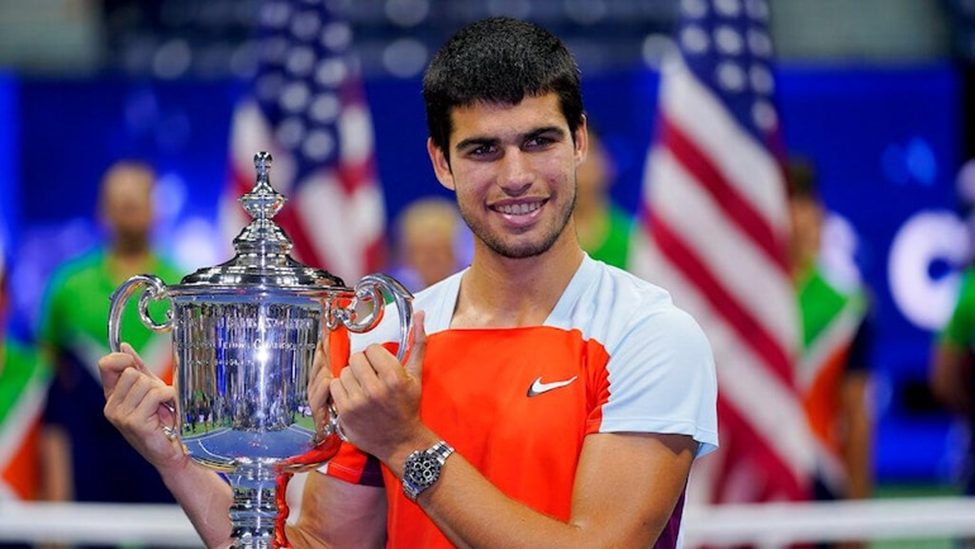
Alcaraz would defeat 5th seeded Casper Ruud in the U.S Open final 6-4, 2-6, 7-6 (7), 6-3 to win his first Grand Slam title. The ovation Alcaraz received after the match point was astounding. The crowd there were amazed by his near perfect U.S Open Tournament, the plays he made and most importantly: the effort he put in.

The victory makes Alcaraz the youngest No.1 in ATP history. At 19, he is like Nadal, Djokovic, and Federer, who won their first major at 19, 20, and 21, respectively. Alcaraz is nowhere close to finished, based on his interview after his U.S Open win.

“Right now, I’m enjoying the moment. I’m enjoying having the trophy in my hands,” said Alcaraz. “Of course, I’m hungry for more. I want to be at the top for many, many weeks. I hope many years.”

There have been comparisons with Alcaraz to the big three (Nadal, Federer, and Djokovic) with how his career has started, but there is one thing that stands out compared to everyone else.

The effort.

Carlos Alcaraz has the potential to be the greatest tennis player to ever hold a racquet. It is too early to tell, admittedly, because he is only 19. However, if there is one thing that should be taken from this article, its that Carlos Alcaraz will be a name that will be known for years to come.

Believe the hype.

Most Valuable Player

By Ryan Harless

September 16, 2022

Ryan Harless is a third-year undergraduate at BGSU from Hillsboro, Ohio. He is majoring in Sport Management with a Journalism Minor. Baseball and golf at all levels are his primary interest but is also interested in combat sports, hockey, basketball, and football.

In the world of baseball, the Most Valuable Player award is one of if not the most sought-after award. It goes to the player who has the best numbers on the field in each respective league. There have been many debates in the past decade over if the award should include pitchers as there is already an award for the best pitcher in each respective league, that being the Cy Young award.

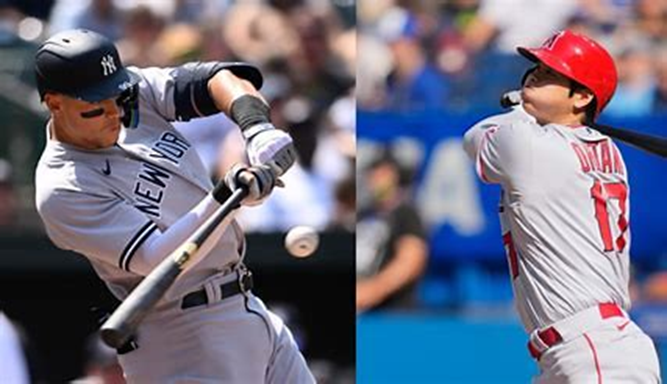
But in recent years there has been a phenom who has thrown a wrench into baseball tradition and how we think of its players. Shohei Ohtani is a twenty-eight-year-old who plays for The Los Angeles Angels. What separates Ohtani from literally EVERY other player in the MLB is the fact that he is an elite power hitter who is in the top five in home runs, RBI, and slugging percentage. He is also an elite starting pitcher who is in the top five in ERA and strikeouts.

Enter Yankee outfielder Aaron Judge, who is currently on pace to break the all-time Yankee single season home run record. He also has a current slash line of .307/.410/.677 which are unreal numbers to have along with fifty plus home runs. Judge is having a career year and one that in any other time period would all but guarantee him a unanimous MVP award. But is he the most valuable?

I think that if we are looking at players strictly on stats for MVP voting you cannot give the award to anyone but Ohtani. Sure, Judge is having a massive year offensively and putting up numbers we haven’t seen since the days of Barry Bonds and Mark McGwire. But right now, Ohtani has scored 80 runs on offense and has only given up 40 earned runs as a pitcher. With Ohtani, you’re not only getting a far above average starting pitcher, but a starting pitcher who will more than cover the runs they give up at the plate!

In the 2021 season when Ohtani won his first MVP award, he negated the earned runs he gave up just with his home run count alone. He had insanely tough competition in the MVP race that year too as Vladimir Guerrero Jr. was in major contention to win the first triple crown in MLB since 2012. But Ohtani still won unanimously.

Shohei Ohtani is a generational talent that we may never see again. It’s unfortunate for anyone else in the American League that puts up good numbers, but Shohei is, by far, the Most Valuable Player in all of Major League Baseball and will continue to be until he chooses not to.

Ons Jabeur: From 2007 (Junior) US Open Debutant to 2022 Finalist

By Sarafina Napoleon

Sarafina Napoleon is from Nigeria and is a first-year graduate student in Sport Administration at BGSU. As a journalist for 9 years, she brings a wealth of experience and insight to the Maxwell Media Watch.

September 10, 2022

Ons Jabeur advanced to semifinals with win over Caroline Garcia

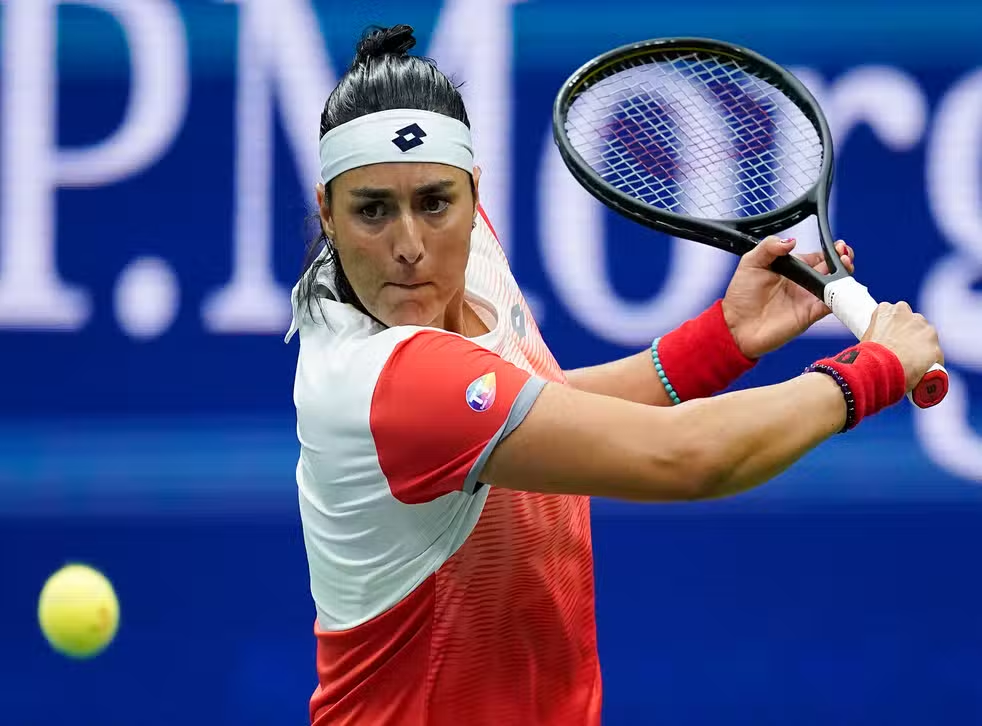
It was yet another win for Africa on September 9th, 2022, when Ons Jabeur booked a US Open final spot, becoming the first African Woman since 1968 to achieve such a feat in the professional era. It’s been a terrific 2022 for the Tunisian, making consecutive Grand Slam finals, but many people are unaware of how the journey started, thanks largely to the scant media coverage she has received. It’s been 17 years of constant hard work, perseverance, and the desire and will to get to the top.

Born in Ksar Hellal, Tunisia, Ons started playing tennis at the age of three and played on the ITF Circuit in 2007. Two years later, in 2009, she made her first junior Grand Slam debut at the US Open but couldn’t get past Britain’s Laura Robson in the first round. She eventually won the Junior Grand Slam title at the French Open in 2011 and became the first North African Woman to win a Grand Slam tournament at the junior level. Then came 2012; at 17, she was handed a wildcard at the Premier 5 Qatar Open in February, where she made her WTA main-draw debut but lost in three sets to No. 103 Virginie Razzano from France.

Considering her struggles at WTA Events at a senior level, it hasn’t been all rosy for Ons. She did qualify for two Grand Slam main draws at the 2014 US Open and 2015 Australian Open but failed to live up to the billing, losing her opening matches at both tournaments. For the first time in 2017, she participated in all four Grand Slam singles events but couldn’t win any of the titles. Her big break came at the French Open, where she won two main draw matches and cemented her place in the top 100 for the rest of the year. In 2017, she competed at all Grand Slam tournaments for the first time in her WTA Career, but she struggled.

A determined Ons kept working hard and digging deep to get to the top, which eventually paid off in 2021 when she won her first WTA Title at the 2021 Birmingham Classic, defeating the Russian Daria Kasatkina in the final. It is also worth mentioning that she got to the Wimbledon championships’ quarterfinals in 2021.

2022 RUN

2022 started with the Tunisian playing at the Sydney International where she got knocked out in the quarterfinals. She withdrew from the Australian Open after picking up an injury at the Sydney International. Jabeur lost in the second round of Indian Wells, but got to the fourth round of the Miami Open, reached the final of the Charleston Open, and went on to win the Madrid Open, making her the first African player to win a WTA 1000 title. Then came the Italian Open, where she had a brilliant run. Still, she wasn’t good enough to win it all as she fell to Iga Świątek in the Final; despite losing the Italian Open final, she reached a career-high world No. 6 in May.

The French Open came with many expectations, but she fell out in the first round against Poland’s Magda Linette but made a career-high ranking of world No. 4 in June at the end of the tournament. Wimbledon saw a different Jabeur who went all the way to the final, defeating Mirjam Björklund, Katarzyna Kawa, Diane Parry, and Elise Mertens in the process. The Wimbledon Final came, which was her first Grand Slam final appearance, making her the first African Woman to reach a Grand Slam Singles Final in the Open Era. Sadly, she couldn’t deliver at the biggest stage, losing to Elena Rybakina in three sets which was a bitter pill to swallow as an African, since tennis experts had picked her to win.

Ons Jabeur vs Iga Świątek: A revenge mission?

September 10th, 2022, will be a day to remember for many. Africans and Arabians who are all looking forward with high expectations. Ons Jabeur will be in action, participating in her second Grand Slam Final barely two months after her first final, which she lost to Rybakina. She faces a daunting task against Świątek, who is yet to lose a Grand Slam final. The Polish player has won in both Grand Slam finals she’s played (French Open 2019 & 2022).

Ons Jabeur is one match away from becoming the first African and Arab Woman to win a significant title, and she can achieve this at the 142nd edition of the US Open. To this point, her accomplishments have been overshadowed by the massive coverage of Serena Williams’ retirement and excitement about rising US stars Francis Tiafoe and Coco Gauff.

The big question now is, Can She win? And if she does, will she gain the accolades deserving of a first-time grand slam winner and the first African-Arab Woman to do so?

Welcome to Fall 2022 Maxwell Media Watch

Writers for Fall 2022 Maxwell Media Watch had their first meeting on Thursday, September 8, 2022 and have already begun working on their first entries. This semester’s writers include a grad student whose media name is Sarafina Napoleon, who penned the first entry about today’s U.S. Open Women’s Singles Final featuring the first African-Arab woman to advance to the U.S. Open final. Forthcoming entries will discuss: Francis Tiafoe becoming the first Black male advancing to the U.S. Open semifinals since Arthur Ashe; WNBA player Brittney Griner’s detention in Russia; WNBA player Sue Bird’s retirement; the rebuild of MLB’s Pittsburgh Pirates; and the Angels’ Shohei Ohtani’s case to be named MVP.

Undergraduate and graduate students in Sport Management, Sport Administration, Journalism and Communication are welcome to attend Maxwell Media Watch meetings and to write entries that critique media coverage of sports. For more information, please contact Pershelle Rohrer, senior contributor (rohrerp@bgsu.edu), or Dr. Nancy Spencer, faculty advisor (nspencr@bgsu.edu).

How the Brian Flores Lawsuit Shed Light on Media Critiques about Hiring Black Head Coaches in the NFL

By Gavin J. Davidson

Gavin J. Davidson is a second-year graduate student in Sport Administration at BGSU from West Point, MS. He is interested in most major sports but football is his primary sport interest.

March 16, 2022

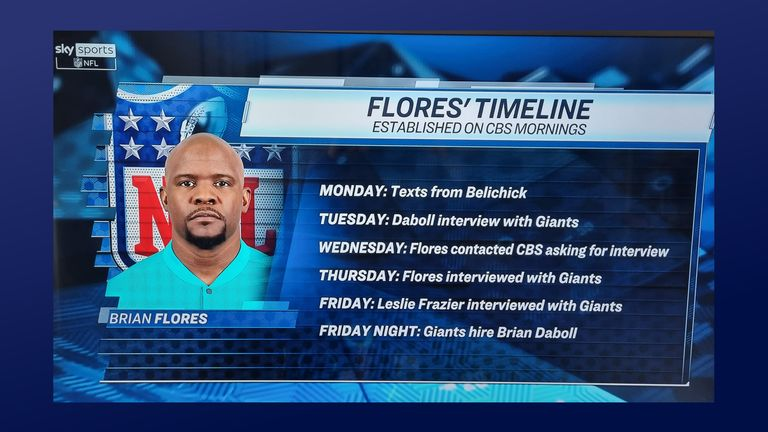
Brian Flores Timeline

The NFL has had an historic lack of diversity in its head coaching ranks since the league was formed in 1920. Until 2003, there were only five Black head coaches hired in the league. To increase the chances of minorities getting an opportunity to coach, the league issued the Rooney Rule, which is named after former Steelers’ Chairman Dan Rooney. The Rooney Rule requires “every team with a head coaching vacancy to interview at least one or more diverse candidates before making a new hire.” In the beginning, most mainstream media applauded the NFL’s efforts to bring greater diversity to the league. The positive reception of the rule allowed it to be extended to general managers and front-office positions in 2009. Jason Lewis considered the rule to be making a positive change, saying, “The rule has been controversial, but it has been effective.”

While Lewis praised the Rooney Rule, he pointed out that sham interviews had occurred. In 2003, the Detroit Lions were fined for not interviewing a minority candidate for their head coaching vacancy. In 2010, the Washington Commanders (then Redskins) hired Mike Shanahan while the Seattle Seahawks hired Pete Carroll to be head coaches for their respective football teams. Since the teams predetermined that they wanted Shanahan and Carroll, they interviewed minority candidates late in the process just to be in compliance. In 2013, Maloni and Diegel suggested that nepotism had trumped the Rooney Rule reporting that in the first ten years of the Rooney Rule, coaches’ relatives would often get jobs on their family’s staff and/or be promoted from within.

When the league saw that it was reverting to the problem of a lack of diversity in the coaching ranks, they adjusted by making additions to the rule. Michael David Smith detailed some of the additions to the rule in 2020, including a second minority candidate added to the hiring pool, no internal promotions, extending the rule to coordinators’ jobs, and adding an incentive program. An additional amendment rewarded teams for developing minority talent who became a head coach or GM in the league. If a team lost a minority coach or an executive to another team, then the original team would get a third-round compensatory pick for two years, and if they lost both in the same year then they received a third-round compensatory pick for three years. The NFL also required teams to interview at least two external minority candidates for a head coaching position and one for a coordinator position. There must also be one minority or female candidate interviewed for senior level positions.

As the rule became less effective, media narratives began to change. Instead of commending the Rooney Rule for helping to even the playing field for minorities, some in the media concluded that the league was finding ways to maintain the status quo, making the rule now useless. So, what factors contributed to changing media narratives about the Rooney Rule? The lawsuit filed by the former Head Coach of the Miami Dolphins certainly highlighted its ineffectiveness.

On January 10, 2022, Brian Flores, the Dolphins’ head coach for the past three seasons, was fired because he was considered “too difficult to work with,” according to the lawsuit filed on February 1, 2022. Coach Flores did not have an unsuccessful tenure when you look at his record with the team. He compiled a 24-25 record with a winning record in the last two seasons. Despite not making the playoffs in three years, Flores inherited a rebuild that may have overperformed based upon national media experts’ expectations reflected by their preseason predictions.

After Coach Flores departed, he had multiple interviews for head coaching vacancies in the league. When the Giants released Joe Judge, Flores was among those considered for the position as head coach. Three days before his interview, his former coach, Bill Belichick, sent him a congratulatory text on getting the job. Being confused about the message, Flores wanted to confirm that Coach Belichick was texting the right person. After Flores reached out to him, Belichick realized that he congratulated the wrong guy, and it was Brian Daboll who was getting the job. Flores had not even been interviewed yet. Despite the news from Belichick, Coach Flores went to the scheduled interview as a show of professionalism, assuming that the only reason he got the interview was because he was the minority candidate and the Giants needed to comply with the Rooney Rule.

Based on what transpired in January, Flores filed a lawsuit against the NFL, the Miami Dolphins, the New York Giants, the Denver Broncos, and other NFL teams for racial discrimination. As a result, the Dolphins documented what they believed were Flores’ flaws. Ryan Yousefi explained the reasons why the Dolphins fired Coach Flores, claiming that Flores was ineffective when it came to Human Resources. As evidence, the Dolphins said Flores had more offensive coordinators than the number of years he was head coach, while some players reportedly did not like the way he coached, and the offense had struggled since Flores took over.

The New York Giants proceeded to hire Coach Daboll, confirming Flores’ suspicion that his interview was a “sham.” To seek justice, Coach Flores sued the NFL for racial discrimination in its hiring practices. Flores’ lawsuit referenced previous articles about the Rooney Rule that supported his stance on racial discrimination. Most of the articles were dated in 2020, which meant that these observations came after adjustments to the rule had been made.

One of the key articles that critiqued the lack of diversity in the NFL was written by Jemele Hill in The Atlantic. Hill’s perspective is insightful because she not only discussed the lack of diversity for head coaches but also a lack of diversity within the pipeline that lead to becoming a head coach. Most head coaches were once offensive coordinators. Most black coordinators were defensive coordinators, making it difficult to gain a promotion. Most offensive coordinators earned their position after being a quarterback coach. There are very few black quarterback coaches in the NFL, which gives them less chance of going through the pipeline to become a head coach. Hill also compared Flores to Joe Judge, the former Giants head coach, pointing out that Flores had a better resume than Judge when considering the two coaches’ credentials. It seems that the Giants were not taking that into consideration since they had hired Judge but allegedly only interviewed Flores to fill the Rooney Rule requirements.

After the lawsuit came out, Heidi Schmidt reported that Roger Goodell admitted that the NFL’s diversity initiatives had not been successful, saying “We must acknowledge that particularly with respect to head coaches the results have been unacceptable.” Whenever there is a situation that makes the NFL look like it fails in its commitment to have a diverse organization, they have tried to implement new policies to move towards their goals. According to NFL executive Troy Vincent, who reported to the Associated Press, “We’ve been working on this every single day since the hiring cycle ended a year ago and we have to do better… We have high expectations that we should see positive results because the work has been put in.” While NFL executives have said that they want diversity, they have yet to prove they want it by their hiring practices. The ownership seems to act primarily when they get pushback on issues, they do not feel are important to them. Meanwhile, they send Commissioner Goodell out to take the heat while the owners continue to dodge scrutiny for their actions.

The lawsuit Flores brought against the NFL shows the power of media because some of the main points Flores is making come from articles that document the League’s shortcomings. A problem arises when the media does not call out the league for its failure to achieve equity. The league will continue to maintain the status quo unless someone addresses them. If more writers investigate the problems that are going on, then change will happen. Jemele Hill’s journalistic insights can provide the impetus for the league to pursue the diversity that it claims to desire. More members of the media must act on the inequalities of the situation for changes to take place and need to hold the authority accountable when there is blatant disregard for the rules. There also needs to be greater representation of diversity within the media. If everyone in the media comes from the same background, then there will be no call for change because everyone sees things the same way.

Media Hits and Misses At Indian Wells

By Dr. Jacquelyn Cuneen

This is part of an ongoing series of guest posts by those in academia and in the professional world of sport. This week’s post is written by Dr. Jacquelyn Cuneen, Ph.D, a former Sport Management Professor at Bowling Green State University.

Usually, tennis news is just like other sports news — who won the games, how they won the games, who rivals who, who dominates, and when do they play again. Except, quite often, an age-old dispute emerges from tennis that causes us to revisit a new version of an old controversy. Sexism!

The BNP Paribas Open — Indian Wells — is a premier stop on both the women’s and men’s tennis tours. The tournament is greatly respected by players, fans, and media, and it is so prestigious that Indian Wells may one day be granted Grand Slam status. Thus, all the top players compete, global media cover the matches from start to finish, and fans set attendance records each year. In other words, the tournament itself is news. However, from the very start to the very finish of 2016’s event, the global media had much more to cover than matches when sexism, tennis’ recurring nemesis, once again intruded. And while the media devoted more than ample coverage to the major stories, they missed some critical undercurrents.

Opening day brought the Maria Sharapova doping scandal. The world number 11 had for ten years been using mildronate, a drug prescribed primarily for angina and other cardiac-related ills. Since January, the drug has been banned by the World Anti-Doping Agency because among its effects is an increase in blood flow which can enhance athletic performance. Sharapova apparently missed the agency directive sent to all players in December 2015 that announced this newly banned drug; she tested positive for mildronate and was disqualified from playing at Indian Wells. The media, particularly Tennis Channel and ESPN, doggedly analyzed Sharapova’s performances and discussed advantages she may have gained from using mildronate. Commentators also, but with less ceremony, listed those Sharapova sponsors that deserted her very quickly upon the breaking news.

With such comprehensive coverage of Sharapova’s predicament, what possible undercurrent could the media have missed and how did it relate to Sharapova’s drug use and sponsorships? In a word: Nike!

Nike was one of the first of many sponsors (e.g., Tag Heuer, Evian, Avon, Porsche) to run for cover when news of Sharapova’s failed drug test was made public. So, what undercurrent did the media miss related to Nike and why do Nike’s repudiations relate to sexism? In a word, Tiger.

Think back to the 2009 holiday season when news broke about Woods’ numerous extramarital affairs. His sponsors did not abandon him immediately, but within a matter of weeks, Woods, like Sharapova, lost many sponsors (e.g., Tag Heuer, Gatorade, Gillette, Buick) but not Nike. Nike continued their association with Woods, lasting to this day.

Where were the media to ask questions related to Nike’s sponsorship decisions? Why did they not note the undercurrent and ask Nike about the rationale that fueled their loyalty to Woods, but did not extend it to Sharapova? Is it even thinkable that taking a performance-enhancing drug “inadvertently” (as claimed by Sharapova) is worse than serial infidelity, when many golf and tennis fans would find both to be repugnant? Only Nike knows their reasons for deserting Sharapova; no one else knows because the media did not inquire about it. Fans in a discerning world might like to know how a company with a 2017 target of realizing $7 billion in women’s spending — which will constitute 20% of their total annual revenues — can make such a questionable and possibly gender-biased decision.

Closing day brought the Ray Moore scandal. Moore was a professional player of little note and no consequence between 1968 and 1983, but gained notability as one of the founders and eventual chief executive officer of the Indian Wells tournament. At a breakfast meeting prior to the women’s final match, Moore expressed his beliefs that, among other things, women’s players ride the coattails of the men, and if he was a woman player, he would go down on his knees nightly and be thankful that Roger Federer and Rafa Nadal were born because they have carried the game. Media, even non-sports media, covered Moore’s comments in depth. Stories in traditional and posts within modern social media universes expressed outrage and disgust over Moore’s archaic ideals. So, what undercurrents did the media miss in the Moore disgrace? In a word, men!

Not only were Moore’s insults obviously degrading and dismissive to those women players who rank among the best athletes in history, his opinion about Federer and Nadal carrying the game is an insult to the other men on the tour. Federer, and particularly Nadal of late, are not carrying the game and they never actually did. While they may have been among the most visible of recent players, plenty of others have dominated tournaments as well. Why did the media not seek opinions from champions such as Andy Murray, Novak Djokovic, and Stan Wawrinka who have dominated Federer and Nadal for the past few years. Moore’s comments were not just offensive to the women players. His version of sexism offended every player regardless of gender, except Federer and Nadal.

Moore learned the consequences of antiquated ignorance expressed in a modern world within three days of the tournaments’ conclusion. He resigned as Indian Wells’ CEO, and as the controversy is ongoing, it is the media’s obligation to discover the reasons for his retreat. Could Moore not face the personal significance of his comments or was his resignation forced by inside and outside sources? It would be nice to know that story.

A final thought for consideration: Ray Moore played on the men’s professional tennis tour for 15 years.  In that time, he managed to win eight doubles titles, none of them a major, playing with 16 different partners. This was during the tennis boom of King, Evert, Laver, and Connors. It was the era when dedicated tennis beat reporters emerged and media coverage of the game flourished. Yet, few besides the most faithful of tennis aficionados heard of Ray Moore then or now … speaking of riding coattails.

A Sad Chapter Ends… or Does It?

By Dr. Nancy E. Spencer

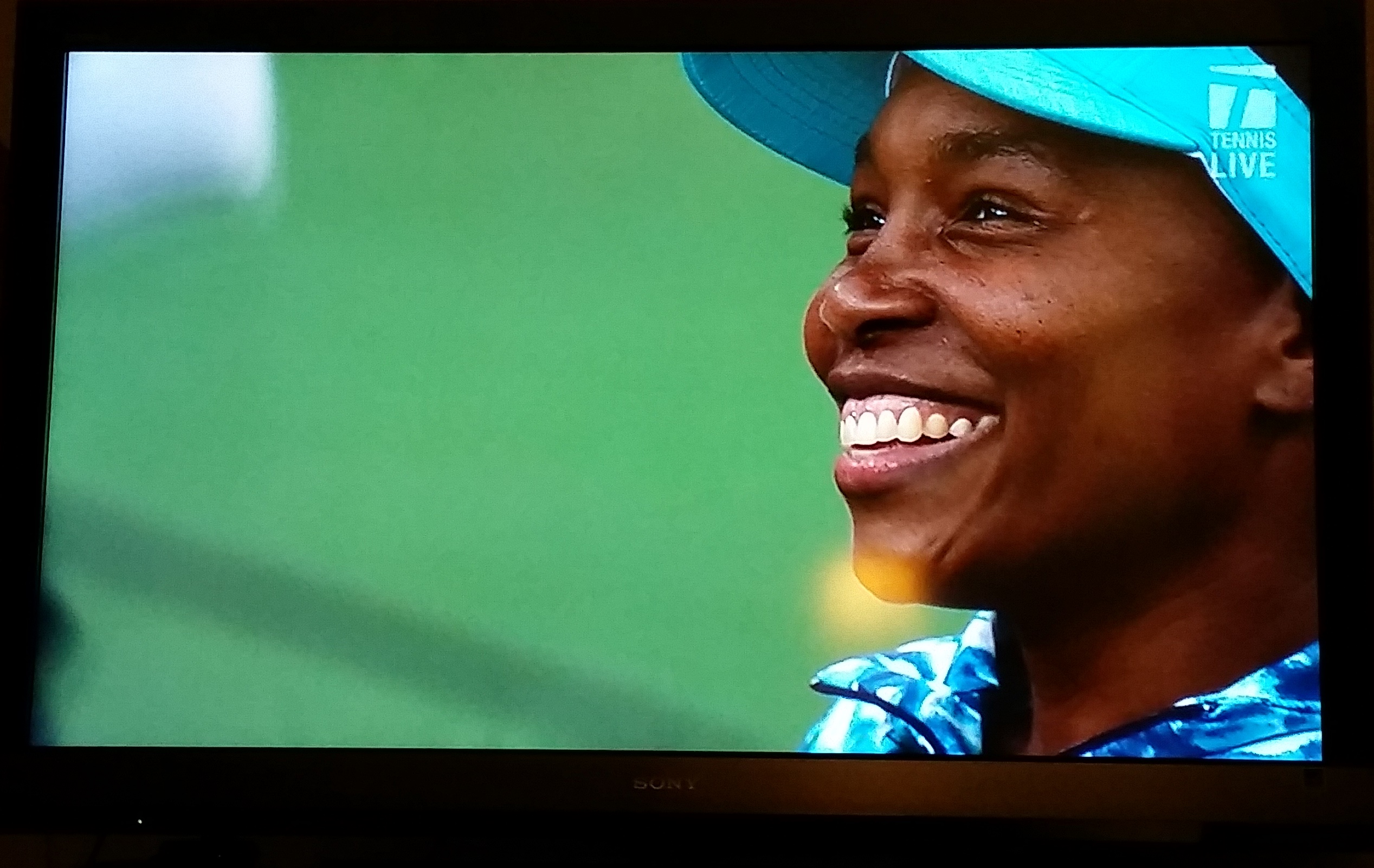
On Friday, March 11, 2016, Venus Williams made her return to Indian Wells, facing Japan’s Kurumi Mara in a first-round singles match. It had been 15 years since Venus last played in the tournament, and she received a warm welcome as reflected by her broad smile in the photo below.?

In March 2001, when Venus last appeared at Indian Wells, she was scheduled to meet her sister Serena in the semifinals. As it was reported by most media sources, Venus defaulted just moments before she was to have played Serena. Tennis writer Joel Drucker (2009), wrote that “four minutes before her match against Serena, Venus pull(ed) out with tendinitis. Players usually notify officials that they will be unable to compete at least 30 minutes before a match so organizers can make contingency plans” (para. 13).

Serena related a different version of this story in her autobiography, where she wrote that during Venus’ quarter-final match against Elena Dementieva, she was dehydrated and started to cramp; she also hurt her knee and questioned whether she would be able to play in the semifinals against Serena (Williams & Paisner, 2009). On the morning of their scheduled semifinal, “Venus checked in with the tour trainer and told him she didn’t think she could play” (Williams & Paisner, 2009, p. 64). According to the rules, the trainer needed to give his approval before Venus could officially withdraw. The trainer was then supposed to consult with the tournament director who would typically schedule another match in its place. [This part is confirmed by Drucker’s statement above].

Checking in with tour officials was an especially important step since Venus and Serena were scheduled to play on live TV (on ESPN) before a crowd that eagerly anticipated the “rare tennis treat” (2001, p. 3C) of seeing the sisters play each other for only the sixth time in their professional careers. There was clearly a lot riding on whether or not Venus and Serena played that match. Yet, according to Serena, the trainer “kept telling Venus to hold off on making any kind of final decision” (Williams & Paisner, 2009, p. 65).

Two hours before the match was slated to begin, Venus again told officials that she would not be able to play, but still no announcement was made that she was withdrawing. It was not until five minutes before the match was to start that a tournament official finally “announced to the packed stadium that Venus was withdrawing due to injury” (Williams & Paisner, 2009, p. 67). Needless to say, the timing of the announcement could not have been worse and fans unleashed their anger toward Venus since she was made to appear as the culprit who withdrew at the last minute.

Two days after Venus’ default in the semifinals, Serena played in the final against the Belgian Kim Clijsters. When Venus and her father entered the Stadium to watch the final, fans responded by booing vociferously. Richard Williams proclaimed that a dozen fans in the stands used racial slurs and one fan yelled that he would “skin him alive” (Smith, 2001, p. 3C). According to some sources, fans were upset not only because of the late default, but also because they had the impression that Richard, was responsible for orchestrating the outcomes of their matches. Dementieva, whom Venus defeated in the quarterfinals, had even suggested in her press conference that she thought their father Richard would decide who would win their semifinal match (Drucker, 2009). A headline in the National Enquirer also suggested that Richard ordered Serena to lose to Venus in the 2000 Wimbledon semifinals. This further fueled the impression of match-fixing.

Aside from such accusations about match-fixing, there has never been any concrete evidence to confirm that this is anything more than speculation. In fact, Bart McGuire who was then CEO of the WTA Tour, issued a statement on March 16, 2001, saying that “The tour is aware of the assertions being circulated regarding Venus and Serena Williams’ head-to-head matches. We have seen no evidence to support those assertions, and both players have denied them” (Drucker, 2009, para. 29).

On March 23, 2001, Venus addressed the role of the press in fueling the story about what happened at Indian Wells. When asked about the crowd’s response at Indian Wells, Venus said that she didn’t always understand the press, but she understood that they wanted a big story and they were “interested in selling papers” (Drucker, 2009, para. 49).Indian Wells’ Tournament Director Charlie Pasarell addressed the question posed to Venus about whether it was unfair of the crowd to respond as they did. Pasarell reported that he cringed “when all that stuff was going on,” adding that “it was unfair for the crowd to do that” (Drucker, 2009, para. 51).

At the beginning of Drucker’s (2009) article, the editor noted that “the controversy surrounding Venus and Serena Williams’ decision not to play at Indian Wells has been composed of rumors, conjecture and  confusing comments about racism and match fixing” (para. 1). While it may be difficult to make sense of all that has been reported and recorded by the press about Indian Wells over the last 15 years, what happened there in 2001 was enough to make the Williams’ sisters decide not to play in the tournament for the past 14-15 years. I vividly remember watching that match and was embarrassed by the vitriol spewed toward Venus, Serena and their father Richard. I have always understood their decision not to play at Indian Wells. While I applaud their willingness to forgive and move on, I question if that chapter is truly over if we have not fully addressed the underlying impulse for the crowd’s (mis)behavior at Indian Wells in 2001.

References

Drucker, J. (2009, March 11). What happened at Indian Wells? ESPN.com. Retrieved from http://espn.go.com/sports/tennis/columns/story?id=3952939&columnist=drucker_joel

Rare tennis treat: Williams vs. Williams. (2001, March 15). USA Today, p. 1C.

Smith, D. (2001, March 26). Williams decries fans as racist. USA Today, p. 3C.

Williams, S., & Paisner, D. (2009). On the line. New York, NY: Grand Central Publishing.