Tag Archives: sports

Super Bowl Recap

By: Lily Smith

March 31, 2025

Lily Smith is a second-year undergraduate at BGSU from Oregon, Ohio. She is majoring in Sport Management with a Marketing minor. In her spare time, she is an intern in the BGSU Athletics Marketing department, a BGSU Campus Tour Guide, and an avid reader. She is passionate about all things women’s sports, and all things women in sports.

Just about a month ago, I returned to campus from my trip to New Orleans for Super Bowl LIX. I went on the trip with 23 other members of the BGSU Sport Management Alliance (SMA). We travelled to New Orleans, Louisiana to work various different events surrounding Super Bowl LIX. 

Super Bowl LIX logo in front of the Caesars Super Dome

Day 1: Travel Trauma

Our first day of the trip was mainly a travel day. Our flight to New Orleans had a short layover in Denver. Although we were only in the Denver airport for about 30 minutes, I still got to see the mountains for the first time. 

A photo from our gate at Denver International Airport. 

Things turned downhill after landing at Louis Armstrong New Orleans International Airport. From our flight into Denver and then into New Orleans, I ended up getting altitude sickness from the rapid elevation change. Due to the traumatics of those few hours, I don’t remember much of our arrival into New Orleans. I know we did get to our hotel around 5pm, and I received about 30 phone calls from my mom making sure I was still alive.

The rest of the group was able to go to Opening Night, which from my understanding was similar to the Opening Ceremony at the Olympics. I stayed home and tried to recover from the day. They were able to see players, hear interviews, and overall celebrate New Orleans, and Super Bowl week. 

Day 2: Beignets and Exploring the City

After about 12-13 hours of sleep, a very long, very hot shower, and a Pedialyte, I was finally back on my feet, sorta. It is Tuesday now! The only thing we had scheduled for the day was training for one of our upcoming shifts. We were able to pick up our required credentials for the NFL, and our uniforms for the events we were working. 

We were also able to go to Cafe Du Monde in the French Quarter and try some fresh beignets. Let me just say, they are delicious. Beignets are definitely something I am not going to eat outside of New Orleans, nothing will compare. We were able to do some small sightseeing, and just take in the overall experience of New Orleans. We went to Louis Armstrong Park, and then did a little shopping at the Nike Store. Then we went back to the hotel to change and refresh for dinner. I got that beautiful plate of shrimp alfredo pictured below.

Beignets at Cafe Du Monde.
Louis Armstrong Park
Shrimp alfredo at Katie’s
Beignets at Cafe Du Monde

Day 3: Botanical Gardens and First Shift

The next morning, we went to the City Park Botanical Gardens. It was very pretty in the gardens, and they had a lot of fascinating art and sculpture installations. The gardens had this precious cat, who did not want anything to do with us, but was very cute sunning itself.

After some fresh air, we headed to the New Orleans Ernest N. Morial Convention Center to work our first shift at the Super Bowl Experience, presented by Panini. The first day, some of the other members of SMA and I worked the 40 yard dash for the kids’ rendition of the NFL Combine. We had a turf area that had 40 yards marked off, including a finish line and a foam area for participants to dive into at the end. Lots of kids wanted to race their friends and siblings. We also had adults and teenagers wanting to get in on the fun as well.

One of the main components of the whole event was making sure attendants of the event had the NFL OnePass app. This was their way of signing a waiver for the different games, but also a good way for the NFL to track participation rates. At each activation, attendants had to scan their app, so a lot of my job at the 40 yard dash station was making sure participants were ready to go before the race. It was definitely a learning curve for the fans, and myself. 

Kitty!!!
Botanical Garden
There were so many cool plants at the gardens. Things we would never see here in Ohio.

Day 4: LSU and Kylie Kelce

The next day, we went on a visit to Louisiana State University. This was one of my favorite things we did on the whole trip. In one of my previous entries, I did a deep dive on LSU’s Kim Mulkey. She is the head coach for their women’s basketball team. At the visit, we were able to see their basketball arena, the women’s locker room, and some practice facilities. Overall, you could feel the energy in those buildings. As a fan of women’s basketball, this was a magical experience for me. We were also able to go onto the field in Tiger Stadium, and see the whole LSU Football experience. It was amazing to be walking around a campus that in the past and even currently, has had so many legends of the sport industry walking around it as well.

Here I am on the field in Tiger Stadium
Inside the PMAC (Pete Maravich Assembly Center)
Pete Maravich Tribute
Women’s Basketball Practice Space

After our visit to LSU, my group and I were able to go into the city and go to the Super Bowl Experience as fans. Some of the other students had shifts working at the airport volunteering with the Host Committee, but the rest of us took time to do homework and explore the city. While we were walking to the entrance of the convention center from our parking lot, we happened to meet Kylie Kelce! This was so exciting to me, as I have become a fan of hers in the last year or so. She was so nice, and definitely the best “celebrity” encounter I have ever had, not that I have had too many though. While exploring the event for ourselves, we were able to see Micah Parsons (Dallas Cowboys) and Drake Maye (New England Patriots) playing pickleball. This was a really cool activation put on by the sporting equipment brand Franklin, and their owners.

Meeting Kylie Kelce
Drake Maye
Micah Parsons

Day 5: The Lombardi Trophy

On Friday, we had another shift at the Super Bowl Experience. This time, I worked the Lombardi Trophy area. This was one of my favorite things I did the whole trip. It was so surreal to be around the trophy and seeing fans interact and take pictures with it. The Lombardi Trophy is such an iconic symbol of the Super Bowl and the empire that the NFL has built.

Up close shot of the trophy
Posing with the trophy

Day 6: Our Last Super Bowl Experience Shift

After a long shift being at the Lombardi Trophy’s best friend, we went back to the hotel and got some much needed rest before some free time and then another shift at the Super Bowl Experience. This day, I worked some of the pickle ball events I mentioned earlier. I was not able to take any pictures this day, so I don’t have anything to show for that part of my shift. Halfway through working pickleball, I got moved to a different station where I was working another photo opportunity. This was hands down my favorite thing I worked at the Super Bowl Experience. It was a big SBLIX logo that fans were able to sit or stand on, and take pictures with. It was amazing because I got to connect and talk to so many people. I was able to speak with locals, who thought I had an accent, but also people from all over the country (and the world!) who just shared the love of football.

Day 7: Super Bowl Sunday

After losing my voice and a good night’s sleep, we were off to the game day shift! Our day started bright and early when we had to go to our parking and credential pickup site. All of the credential pickups we did throughout the week were so high tech in terms of facial recognition. It felt like I was in some sort of other reality. We were then shuttled into downtown New Orleans, where our staffing hosts fed us brunch and gave us training reminders for our upcoming shift.

After our bellies were full of delicious local food, we were sent out for our shift. I was stationed on Poydras Drive, which was one of the main entrances into the stadium. My job was helping people with directions and just answering general questions. There were several different tailgate groups that either came with tickets or were a premium, so we had to help guide patrons to those events. One of my favorite things from this time was starting famous E-A-G-L-E-S chants with Eagles fans. Some of the other BGSU people were stationed with me, so we were trying to count all of the NFL teams’ jerseys we saw walking into the game. We did end up seeing all 32 teams represented!

A few hours into our shift, things got cut short due to weather and safety concerns. We had to go back into our home base for our staffing hosts, but were able to watch the game together as a big group of volunteers. After things cleared up, we were able to take pictures in front of the Super Dome just before halftime.

Day 8: Tulane University and Seafood Boil

Monday morning, we had a visit at Tulane University and their athletic department. Tulane had such a cool campus since it is right in the heart of New Orleans. We were able to meet with some of their operations staff and see some of their facilities. The Chiefs had actually practiced on their iconic blue turf football field before the game, so everything was being torn down due to the extra security measures put in place. The Chiefs also requested to practice on real grass, so they had to put a floor down over the blue turf and then put all the pieces down for it to be a grass field.

Turchin Stadium for Tulane Baseball
Some of their trophies and jersey combinations
Removing the grass field

Later that day, we returned to the hotel to start to pack up and rest before our travels home. To round off our time in NOLA, we decided to get a seafood boil. This was one of my favorite things I ate the whole trip. We got a standard boil, but got calamari, frog legs, oysters, and hush puppies on the side.

Digging in
The group enjoying our food

Day 9: Travels Home and Last Thoughts

Our last day we woke up, packed up our hotel rooms, and headed off to the airport. After a long day of travel, we landed back in Detroit around 10pm Tuesday night. Overall, I had a great time getting to experience such a great city. Working Super Bowl LIX is something I will never forget, and it truly was a once in a lifetime experience. I learned so much, and I will cherish these memories and knowledge forever. I am so thankful to BGSU and the Sport Management Alliance for making this experience possible for me! I will cherish it forever!

Just before landing in Detroit

The Legacy of “The Great One”

By Alexis Shuttleworth

Alexis Shuttleworth is a freshman Sport Management major. Her main interests are in College and Professional Football, Hockey, and Motorsports.

January 1, 2025

What does it take to be called “The Great One”? For Wayne Gretzky, it meant not only shattering records but also transforming hockey and leaving an indelible mark on the world of sports. Wayne Gretzky is a Canadian-born hockey player who is widely considered the greatest player in the history of the sport. Many even argue that he is one of the best athletes of all time. With such fame and popularity, he has impacted others, including fellow players, teams, coaches, aspiring hockey players, and the sport as a whole. Gretzky’s remarkable achievements on the ice, his impact on the NHL’s growth, and his role as a positive role model for athletes have solidified his status as one of the most influential figures in sports history.

What makes a person influential? What defines a pop icon? There isn’t a straightforward answer to these questions; it often depends on individual interpretation. I want to break it down into five different categories: 1. star power and/or talent, 2. personality, 3. the ability to break social norms and 4. showmanship, and 5. the impact an individual leaves behind. Although Wayne Gretzky is neither a pop star nor an award-winning actor, I believe he embodies all the qualities necessary to be considered a pop icon. Not only is he a pop icon, but he is also someone that people look up to which I believe is the most important aspect of being a famous sports player and is the proper way to use your fame. As Gretzky himself explains, “behind every big play, there’s another guy who grew up dreaming of making that play. He’s got a story, and he was inspired by someone else’s story” (Gretzky & McClellan Day, 2016, p. ix). The beauty of being a popular icon in sports is inspiring the ones after them to be just as great, or even greater.

Wayne Douglas Gretzky was born on January 26th, 1961, In Brantford Ontario, Canada. His deep love for hockey sprouted from his father Walter Gretzky who is often referred to as “Canada’s Hockey Dad”. Walter had even built a skating rink in the family backyard and named it “Wally’s Coliseum”. This is the place where Wayne would spend countless hours perfecting his craft. It was known at a young age Wayne would be something great. As Felix writes on International Hockey Net, “by the age of 5, Wayne was already demonstrating remarkable prowess on the ice, skating circles around older kids and displaying uncanny ability to handle the puck with finesse” (para. 4). Felix writes that in the early years what set Wayne apart from the rest was not just his skill but his dedication to the game. This is something that would follow him into his later years of life as well.

After many years of hard work, Gretzky started his career in junior hockey, and this is when it became clear that he would be something great. “In the world of junior hockey, Wayne Gretzky’s star shone brightly. He first gained widespread attention while playing for the Sault Ste. Marie Greyhounds in the Ontario Hockey League (OHL). It was during this time that he amassed a staggering 70 goals and 112 assists in a single season(Felix, 2016, para. 10). This is when heads began to turn and many eyes in the NHL were watching. At the age of 17, he finally made his NHL debut with the Indianapolis Racers in the World Hockey Association (WHA) after NHL scouts could no longer ignore his excellence. However, his true career in the NHL wouldn’t begin until he was 20 years old, and he started playing for the Edmonton Oilers.

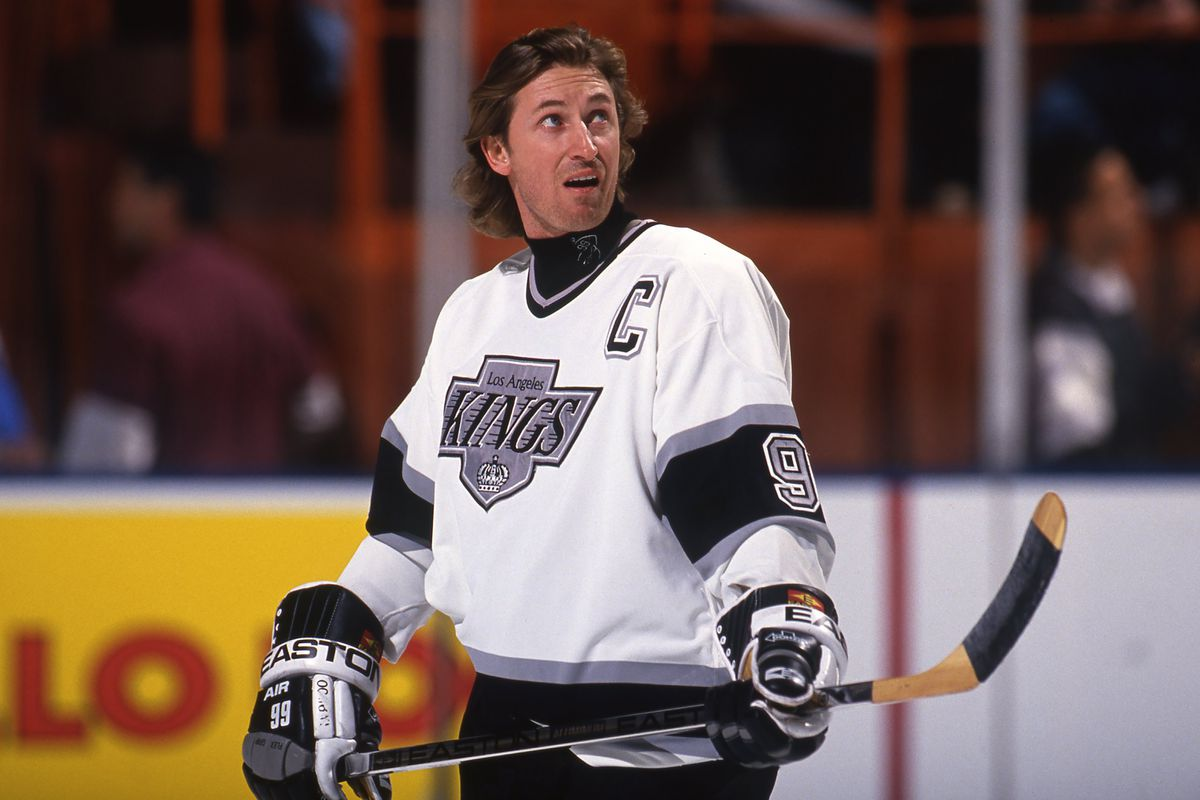
Before exploring Wayne Gretzky’s career and how he became a popular household name, it is important to understand the factors that contribute to him achieving greatness in this sport. To grasp how an average kid from Brantford, Canada, transformed into a well-known figure celebrated for his remarkable accomplishments and dedication to hockey, we must first examine his upbringing. The young Gretzky had an icon whom he always admired – i.e., Gordie Howe, and he is not shy to make it known that Howe was the reason he started his career in hockey. Even the iconic number he wore, 99 (The only number retired across the NHL) (Jackson, 2000), is due to Howe. “It’s special not because I wore it. It’s special because someone who came before me wore the number 9. All I wanted to be when I was growing up was Gordie Howe.” (Gretzky & McClellan, 2016, p. xiv). Gretzky transformed from being a 6-year-old boy learning the sport of hockey from his dad, inspired by a dream of becoming like the great Gordie Howe, to ultimately being recognized as the greatest player ever to step onto the ice. Having role models in life is one of the most important aspects of sports and is how many of the “Greats,” as we know them, are as good as they are.

Wayne Gretzky stands out among the hockey legends primarily because of the remarkable records he set in the NHL and his dominance. “He is simply, ‘The Great One,’ a player of unsurpassed skills who dominated hockey as no other single player has ever dominated a team sport” (Hickok, 1995, p. 305). Even 25 years after his retirement in 1999, he still holds most of these records. During his career, Gretzky set a total of 61 records, and as of today, he retains 57 of them (Jackson, 2000). Instead of listing all the records, which could possibly exceed my page limit, I will highlight some key records that truly illustrate Gretzky’s dominance as a player.

In the regular NHL season, players earn points by scoring goals or providing assists to other players’ goals. Gretzky still holds the record for the most points scored in a single season. Incredibly, he also ranks 2nd, 3rd, 4th, 5th, 6th, 7th, 8th, 9th, and 10th places for this record, meaning he has beaten his own record a total of ten times. Also, there is a 54-point difference between Gretzky, in first place, and Mario Lemieux, who is in 11th place. There have also been three players in NHL history to have 100+ assists in a single season: Mario Lemieux (1 time), Bobby Orr (1 time), and Wayne Gretzky who did it in 11 consecutive seasons. This demonstrates just how exceptional Wayne Gretzky truly was during his time on the ice. There are many different aspects that contribute to being an influential figure, especially in the field of sports, and excelling in sports is just one of those aspects.

An often-overlooked factor in the realm of sports pop icons is their personality outside of their fame. While impressive statistics in the league are important, they lose significance if an athlete is perceived in a negative light off the field. Such individuals may be labeled as “privileged” or “changed by fame.” This perception can influence how younger audiences look up to these athletes. For instance, parents may be reluctant for their children to look up to someone like Deshaun Watson, despite his football prowess, due to his negative actions and off-field image.

In contrast, Wayne Gretzky exemplifies admirable behavior both on and off the ice. He is widely regarded as one of the kindest and humblest athletes in history. To prepare for this essay, I read his autobiography, 99 Stories of The Game (Gretzky & McClellan Day, 2016), which provided deeper insights into his thoughts and mindset after retirement. Interestingly, I found that the book focused more on his teammates and coaches than on Gretzky’s own NHL career, highlighting the type of person he is. He believes that the stories generated throughout a player’s journey are what truly define them and shape the NHL, rather than statistics or wins and losses. As Gretzky states, “The fact is greatness is not captured in statistics. It’s captured in stories” (Gretzky & McClellan Day, 2016, p. xi). He further explains, “Without these stories, I would not have been the player I was, and the NHL wouldn’t be the league it is today” (Gretzky & McClellan Day, 2016, p. xiv). This perspective is essential for a true sports icon.

In the book Outtakes: Dan Patrick, American sportscaster and radio personality Dan Patrick interviews Gretzky. He shares that Gretzky expressed a desire not to be number one on the SportsCentury list, saying he simply didn’t want the pressure and attention. Instead, Gretzky preferred to be ranked second, fourth, or ninth. He said he would be fine with being recognized as the second-best athlete of the century or being in the top five or ten. He was comfortable knowing his place was near the top but didn’t want to occupy the top spot. It is hard to argue with that sentiment (Patrick & Sampras, 2000). Few athletes share such a perspective, as, for many, being number one is the goal. For Gretzky, however, the priority was to play the game he loved and inspire others to do the same.

Wayne Gretzky exemplifies what it means to be a popular icon, due to his ability to break social norms in hockey and embrace showmanship during his playing career. To achieve true popularity, one must endure and stand out. If you are an average hockey player stuck on the fourth line with a few points, your name is unlikely to be remembered. In contrast, Gretzky possessed exceptional talent and skill that will be talked about for generations to come.

Interestingly enough, Gretzky was never technically drafted into the NHL because of the NHL-WHA merger in 1979. This circumstance made a need for him to make a name for himself from the start. His first taste of the NHL was at age 17, when “Wayne Gretzky made his NHL debut with the Indianapolis Racers in the World Hockey Association (WHA), a rival league to the NHL. However, it was his subsequent move to the Edmonton Oilers, then an NHL team, that would mark the beginning of an era (Felix, 2023, para. 13). This small taste of the pro league before being thrown onto the NHL permanently may have been crucial for his stardom in the future.

During his rookie year, Gretzky made an impressive entry into the league, scoring 51 goals and providing 86 assists (“Wayne Gretzky,” 2024). Without this standout performance, he likely would have gone unnoticed, just another player in the 107 years of NHL history. Establishing visibility early in your career is crucial for becoming a pop icon in the future.

The final and, in my opinion, most crucial aspect of being a beloved public figure is the impact you leave behind. Many pop icons that come to mind are still being discussed today because of the influence they had on their communities. For instance, Elvis Presley has been gone for 47 years, yet he is still regularly mentioned with great admiration and continues to be a household name. Why is that? It’s because of the significant impact he has had on the music scene. He is often referred to as the “King of Rock and Roll.” The influence individuals have on their communities is what keeps their legacies alive for many years to come.

Wayne Gretzky exemplifies greatness in numerous ways, especially through his impressive records and statistics. Although he last played in the NHL in 1999, he still holds an astounding 57 records. It’s likely that many of these records will remain unbroken for years to come, and some may continue long after he has passed away. Gretzky’s name will persist in record books and graphics for many years, ensuring that his legacy will be prominent in the NHL for generations.

Another reason Wayne Gretzky has had a significant impact on the hockey world is his ongoing support even after retiring. According to The Canadian Encyclopedia, “Following his retirement, Gretzky became a minority owner and alternate governor for the NHL’s Phoenix Coyotes. He later became the team’s head coach in August 2005 and signed a lucrative five-year contract extension in May 2006. In his four seasons with the club, he coached the team to a record of 143 wins, 161 losses, and 24 overtime losses” (“Wayne Gretzky,” 2025, para. 14). Even after his playing career, Gretzky continued to be an influence in the NHL, and by coaching others, he continued his dream of impacting players in the sport.

Not only did he have an impact on the hockey world he also had an impact globally and he illuminated Canada’s identity crisis at one point. For example, Steve Jackson (2000) reflected “upon the 1988 crisis of Canadian identity by tracing the discourses that linked the fate of one sports star, Wayne Gretzky, to the fate of the nation within the context of an impending threat of ‘“’Americanization’” (p. 166). When Gretzky was traded from the Edmonton Oilers in Canada to the Los Angeles Kings in America it was articulated as a crisis in Canadian identity. Many believed this would ruin the star’s fame and that he would no longer be considered a “Canadian Star.” This did not happen, however. It proves though how much of a popular figure Wayne Gretzky was at the time to cause this much discourse between countries.

One final reason, among many, that Wayne Gretzky impacted the sport of hockey is through his influence on how the game is played and his ability to inspire a new generation of hockey players. It is well-known that many athletes admired Wayne Gretzky while growing up. He transformed the public’s perception of the sport and motivated numerous players currently in the NHL to pursue their dreams.

The International Hockey Net explains this quite well: “Wayne Gretzky’s journey to the NHL wasn’t just a path to professional success; it was a transformative force in the world of hockey. He changed the way the game was played, emphasizing finesse, creativity, and teamwork over brute force. Gretzky’s impact was not limited to the ice; it extended to inspiring generations of young players who aspired to follow in his footsteps” (para. 15). His influence continues to reach across generations, and I believe it will never stop. People will always look up to “The Great One,” and I believe that is what makes him a pop icon.

While many may have differing opinions on what defines a popular icon and who deserves that title, I will always view Wayne Gretzky as the perfect figure who embodies the essence of hockey. He exemplifies this through his remarkable dominance on the ice, his incredible personality, the transformative changes he brought to sport, and, most importantly, the lasting impact he has made. Gretzky is the reason for my passion for hockey, and I know that many others share this same feeling as well. His legacy will continue to thrive as long the sport of hockey is played, and this is what makes him a pop icon.

References

Felix. (2023, September 26). “The Great One: Unraveling the legend of Wayne Gretzky.” International Hockey Net. https://internationalhockey.net/the-great-one-unraveling-the-legend-of-wayne-gretzky/#:~:text=Wayne%20Gretzky%E2%80%99s%20journey%20to%20the%20NHL%20wasn%E2%80%99t%20just,emphasizing%20finesse%2C%20creativity%2C%20and%20teamwork%20over%20brute%20force.

Gretzky, W. & McClellan Day, K. (2016). 99: Stories of the Game. New York, NY: Penguin.

Hickok, R. (1995). A Who’s Who of Sports Champions. Boston, MA: Houghton Mifflin.

Jackson, S.J. (2000). Gretzky nation: Canada, crisis, and Americanization. In D.L. Andrews, & S.J. Jackson (Eds.). Sport Stars: The cultural politics of sporting celebrity (pp. 164-186). New York, NY: Routledge.

Patrick, D, & Sampras, P. (2000). Outtakes: Dan Patrick. New York, NY: ESPN Books.

Wayne Gretzky. (2024). Canadian Encyclopedia. https://www.thecanadianencyclopedia.ca/en/article/wayne-gretzky

Transfer Portal’s Impact on BGSU

By: Sam Morris

Sam Morris is from Madison Heights, Michigan, and is an undergraduate student at BGSU majoring in Sports Management. He has a passion for sports writing and journalism. In his free time, he also performs, writes, and produces his own rap music.

November 15, 2024

Transfer Portal Background Info

Sports law experts at Greenspoon Marder say that “the transfer portal has become a free agency bonanza.” Bowling Green State University (BGSU) is no exception to this trend, as its 18 varsity sports have all used the transfer portal in 2024.

Since its creation in 2018, tens of thousands of student-athletes have used the portal. According to NPR, the NIL rule in 2022 has increased the applicant pool even more in the past two years.

Football is one of the sports for which the portal has gained the most attention. BGSU football has used it to turn their program around.

Falcon Football and Blane Cleaver

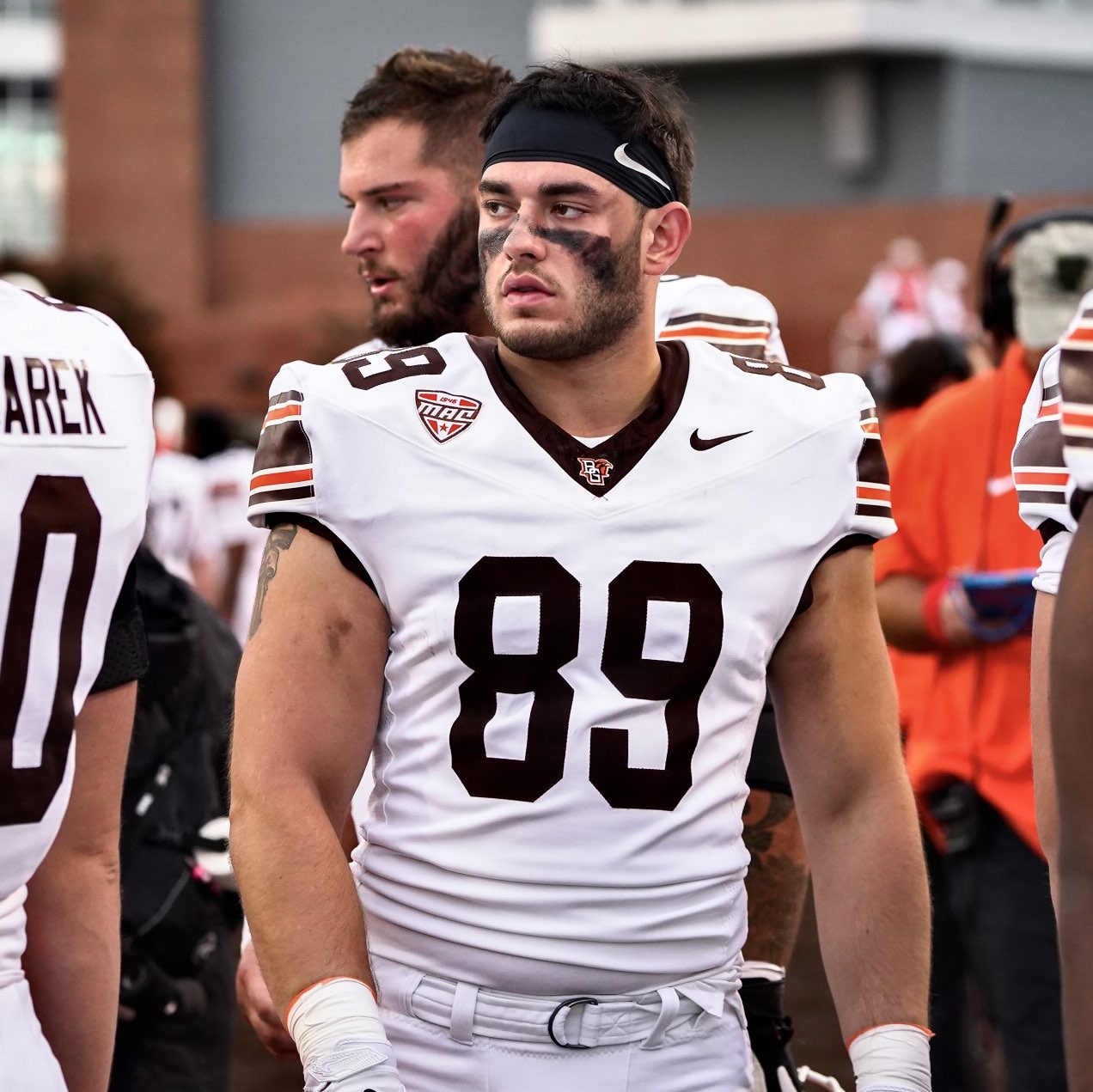
After spending three years at Army West Point, Blane Cleaver, senior tight end for the Falcons, became one of the many BGSU football transfers this past offseason.

Blane Cleaver, BGSU Falcons senior tight end

“I decided to step away (because) the balance between trying to play division one football with academics and the military was pretty challenging; and I just wanted a fresh start,” said Cleaver.

He got that fresh start with the Falcons after entering a chaotic April transfer portal process.

“I talked to between 20-30 schools,” he said. “I had calls, texts, (and) voicemails from the moment I woke up to dinner time.” 

He eventually narrowed it down to three schools. He made his final decision after coming to Bowling Green for a visit.

“When I got to campus, I really liked everything I saw,” said Cleaver.

He believes the transfer portal is a huge positive for mid-sized schools like BGSU.

“If someone’s at Ohio State and they’re not playing, it’s very easy for them to take a step back to a bit of a smaller school, or guys at an FCS can take that step up and make an impact as well,” he said.

BGSU football has seen both cases recently impact their team. Former Indiana quarterback, Connor Bazelak, is now BGSU’s starting quarterback. Former Samford cornerback, Jordan Oladokun, is one of BGSU’s top defenders.

Falcon Hockey and Owen Ozar

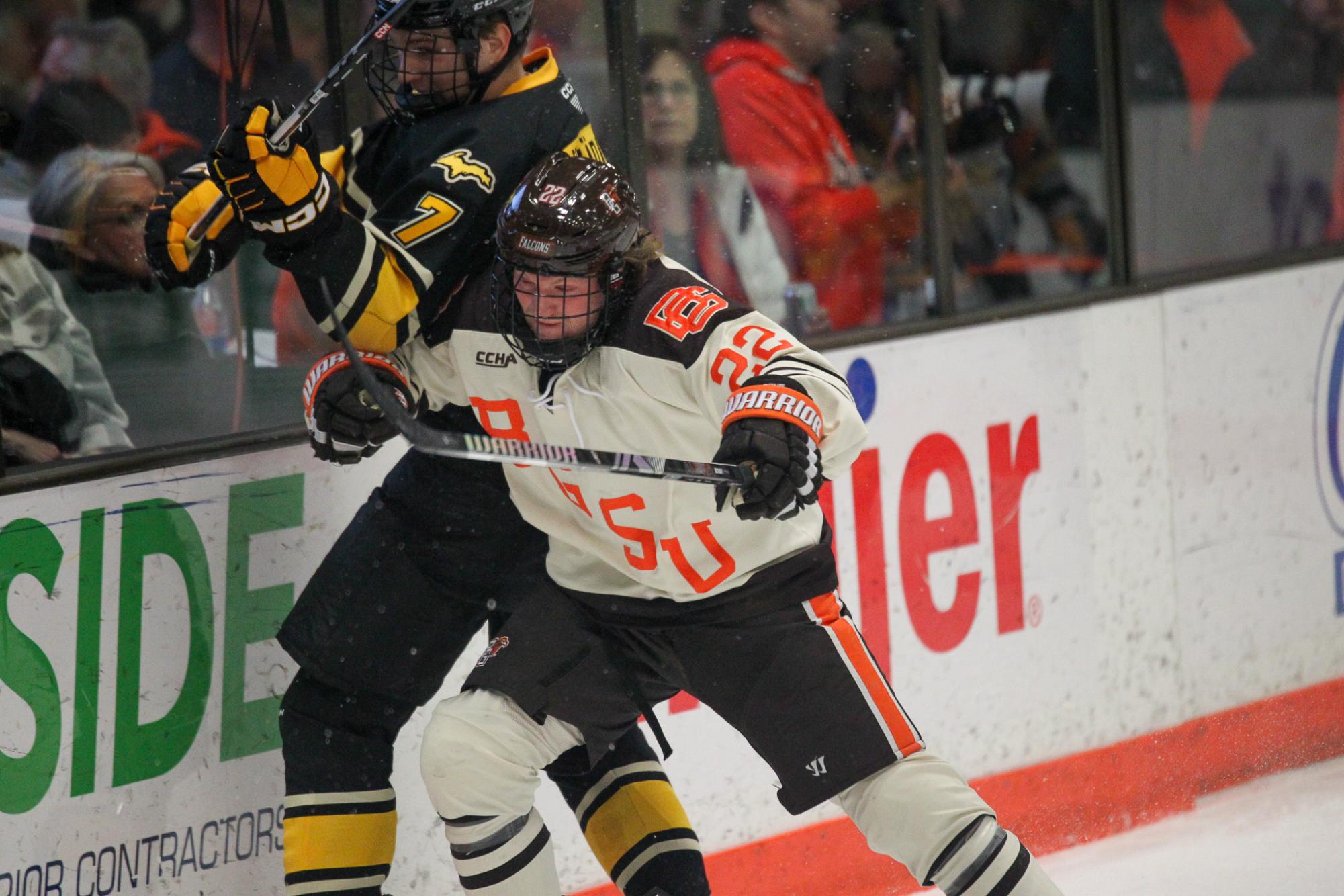
Owen Ozar, senior forward for BGSU Hockey

BGSU hockey has also been impacted by the transfer portal recently, getting Owen Ozar, a senior forward from Denver, in the last offseason.

“I chose to come to Bowling Green because they showed that they had a lot of interest in me,” said Ozar.

He had a similar reason for transferring as Cleaver but went through a much quicker transfer portal process.

“I decided to tell the (Denver) coaches that I was going to try to go to a different school because I wanted to play more,” he said. “After that exit meeting, within a day or two, I was in the transfer portal. Then, two or three days after that, I committed to Bowling Green.”

Ozar also believes the transfer portal has been a positive for BGSU hockey in recent years.

“Last year, we picked up two fifth-years that ended up being some of our top goal scorers. This year, we picked up a lot of good players as well, like Jackson Niedermayer from Arizona State,” he said.

Unlike football, small schools like Denver compete for national championships in hockey. Ozar believes that these are the teams mid-sized schools like BGSU can target.

“There are a lot of good hockey players on those teams that just don’t get the opportunity. I think schools like Bowling Green can take those players and use them to their advantage,” said Ozar.    

A BGSU Student Perspective

While student-athletes largely see the transfer portal in a positive light, the public opinion is more of a mixed bag.

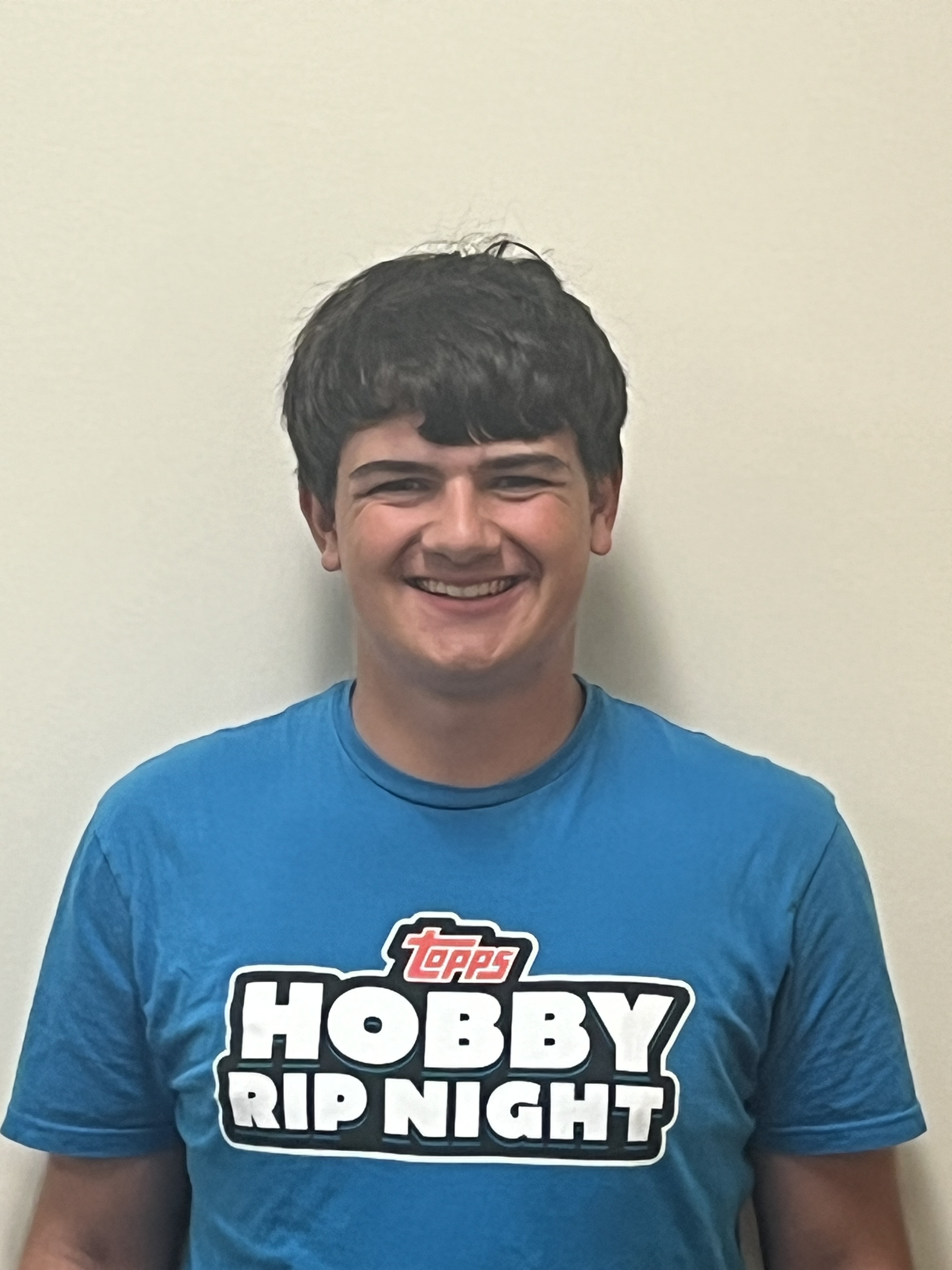
Josh Lalik, BGSU freshman SM student

Josh Lalik, a BGSU freshman sport management student, believes there are both pros and cons of the transfer portal.

“I think it’s overall been a positive, but there have definitely been negative impacts,” said Lalik. “A Group of Five guy like Grayson McCall could have a great season and move on to bigger and better things.”

The McCall example Lalik gives put Coastal Carolina football at a major disadvantage. Their star player left, and they could do nothing about it.

Another major negative of the transfer portal is that it is extremely risky. Some athletes get stuck in a situation where they do not end up landing at a new school at all.

Conclusion

Like most other trends in sports, the NCAA transfer portal will continuously evolve. There are some negatives, but the overall sentiment from the athletes themselves is that it is a positive for collegiate athletics.

The M.A.C: A Conference Fighting Against the Odds

The M.A.C Logo

By: Sam Morris

Sam Morris is from Madison Heights, Michigan, and is an undergraduate student at BGSU majoring in Sports Management. He has a passion for sports writing and journalism. In his free time, he also performs, writes, and produces his own rap music.

November 9, 2024

The culture of the 2020’s NCAA has been dominated by the creation and use of the transfer portal, million-dollar N.I.L deals, and conference realignment, and it is hurting the M.A.C’s ability to compete…..or is it?

NCAA Transfer Portal

The first element of the 2020’s NCAA is the transfer portal, which allows college athletes to choose wherever they want to go in the NCAA if they don’t like or want to be at the first school they picked. This has affected every team and every conference in the NCAA, as THOUSANDS of athletes a year enter the portal, including an all-time high of 20,911 athletes in 2022, and that’s just in Division 1!

The transfer portal has created “super-teams” within the Power 4 conferences but has left smaller conferences, like the M.A.C, constantly searching for players. Although MAC schools occasionally get Power 4 players in the portal, such as Bowling Green landing former Arizona State shooting guard Braelon Green, it is ultimately a much rarer feat than if the school was in a Power-4 conference to start.

Braelon Green (left) blocking a Utah player’s shot while on Arizona State

What often happens instead is M.A.C schools pick up other mid-tier conference players or Division 2/JUCO players in the portal who are looking for a better opportunity, which makes the program weaker overall while increasing the talent level of top-tier programs. This creates a constantly growing talent gap between the mid-tier conferences like the M.A.C and the Power 4 conferences.

N.I.L Deals

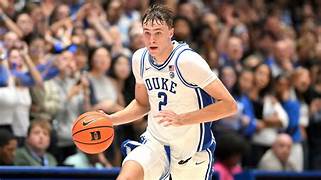
Huge N.I.L deals are also dominating the sphere of college athletics, with some athletes, such as Duke basketball’s standout forward, Cooper Flagg, getting an estimated 2.6 million dollars in N.I.L money this year. Whereas, the top 5 N.I.L deals given to M.A.C school, Ball State’s basketball team combined with the top 5 N.I.L deals given to Ball State’s football team, didn’t even hit the million mark. This is a huge problem in recruiting for M.A.C schools because they are at a disadvantage with how much money they can spend on athletics compared to the bigger schools.

Cooper Flagg dribbling up the court

Conference Realignment

On top of the N.I.L and transfer portal creating talent gaps in college athletics, there is a physical gap occurring with conference realignment. This is perhaps the biggest current threat to the M.A.C as they could easily see their conference get torn apart like Conference USA, the American, or even the Power 4 ACC. What would be even worse is if the M.A.C eventually disbands with all of their schools going elsewhere. If it happened to the once powerful PAC-12, why couldn’t it happen to the M.A.C, one of the smallest and weakest financial conferences in America.

Map of conference realignment

M.A.C Football Fighting Back

With all of this being said, the M.A.C is refusing to give up. In fact, they are thriving in many ways. They are currently the ONLY Division 1 conference to not significantly alter the teams in their conference. So far, they have not lost a single team to another conference and have in fact added former FBS-Independent UMASS to their conference starting in the 2025-2026 season. This silver lining should give the M.A.C hope that they can in fact compete with other conferences going forward.

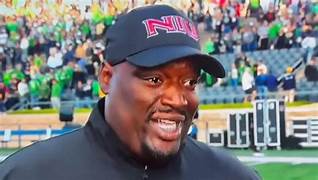
Northern Illinois coach, Thomas Hammock, crying tears of joy after beating #10 ranked Notre Dame

As for the talent gap that continues to grow, this may just be a phenomenon that makes sense on paper but isn’t true in real life. Despite the transfer portal and N.I.L deals making M.A.C teams theoretically weaker, it sure hasn’t seemed like this is the case in the 2024-2025 football season. Northern Illinois, that was picked to finish tied for 3rd in the M.A.C, beat #10 Notre Dame in South Bend in week 2 of the season. This made national headlines and eventually ended up with Northern Illinois ranked in the top 25 for a few weeks. Bowling Green State University (currently tied with Ohio, Miami (OH), and Western Michigan for first place in the M.A.C.), took #8 Penn State and #24 Texas A&M down to the wire, losing both games by only one score, and leading most of both contests as well.

Pros from the M.A.C

Maybe the most important evidence that the M.A.C is not close to being finished is that with all of the disadvantages that they seem to face, they are still producing high-quality professional players and graduates in a multitude of sports.

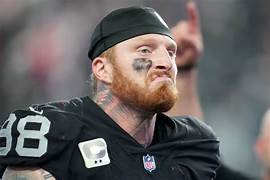
Raiders DE, Maxx Crosby, grimacing

In the NFL, Eastern Michigan alumni, Maxx Crosby, defensive end for the Las Vegas Raiders, is a 3-time Pro Bowler and 2-time All-Pro. In 6 years with the silver and black, he has 222 tackles, 99 tfl’s, and 58.5 sacks. His also consistently ranked in the NFL’s top 100 list, reaching a peak of #10 in 2023.

Yankees INF/OF, Jon Berti, making a throw from third base

In the MLB, Bowling Green alumni, Jon Berti, a versatile utilityman, went to the 2024 World Series with the New York Yankees. He also held the stolen base crown with the Miami Marlins in 2022 by stealing 41 bags. He did so in 102 games, the fewest games a stolen base leader has had in MLB History!

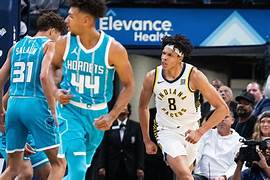
Pacers forward/center, Enrique Freeman (far right), celebrating after a play

In the NBA, Ryan Rollins (Toledo) is a third-string guard for the Milwaukee Bucks, Richaun Holmes (Bowling Green) is a 10-year NBA veteran and third-string center for the Washington Wizards, and Enrique Freeman (Akron) is a backup rookie forward/center for the Indiana Pacers.

Overall, I believe the M.A.C will continue to fight against the transfer portal and N.I.L phenomenon’s if they stick together and don’t abandon the conference in realignment. The widespread success of M.A.C football this year and of M.A.C players in pro sports is also a good sign that the M.A.C will continue to fight against the odds and hopefully stay strong together.

NHL Prospect Update: Ontario Hockey League

By Elise Williams

Elise Williams is a sophomore Sport Management major from Dublin, Ohio. She loves anything hockey and is incredibly passionate about the Canadian Hockey League. In her free time, she can be found curled up with a good book, asleep, or eating shredded cheese right out of the bag.

October 23rd, 2024

It’s been a few months since the 2024 NHL Entry Draft took place in The Sphere. An interesting experience for all. And since many NHL rosters are filling with rarely heard names for the beginning of the season, I figured now would be the best time to give a prospect update. More specifically, with the Ontario Hockey League (OHL) guys, and how they have developed since their draft years.

Denver Barkey celebrating after a goal.

Denver Barkey (#95 in 2023, Philadelphia Flyers)

During his time with the Knights in London, Barkey has shown incredible tenacity and growth. Throughout his tenure, he has continued to provide scoring for the entire Knights roster and while not necessarily putting up superstar, godly numbers, his scoring is consistent and increasing. He signed with the Flyers back in March of 2024, a three-year deal that begins in the 2024-25 season. Flyers fans can expect him to be a great 3rd or 4th line guy, as his size is generally not ideal (5’8). However, Barkey continues to put in the work to become a top line player for both the Knights and the Flyers. Recently, he attended Flyers NHL camp with Knights teammate Oliver Bonk, but Barkey didn’t skate, as he is recovering from illness. Also, if any of you happen to care, I’ve talked to him a bit, and he is a really nice guy. He signed a drawing I gave him two years ago, and we occasionally talk through Instagram DMs.

Hunter Brzustewicz circling around the net. 

Hunter Brzustewicz (#75 in 2023, Vancouver Canucks/Calgary Flames)

Hunter Brzustewicz (pronounced, broo-STEV-itch, crazy I know), not to be confused with younger brother Henry Brzustewicz, is a new acquisition for the Calgary Flames. Hunter was involved in the Elias Lindholm trade with Andrei Kuzmenko and a few first-rounders. As an offensive defenseman, Brzustewicz‘s speed and skill are two massive factors in his play. He signed with the Flames back in mid-March, securing his spot within the Flames’ system. Brzustewicz, being US-born, went through the AAA system in Michigan. His point totals from 2023-24 were insane (especially for a defenseman), putting up a total of 92 points in 67 games. Currently, he is playing with the Calgary Wranglers, and within two games has put up an assist. Still, Flames fans can look forward to having a skilled defenseman in the near future in Brzustewicz (which is really hard to spell 7 times).

Easton Cowan suiting up for the Knights. 

Easton Cowan (#28 in 2023, Toronto Maple Leafs)

“Cowboy”, as many call him, is the future of the Leafs organization. Going later in the first round after being projected late fourth round, his come-up is well-documented by many different sources. Throughout his tenure with the Knights, Cowan has put up great numbers, tallying 96 points in just 54 games last year. In the playoffs, he put up 34 points in 18 games. These numbers got him signed with the Leafs as well, a 3-year deal that ends in 2026-27. Leafs’ fans can expect a sharp-shooting winger with great speed to join their lineup within the next year or so. Even though many are still skeptical about Cowan jumping so high in the draft, Brad Treliving (generally) does know what he’s doing when it comes to prospects. There are plenty of other great prospects coming through the Leafs farm system that will be touched on in the WHL portion of the NHL prospect update.

Dom DiVincentiis preparing to stop a puck.

Dom DiVincentiis (#207 in 2022, Winnipeg Jets)

As the only goaltender on this list, DiVincentiis stands out. He also stands out on the stat sheet, putting a save percentage of .919 in 48 games. That is almost unheard of in junior leagues. On top of that, he was the OHL ‘Goaltender of the Year’ in 2022-23. His skills made the Jets decision to draft him all the more worth it. Generally speaking, goalies never crack NHL rosters right out of junior hockey. It’s very rare to see an 18 or 19-year-old goalie in the National league because of the development and skill it takes to perfect being a goalie. You don’t just come out of Junior with the skills to stop a puck flying at you at 120 mph. So, giving a goaltender the time to adjust to the elite skill and speed of the National league, most hang out in the ECHL (which no longer stands for anything), or the American Hockey League (AHL). So Jets fans can expect DiVincentiis in the next 5 or so years, just so he can develop into the best goaltender he can be.

Sam Dickinson warming up for the London Knights.

Sam Dickinson (#11 in 2024, San Jose Sharks)

Full of personality and skill, Dickinson has a long NHL career ahead of him. He joined the Knights early in his career, a clear sign that he was the real deal. A genuine two-way defenseman, Dickinson has amazing puck control and hockey IQ, knowing what plays will create the best opportunity for a goal. His skills got him on the OHL First All-Rookie team in the 2022-23 season. On top of that, he was on Team Canada for the Hlinka Gretzky Cup (which is like the hockey Olympics for under 18’s, in which 8 nations face off). His point production is increasing exponentially as well, putting up 70 points in 68 games as a defenseman (2023-24), as opposed to his 23 points in 62 games (2022-23). Sharks fans have plenty to look forward to in Dickinson, and can expect him as soon as the 2025-26 NHL season. He signed with the Sharks in July of 2024, so maybe that will expedite the process of him going to The Show.

Dalibor Dvorsky waiting to make a play for the Sudbury Wolves.

Dalibor Dvorsky (#10 in 2023, St. Louis Blues)

Coming to the OHL from the Swiss league Hockey Allsvenskan, Dvorsky brought his intense gameplay with him. His speed combined with his skill made him an amazing prospect for the 2023 NHL Entry Draft. His puck-handling, passing, and offensive read are all lethal for the opposing team. He played for Team Slovakia at the World Juniors (the big hockey tournament around Christmas, where 8 nations face off with players under 20. This tournament is more popular than Hlinka Gretzky because the players promise to be in the NHL sooner – that is my guess), as well as Hlinka Gretzky, notching 13 points in 7 games in the younger tournament, and 3 points in 5 games at the World Juniors. Still, his intense game and ability to make difficult passes got him drafted by the St. Louis Blues. He signed with them in July of 2023, and many had mixed feelings. Those feelings should subside though, as Dvorsky is barreling through the AHL system in hopes of cracking an NHL roster either this year or the next.

Jett Luchanko turning to make a play at Flyers Development Camp.

Jett Luchanko (#13 in 2024, Philadelphia Flyers)

Luchanko (which, c’mon, what a name) shot up the NHL Draft rankings before the draft actually started. His work ethic is a massive part of that. Not only does he want to learn, but he also wants to be competitive. While his shot may not be the best on the team, his puck control and ability to make passes is on another level (Similar to Dvorsky above). He puts in the work to constantly be better than the competition, and feels the need to prove to many why the Flyers selected him. He flew under the radar at first, but his performance at the NHL Combine showed his strength to many that may have doubted him. His point totals throughout the years have steadily increased, starting at 14 points in 46 games, then shooting up to 74 points in 68 games. He signed with the Flyers in July of 2024, and began training to be an all-star. The amazing skills he has and the others he continues to polish will be an amazing asset for the Flyers in the near future.

Zayne Parekh looks towards fans in Saginaw.

Zayne Parekh (#9 in 2024, Calgary Flames)

Starting his junior career earlier than others, Parekh hadn’t always been on everyone’s radar. Whispers of his name had only just started at the beginning of his draft year, and then his talent exploded. His ability to make plays quickly and with such a strong hockey IQ was what drew in plenty of NHL teams. Winning the 2024 Memorial Cup with the Saginaw Spirit only further drew in talent-hungry teams. Parekh was a massive asset to Saginaw during the entire tournament (I would know, I was there). His point totals weren’t astronomical, but that’s common for defensemen. At the Memorial Cup, he scored 5 points in 5 games, but anyone could notice his presence on the ice. In the regular season of his draft year, he scored an insane 96 points in 66 games. He signed with the Flames barely a week after the draft, and has been training to crack an NHL roster ever since. The Flames can expect a playmaking defenseman with great skating ability within a few years, possibly even sooner.

Beckett Sennecke with his current team, the Oshawa Generals.

Beckett Sennecke (#3 in 2024, Anaheim Ducks)

Going semi-viral for his dazed reaction to being drafted third overall, Sennecke has the skills to back up his draft spot. While he may not be putting up monstrous points like the other guys on this list, he still is a force to be reckoned with on the ice. The skills Sennecke brings to the Generals forward core are incredible. His puck handling, size, and skating led him to be a high draft pick. While many saw the pick as a throwaway (especially since it was a top 3 pick), others saw it as high-risk high-reward. If developed well within the Ducks’ system, Sennecke has the potential to be a first line winger for the Ducks, alongside an amazing prospect pool for Anaheim (truly one of the best prospect pools I’ve ever seen). Like many of the other guys on this list, Sennecke signed with the Ducks right out of the draft. Ducks fans (if there are any out there) can expect a highly-skilled winger with great size to add to the arsenal of incredible talent in the coming years.

Florian Xhekaj suiting up for the Brantford Bulldogs.

Florian Xhekaj (#101 in 2023, Montreal Canadians)

Florian Xhekaj (pronounced JACK-eye, I think? I’ve heard 12 different ways to say it, but this one is most agreed on), takes after his brother, Arber. That being said, the penalty minutes are high with these two brothers. Opting to protect his teammates rather than put up impressive numbers, Xhekaj isn’t always at the top of the score sheet. In the 2023-24 season, Xhekaj put up 25 points in 68 games, and had 18 penalty minutes (which makes me wonder how the OHL calculates penalty minutes, since I can count on my fingers and toes the number of fights Xhekaj got into, and I would still need more fingers). Still, sometimes a team needs a good enforcer. His aggression on the ice is what got him recognized by the Canadians, but also because his brother also plays in Montreal. The Canadians can expect a Bash-Bro’s type deal once Florian develops through the Canadiens farm system.

The NHL has such a bright future. Plenty of incredible prospects are making their way through the farm systems. As the NHL becomes more and more talented, it becomes more entertaining to watch. There is still plenty of talent left to be drafted as well, which is even better for the NHL as a whole. In conclusion, watch junior leagues. They’re the future of hockey.

A Deep Dive on Kim Mulkey

Mulkey points to the crowd, acknowledging their support. 

By: Lily Smith

Lily Smith is a first-year undergraduate at BGSU from Oregon, Ohio. She is majoring in Sport Management with a Marketing minor. 

March 30, 2024

Kimberly Duane Mulkey was born May 17, 1962 in the days of John F. Kennedy’s presidency. Kim was born in Santa Ana, California, but raised in Tickfaw, Louisiana. Growing up as one of the first girls to play organized boys’ basketball, she was predicted to be a star. This was proven by Hammond High School winning four state championships, led by Kim herself. This success foreshadowed her future playing and coaching careers. 

Many people have a lot of opinions about Mulkey, her coaching style, her political stances, and even her fashion choices. There is a lot to be said about all of these things, and I want to dive deeper into these choices and the reasons behind them, while also providing a history of this influential women’s basketball icon. 

History

Mulkey during her time at Louisiana Tech.

Kim’s persona didn’t start out being characterized by sparkles, ruffles, and hot pink. Her collegiate career was spent at Louisiana Tech University. Standing at just 5 ft 4 in, often with her hair in braids as pictured above, Mulkey made a name for herself as a point guard. During her college career, she earned the title of All-American. Mulkey and the Lady Techsters earned two national championships. In 1981, they claimed the Association for Intercollegiate Athletics for Women (AIAW) championship. They also impressively gained the title of national champions of the inaugural National Collegiate Athletic Association (NCAA) tournament in 1982. Her accomplishments as a player led her to win the first women’s Frances Pomeroy Naismith Award (top college senior under 5 ft 6 in) in 1984. 

Mulkey poses in her Team USA uniform.

In 1983, Kim was selected to play for Team USA at the Pan American Games in Venezuela. She also played for the Jones Cup in Taipei during 1984, as well at the Olympics in Los Angeles that year as well. During her Olympic run, she averaged 5.3 points per game, and claimed the gold medal.

After her international playing stint, Kim returned to her alma mater, Louisiana Tech as an assistant coach to the women’s team. Later, in 1996, she was promoted to associate head coach under Leon Barmore. During her coaching tenure, the Lady Techsters reached seven Final Fours, had a 430-68 record, and clinched the 1988 NCAA Championship. Mulkey stayed with Louisiana Tech until 2000 when she took over as head coach at Baylor. The previous year, the Lady Bears had gone 7-20 and finished last in the Big 12.

Mulkey coaching at Baylor.

Kim’s takeover at Baylor was truly noteworthy. In her first season, Baylor had their first ever NCAA tournament bid. In 2005, Baylor took down Michigan State for the NCAA title. This feat crowned Mulkey as the first woman to have won an NCAA Division I title as a player and head coach. Years later, in 2012, the Lady Bears achieved a perfect season, going 40-0, the highest number of wins in a single season in college basketball history, women or men. That same season, Baylor took home the NCAA championship yet again.

Controversy

Mulkey with Baylor and WNBA star, Brittney Griner.

During Kim’s glorious reign at Baylor, there were some things going on behind the scenes. Mulkey was very critical of her star player, Brittney Griner. Since then, Griner has seen her own controversies, but she still stands as a women’s basketball icon. She is an openly gay black woman. However, during her time at Baylor under Mulkey things were a bit different.

Griner was reportedly forced to hide her sexuality, and even other things like her tattoos. She was not allowed to speak freely, and had to wear sleeves underneath her jersey. Griner did not feel comfortable coming out to her coach or her peers because there was kind of a “Baylor standard,” and this kind of thing would not be allowed. Later on, Kim was asked if she had ever had a gay player on her team and Kim responded, “Don’t ask me that. I don’t ask that. I don’t think it’s anybody’s business. Whoever you are. I don’t care to know that.”

Understandably, everyone involved in this situation was getting criticism. In a sense, Mulkey was trying to suppress her athlete’s lives. Which in some cases is alright to do, because those athletes are there to play their sport, but they are people, too. Everyone deserves to be known and allowed to express themselves, inherently, as a human.

Being smack dab in the middle of the Bible Belt comes with some challenges for people of color and queer people. Women also hold a different position in society as well, taking place in a more traditional way. Forbes has an article diving into the standards of southern women. You could be an astronaut, but you had to keep dinner on the table for your family. The whole goal is “serve” God properly, and to not be too “out-there,” wear “too-little” or clothing that is “too distracting,” you can be “pretty” but you can’t be overly confident, and of course you “can’t” be a tom-boy.

Tom-boy or hyper-feminine?

Historically, taking the position of a basketball coach, or any coach in the sport industry is easier if you are a male. Therefore, it is inherently a male-centered career. Any female head coach is a pioneer of the industry, and it comes with some tough battles. “Feminine” women are viewed as not tough, ruthless, or victorious. I believe as in the following source that there is quite an interesting boundary between being a female and being an athlete.
Throughout history, women did not typically become athletes especially in sports that required speed, strength, and agility. Think back to the first modern Olympic games in 1896, there were only male competitors. Right now, close your eyes and think about the perfect example of an athlete. Probably not a woman, right? It is probably a well-toned, muscly, oiled-up, big, strong man. Not a woman wearing pink, having long styled hair, wearing makeup, having her nails painted, AND having muscles and other athletic features. This is just not the way society has constructed the ideal athlete.

Now, think about a successful basketball coach. You are probably thinking about an older man, with grey hair, khakis and a sweater vest. This is where Kim Mulkey comes in. A lot of her colleagues, mentors, and former coaches, probably all fit this standard. Still to this day, this is the standard of coaches across all sports, leagues, and ages.
Maybe to combat this kind of male-focused standard, Mulkey feels like she has to hyper-feminize herself to make it known she is a woman. Maybe it is not about female empowerment, but stems from an inner-feeling cultivated in the Bible Belt. She is the perfect example of a Southern woman on paper; she just happens to also be a championship winning basketball coach.

Mulkey is a conventionally attractive woman. Her hair is always perfectly hair-sprayed into place, her makeup is always perfectly done, and her outfits never seem to be too revealing. She is showing off her femininity, and making it known she is a woman. You will never see her wearing sweatpants, a t-shirt, or any sort of comfortable looking clothing or anything that combats her femininity, which would make her more manly looking.

One of Mulkey’s most popular looks.

I personally, like her over-the-top pink, sparkle, feather, ruffle style. I think it’s a statement and if I was in her position I would probably dress a little dramatic. I would get a pink pantsuit and walk into a room full of men. However, I don’t have the idea of a “Southern woman” hanging over my head. I don’t feel as if I have to live up to a certain standard of femininity like she might. I don’t know if my take is right, and it could be that she just likes this style.

There is a lot to be discussed about Kim Mulkey, but I think however you view her, she is an all-round successful woman in the sport industry. She has so many accomplishments and that is nothing to belittle because of the way she dresses. Kim has had her issues, and still continues to have some questionable takes on coaching tactics and politics, and maybe even more that is not in the media. However, all of the female athletes, coaches, and advocates are making way for so many young girls who look up to them, especially during March Madness.