
By Alexis Shuttleworth
Alexis Shuttleworth is a freshman Sport Management major. Her main interests are in College and Professional Football, Hockey, and Motorsports.
January 1, 2025
What does it take to be called “The Great One”? For Wayne Gretzky, it meant not only shattering records but also transforming hockey and leaving an indelible mark on the world of sports. Wayne Gretzky is a Canadian-born hockey player who is widely considered the greatest player in the history of the sport. Many even argue that he is one of the best athletes of all time. With such fame and popularity, he has impacted others, including fellow players, teams, coaches, aspiring hockey players, and the sport as a whole. Gretzky’s remarkable achievements on the ice, his impact on the NHL’s growth, and his role as a positive role model for athletes have solidified his status as one of the most influential figures in sports history.
What makes a person influential? What defines a pop icon? There isn’t a straightforward answer to these questions; it often depends on individual interpretation. I want to break it down into five different categories: 1. star power and/or talent, 2. personality, 3. the ability to break social norms and 4. showmanship, and 5. the impact an individual leaves behind. Although Wayne Gretzky is neither a pop star nor an award-winning actor, I believe he embodies all the qualities necessary to be considered a pop icon. Not only is he a pop icon, but he is also someone that people look up to which I believe is the most important aspect of being a famous sports player and is the proper way to use your fame. As Gretzky himself explains, “behind every big play, there’s another guy who grew up dreaming of making that play. He’s got a story, and he was inspired by someone else’s story” (Gretzky & McClellan Day, 2016, p. ix). The beauty of being a popular icon in sports is inspiring the ones after them to be just as great, or even greater.
Wayne Douglas Gretzky was born on January 26th, 1961, In Brantford Ontario, Canada. His deep love for hockey sprouted from his father Walter Gretzky who is often referred to as “Canada’s Hockey Dad”. Walter had even built a skating rink in the family backyard and named it “Wally’s Coliseum”. This is the place where Wayne would spend countless hours perfecting his craft. It was known at a young age Wayne would be something great. As Felix writes on International Hockey Net, “by the age of 5, Wayne was already demonstrating remarkable prowess on the ice, skating circles around older kids and displaying uncanny ability to handle the puck with finesse” (para. 4). Felix writes that in the early years what set Wayne apart from the rest was not just his skill but his dedication to the game. This is something that would follow him into his later years of life as well.
After many years of hard work, Gretzky started his career in junior hockey, and this is when it became clear that he would be something great. “In the world of junior hockey, Wayne Gretzky’s star shone brightly. He first gained widespread attention while playing for the Sault Ste. Marie Greyhounds in the Ontario Hockey League (OHL). It was during this time that he amassed a staggering 70 goals and 112 assists in a single season” (Felix, 2016, para. 10). This is when heads began to turn and many eyes in the NHL were watching. At the age of 17, he finally made his NHL debut with the Indianapolis Racers in the World Hockey Association (WHA) after NHL scouts could no longer ignore his excellence. However, his true career in the NHL wouldn’t begin until he was 20 years old, and he started playing for the Edmonton Oilers.
Before exploring Wayne Gretzky’s career and how he became a popular household name, it is important to understand the factors that contribute to him achieving greatness in this sport. To grasp how an average kid from Brantford, Canada, transformed into a well-known figure celebrated for his remarkable accomplishments and dedication to hockey, we must first examine his upbringing. The young Gretzky had an icon whom he always admired – i.e., Gordie Howe, and he is not shy to make it known that Howe was the reason he started his career in hockey. Even the iconic number he wore, 99 (The only number retired across the NHL) (Jackson, 2000), is due to Howe. “It’s special not because I wore it. It’s special because someone who came before me wore the number 9. All I wanted to be when I was growing up was Gordie Howe.” (Gretzky & McClellan, 2016, p. xiv). Gretzky transformed from being a 6-year-old boy learning the sport of hockey from his dad, inspired by a dream of becoming like the great Gordie Howe, to ultimately being recognized as the greatest player ever to step onto the ice. Having role models in life is one of the most important aspects of sports and is how many of the “Greats,” as we know them, are as good as they are.
Wayne Gretzky stands out among the hockey legends primarily because of the remarkable records he set in the NHL and his dominance. “He is simply, ‘The Great One,’ a player of unsurpassed skills who dominated hockey as no other single player has ever dominated a team sport” (Hickok, 1995, p. 305). Even 25 years after his retirement in 1999, he still holds most of these records. During his career, Gretzky set a total of 61 records, and as of today, he retains 57 of them (Jackson, 2000). Instead of listing all the records, which could possibly exceed my page limit, I will highlight some key records that truly illustrate Gretzky’s dominance as a player.
In the regular NHL season, players earn points by scoring goals or providing assists to other players’ goals. Gretzky still holds the record for the most points scored in a single season. Incredibly, he also ranks 2nd, 3rd, 4th, 5th, 6th, 7th, 8th, 9th, and 10th places for this record, meaning he has beaten his own record a total of ten times. Also, there is a 54-point difference between Gretzky, in first place, and Mario Lemieux, who is in 11th place. There have also been three players in NHL history to have 100+ assists in a single season: Mario Lemieux (1 time), Bobby Orr (1 time), and Wayne Gretzky who did it in 11 consecutive seasons. This demonstrates just how exceptional Wayne Gretzky truly was during his time on the ice. There are many different aspects that contribute to being an influential figure, especially in the field of sports, and excelling in sports is just one of those aspects.
An often-overlooked factor in the realm of sports pop icons is their personality outside of their fame. While impressive statistics in the league are important, they lose significance if an athlete is perceived in a negative light off the field. Such individuals may be labeled as “privileged” or “changed by fame.” This perception can influence how younger audiences look up to these athletes. For instance, parents may be reluctant for their children to look up to someone like Deshaun Watson, despite his football prowess, due to his negative actions and off-field image.
In contrast, Wayne Gretzky exemplifies admirable behavior both on and off the ice. He is widely regarded as one of the kindest and humblest athletes in history. To prepare for this essay, I read his autobiography, 99 Stories of The Game (Gretzky & McClellan Day, 2016), which provided deeper insights into his thoughts and mindset after retirement. Interestingly, I found that the book focused more on his teammates and coaches than on Gretzky’s own NHL career, highlighting the type of person he is. He believes that the stories generated throughout a player’s journey are what truly define them and shape the NHL, rather than statistics or wins and losses. As Gretzky states, “The fact is greatness is not captured in statistics. It’s captured in stories” (Gretzky & McClellan Day, 2016, p. xi). He further explains, “Without these stories, I would not have been the player I was, and the NHL wouldn’t be the league it is today” (Gretzky & McClellan Day, 2016, p. xiv). This perspective is essential for a true sports icon.
In the book Outtakes: Dan Patrick, American sportscaster and radio personality Dan Patrick interviews Gretzky. He shares that Gretzky expressed a desire not to be number one on the SportsCentury list, saying he simply didn’t want the pressure and attention. Instead, Gretzky preferred to be ranked second, fourth, or ninth. He said he would be fine with being recognized as the second-best athlete of the century or being in the top five or ten. He was comfortable knowing his place was near the top but didn’t want to occupy the top spot. It is hard to argue with that sentiment (Patrick & Sampras, 2000). Few athletes share such a perspective, as, for many, being number one is the goal. For Gretzky, however, the priority was to play the game he loved and inspire others to do the same.
Wayne Gretzky exemplifies what it means to be a popular icon, due to his ability to break social norms in hockey and embrace showmanship during his playing career. To achieve true popularity, one must endure and stand out. If you are an average hockey player stuck on the fourth line with a few points, your name is unlikely to be remembered. In contrast, Gretzky possessed exceptional talent and skill that will be talked about for generations to come.
Interestingly enough, Gretzky was never technically drafted into the NHL because of the NHL-WHA merger in 1979. This circumstance made a need for him to make a name for himself from the start. His first taste of the NHL was at age 17, when “Wayne Gretzky made his NHL debut with the Indianapolis Racers in the World Hockey Association (WHA), a rival league to the NHL. However, it was his subsequent move to the Edmonton Oilers, then an NHL team, that would mark the beginning of an era (Felix, 2023, para. 13). This small taste of the pro league before being thrown onto the NHL permanently may have been crucial for his stardom in the future.
During his rookie year, Gretzky made an impressive entry into the league, scoring 51 goals and providing 86 assists (“Wayne Gretzky,” 2024). Without this standout performance, he likely would have gone unnoticed, just another player in the 107 years of NHL history. Establishing visibility early in your career is crucial for becoming a pop icon in the future.
The final and, in my opinion, most crucial aspect of being a beloved public figure is the impact you leave behind. Many pop icons that come to mind are still being discussed today because of the influence they had on their communities. For instance, Elvis Presley has been gone for 47 years, yet he is still regularly mentioned with great admiration and continues to be a household name. Why is that? It’s because of the significant impact he has had on the music scene. He is often referred to as the “King of Rock and Roll.” The influence individuals have on their communities is what keeps their legacies alive for many years to come.
Wayne Gretzky exemplifies greatness in numerous ways, especially through his impressive records and statistics. Although he last played in the NHL in 1999, he still holds an astounding 57 records. It’s likely that many of these records will remain unbroken for years to come, and some may continue long after he has passed away. Gretzky’s name will persist in record books and graphics for many years, ensuring that his legacy will be prominent in the NHL for generations.
Another reason Wayne Gretzky has had a significant impact on the hockey world is his ongoing support even after retiring. According to The Canadian Encyclopedia, “Following his retirement, Gretzky became a minority owner and alternate governor for the NHL’s Phoenix Coyotes. He later became the team’s head coach in August 2005 and signed a lucrative five-year contract extension in May 2006. In his four seasons with the club, he coached the team to a record of 143 wins, 161 losses, and 24 overtime losses” (“Wayne Gretzky,” 2025, para. 14). Even after his playing career, Gretzky continued to be an influence in the NHL, and by coaching others, he continued his dream of impacting players in the sport.
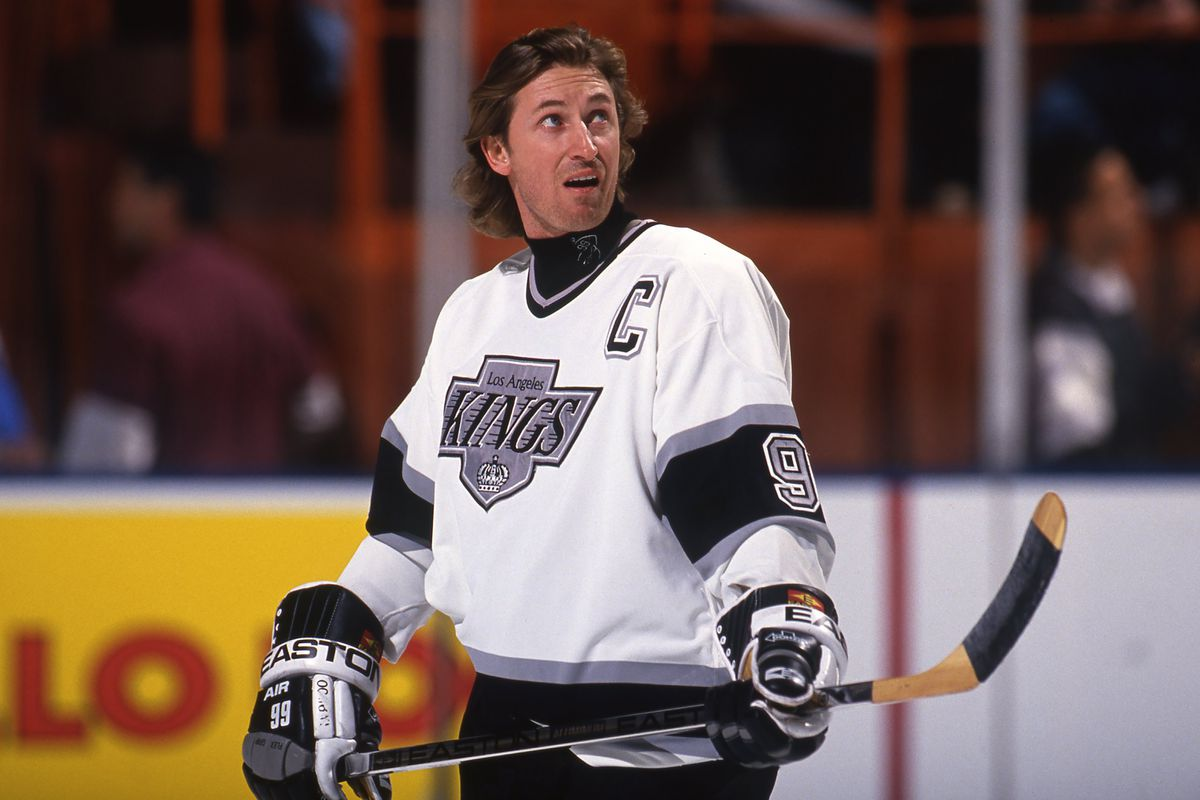
Not only did he have an impact on the hockey world he also had an impact globally and he illuminated Canada’s identity crisis at one point. For example, Steve Jackson (2000) reflected “upon the 1988 crisis of Canadian identity by tracing the discourses that linked the fate of one sports star, Wayne Gretzky, to the fate of the nation within the context of an impending threat of ‘“’Americanization’” (p. 166). When Gretzky was traded from the Edmonton Oilers in Canada to the Los Angeles Kings in America it was articulated as a crisis in Canadian identity. Many believed this would ruin the star’s fame and that he would no longer be considered a “Canadian Star.” This did not happen, however. It proves though how much of a popular figure Wayne Gretzky was at the time to cause this much discourse between countries.
One final reason, among many, that Wayne Gretzky impacted the sport of hockey is through his influence on how the game is played and his ability to inspire a new generation of hockey players. It is well-known that many athletes admired Wayne Gretzky while growing up. He transformed the public’s perception of the sport and motivated numerous players currently in the NHL to pursue their dreams.
The International Hockey Net explains this quite well: “Wayne Gretzky’s journey to the NHL wasn’t just a path to professional success; it was a transformative force in the world of hockey. He changed the way the game was played, emphasizing finesse, creativity, and teamwork over brute force. Gretzky’s impact was not limited to the ice; it extended to inspiring generations of young players who aspired to follow in his footsteps” (para. 15). His influence continues to reach across generations, and I believe it will never stop. People will always look up to “The Great One,” and I believe that is what makes him a pop icon.
While many may have differing opinions on what defines a popular icon and who deserves that title, I will always view Wayne Gretzky as the perfect figure who embodies the essence of hockey. He exemplifies this through his remarkable dominance on the ice, his incredible personality, the transformative changes he brought to sport, and, most importantly, the lasting impact he has made. Gretzky is the reason for my passion for hockey, and I know that many others share this same feeling as well. His legacy will continue to thrive as long the sport of hockey is played, and this is what makes him a pop icon.
References
Felix. (2023, September 26). “The Great One: Unraveling the legend of Wayne Gretzky.” International Hockey Net. https://internationalhockey.net/the-great-one-unraveling-the-legend-of-wayne-gretzky/#:~:text=Wayne%20Gretzky%E2%80%99s%20journey%20to%20the%20NHL%20wasn%E2%80%99t%20just,emphasizing%20finesse%2C%20creativity%2C%20and%20teamwork%20over%20brute%20force.
Gretzky, W. & McClellan Day, K. (2016). 99: Stories of the Game. New York, NY: Penguin.
Hickok, R. (1995). A Who’s Who of Sports Champions. Boston, MA: Houghton Mifflin.
Jackson, S.J. (2000). Gretzky nation: Canada, crisis, and Americanization. In D.L. Andrews, & S.J. Jackson (Eds.). Sport Stars: The cultural politics of sporting celebrity (pp. 164-186). New York, NY: Routledge.
Patrick, D, & Sampras, P. (2000). Outtakes: Dan Patrick. New York, NY: ESPN Books.
Wayne Gretzky. (2024). Canadian Encyclopedia. https://www.thecanadianencyclopedia.ca/en/article/wayne-gretzky
.jpg)




%2Fcdn.vox-cdn.com%2Fuploads%2Fchorus_asset%2Ffile%2F24963054%2FKorchinski__2_.jpg)






 Maxwell Media Watch