
CAPTION: 2026 Winter Olympics in Milano-Cortina, ITALY
Maxwell Media Watch Collaborative: Charlotte Boisvert, Brenna Orton, Elise Williams, Meredith Flaherty, and Nancy Spencer
February 18, 2026
At tonight’s meeting of the Maxwell Media Watch, we welcomed Dick Maxwell, who is the namesake of this site. Mr. Maxwell began our round table discussion by encouraging us to write about sports we’ve been watching recently on TV. Two students (Elise and Charlotte ) provided their observations about figure skating and/or men’s hockey. Another student (Brenna) has been following the WNBA salary negotiations and is interested in the Unrivaled women’s basketball league. This entry provides student and faculty members’ insights into their impressions of the 2026 Winter Olympics in Milan-Cortina (ITALY). Two faculty members describe their observations of the 2026 Winter Olympics as well as of previous Games. Future collaborative articles will examine our reflections on the WNBA negotiations as well as the Super Bowl Halftime show.
Charlotte Boisvert: Personally, I have kept up with Men’s and Women’s Olympic Hockey. During the France and Canada men’s Olympic hockey game on Feb. 15, France’s Pierre Crinon had been suspended by France from subsequent games for fighting Canada’s Tom Wilson.
It is important to note that Olympic hockey follows IIHF or International Ice Hockey Federation rules instead of NHL rules; these rules prohibit fighting within a hockey game. Crinon had broken IIHF Rule 46, which states: “Fighting is not part of international ice hockey’s DNA. Players who willingly participate in a brawl or fight, so-called willing combatants, shall be penalized accordingly by the referee and may be ejected from the game. Further Supplementary Discipline may be imposed.” The NHL differs, letting players finish a fight before a major penalty of five minutes is assessed.
The fight was unsportsmanlike, resulting in a suspension for the remaining games.
Wilson is currently one of the NHL’s strongest defensive players we see in the league, so it was no surprise that he took on the fight naturally. It is second nature for Wilson to drop his gloves when it comes to defending his teammates, in this instance it was Nathan MacKinnon, who had scored on the powerplay against France. Most players were all for Wilson dropping his gloves, because it was hardly a physical fight, mainly roughhousing.
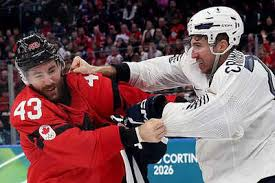
CAPTION: Tom Wilson ignites rare Olympic Hockey Fight
“That guy obviously didn’t want to fight Tom,” MacKinnon said. “He just wanted to wrestle. I wouldn’t want to fight Tom either,” MacKinnon said (ESPN).
Crinon plays for the IIHF, so he knows these rules well, which is why this is so interesting to see this happen. He’s played by these rules his entire career and knows he could get penalized for it, so it could have been surprising to some when it comes to him going against Wilson.
Olympians are meant to be seen as respectable athletes, which is why they stray away from fights like these. It can stir up controversy when people should be focusing on the game instead. Crinon fighting Wilson was not to the standard of an Olympian and could taint the image of his country, so France had every right to suspend him when it came to Olympian standards.
Elise Williams: I’m watching figure skating and curling, interestingly enough. It appears that many people tend to forget that curling is a sport until they turn on their TV once every 4 years: I know I did. The few people I have talked to share the sentiment. It’s been very fun to watch the 3 Team USA figure skaters, Alysa Liu, Isabeau Levito, and Amber Glenn.
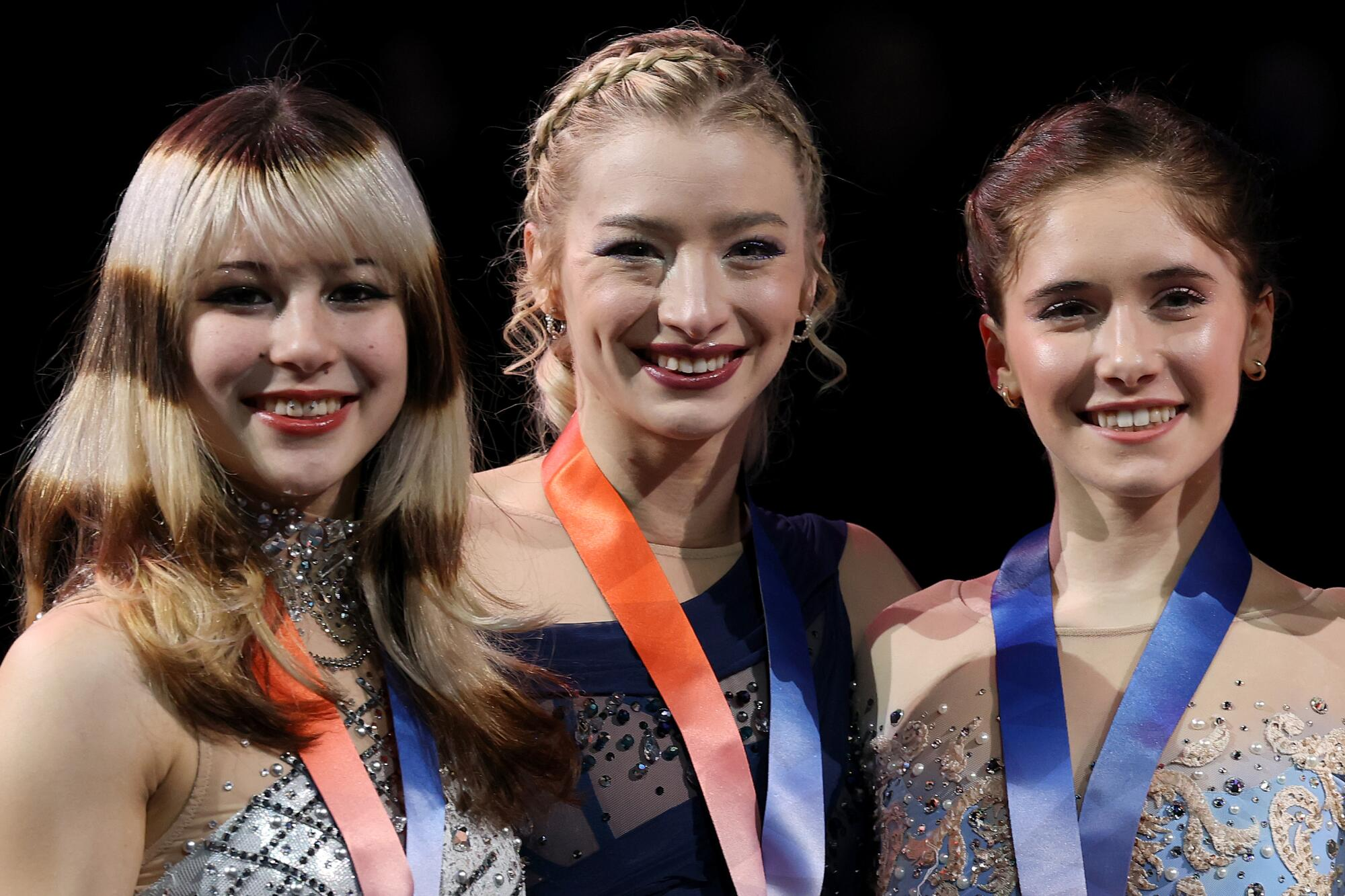
CAPTION: (L-R) Alysa Liu, Amber Glenn, and Isabeau Levito, U.S. Olympic Figure Skaters
Levito’s short program dedicated to Sophia Loren was stunning, and I loved Liu’s showing of Promise by Laufey. Amber Glenn is probably my favorite though, from the many videos of her previous routines that I have watched. It hurt to watch her fall so far in the short program. All three Team USA figure skaters skate with such joy and whimsy in their stride, and look so relaxed out on the ice. Liu commented on it, saying she didn’t want her program to end.
The story of Adeliia Petrosian has also been interesting, considering she is coached by the same person who coached Kamila Valieva, Ana Shcherbakova, and Alexandra Trusova in 2022: Eteri Tutberidze.
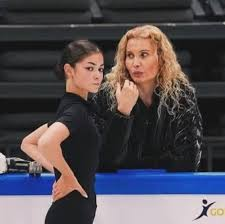
She is notorious for being incredibly hard on her young students, and many of them don’t end up competing again after the Olympics. Petrosian did decently well in the short program, taking 5th. I worry for her and the inevitable Hurricane Eteri if she doesn’t win gold. Another skater I have been watching is Kaori Sakamoto, and how this is her last Olympics. She took bronze against the 3 Russians in 2022, and is one of the favorites for gold this year. Her costume for the short program was beautiful, so I’m hoping to see some more beautiful skating from her as she makes her exit. Finally, shout-out to Sturla Holm Laegrid, who openly admitted to cheating on his girlfriend of 6 months in a post-competition interview, unprompted. Really strange. Hope she finds peace. Overall, figure skating has become a new interest of mine, and I hope to follow it more outside of the Olympics.
Dr. Meredith Flaherty: I have been watching the Olympics to help me cope with the end of football season. The storylines and national identities that get played up fascinate me. I have been particularly interested in how athletes express their shattered hearts when the Olympic dream doesn’t come true. I remember Simone Biles running into “the twisties” during the summer Olympics and the blow-back she got from admitting that she didn’t feel ready to compete.
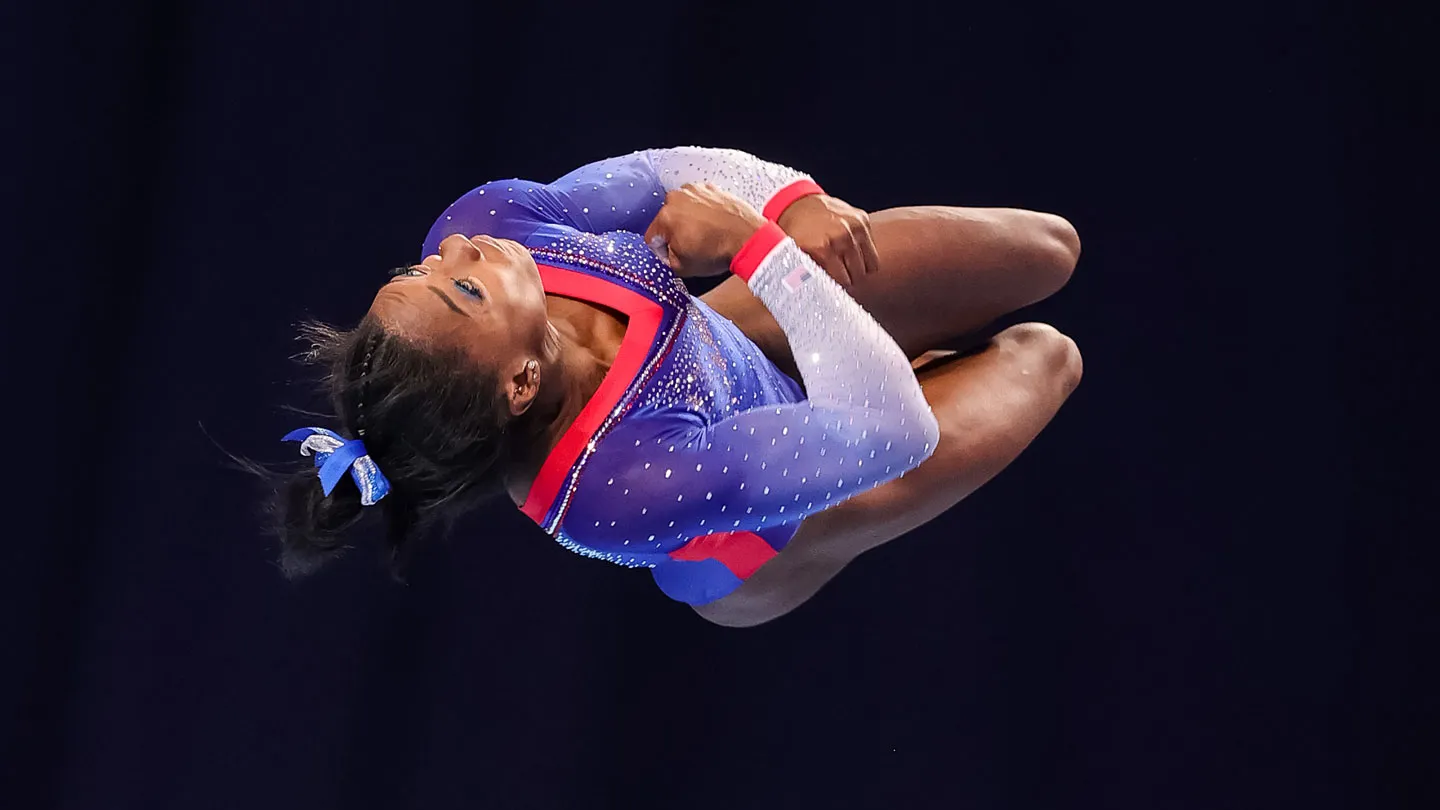
CAPTION: Gymnast Simone Biles (pictured) did twisting rotations, flips and other amazing moves at the June 2021 U.S. Olympic trials in St. Louis, Mo. Then she got the twisties at the Olympics in Tokyo, Japan. As a result, she pulled out of several events.
Fast forward to Lindsay Vonn’s crash. that many attributed to trying to be too big for the sport by deciding she was ready to compete despite her injuries. I wonder how those two athletes would be characterized if they “blew it” in their primary performance, like Ilia Malinin said he had, or Atle Lie McGrath, whose error had him spiraling into a walk to the woods when he didn’t win gold.

CAPTION: Norway’s Atle Lie McGrath walks off the course after skiing out during an alpine ski, men’s slalom race, at the 2026 Olympics in Bormio, Italy, Monday, February 16, 2026.
How athletes deal with pressure, or I should say show the effects of pressure, is a story of its own. But how the public reacts to what athletes do, and how legacy media presents it, have me questioning what fans “love about the Olympics.” The reaction to Malinin owning his failure was a stark contrast to the reactions Biles received for taking ownership for her mental health and risk in competing. Lindsay Vonn wasn’t given any grace for choosing the opposite.
Shows of emotion around catastrophic heartbreak on the world stage, aren’t specific to sport, or speed, or age, or competition. But how women athletes choose to compete, how they show emotion, or what they do in their own best interests as an athlete don’t get the same degrees of freedom that the men athletes do.
Dr. Nancy Spencer: After watching two weeks of Australian Open tennis matches, I wasn’t sure if I could embrace another fortnight of drama. Plus I didn’t come in to this year’s Games knowing many of the young Olympians. I was fascinated to see how the ‘Quad God’ would do with all the hype surrounding his talent. When he fell in his bid for gold, like Meredith, I thought of Simone Biles. A few days later, I read that the two had met up and considered it a good thing.

My first Olympic adventure came in 2002, just five months after 9/11. As a result, organizers of the Salt Lake City Olympics considered not allowing fans to attend but contemplated televising the events with empty stadiums. Many countries also “feared for the safety of their athletes and were reluctant to send them” (Davidson, 2018, para. 2). Security concerns may have dissuaded some ticket holders from attending the Salt Lake City Games, which worked to our advantage. Since my brother lived in SLC, I had a place to stay and family with whom to attend events. Best of all, because of security concerns, reduced ticket prices allowed us to attend more events, including cross country skiing, two women’s hockey games (one featuring the U.S. and another with Canada), downhill skiing, and luge. It was a once-in-a lifetime opportunity and I am grateful to have been there for the winter Olympics. Ten years later, I had the opportunity to attend the London Olympics, where I witnessed Serena Williams win the gold medal in Women’s Singles.


 Maxwell Media Watch